Bulk material processing, distribution centers, and production lines are kept in motion by conveyor systems. Some span great distances and most operate nonstop, relying on thousands of components. But this scale introduces risk.
Seized rollers, failed motor bearings, misaligned pulleys, and over-lubrication aren't just minor inconveniences. Even minor failures can have big implications - leading to costly downtime, increased safety hazards, escalated costs, and disrupted schedules.
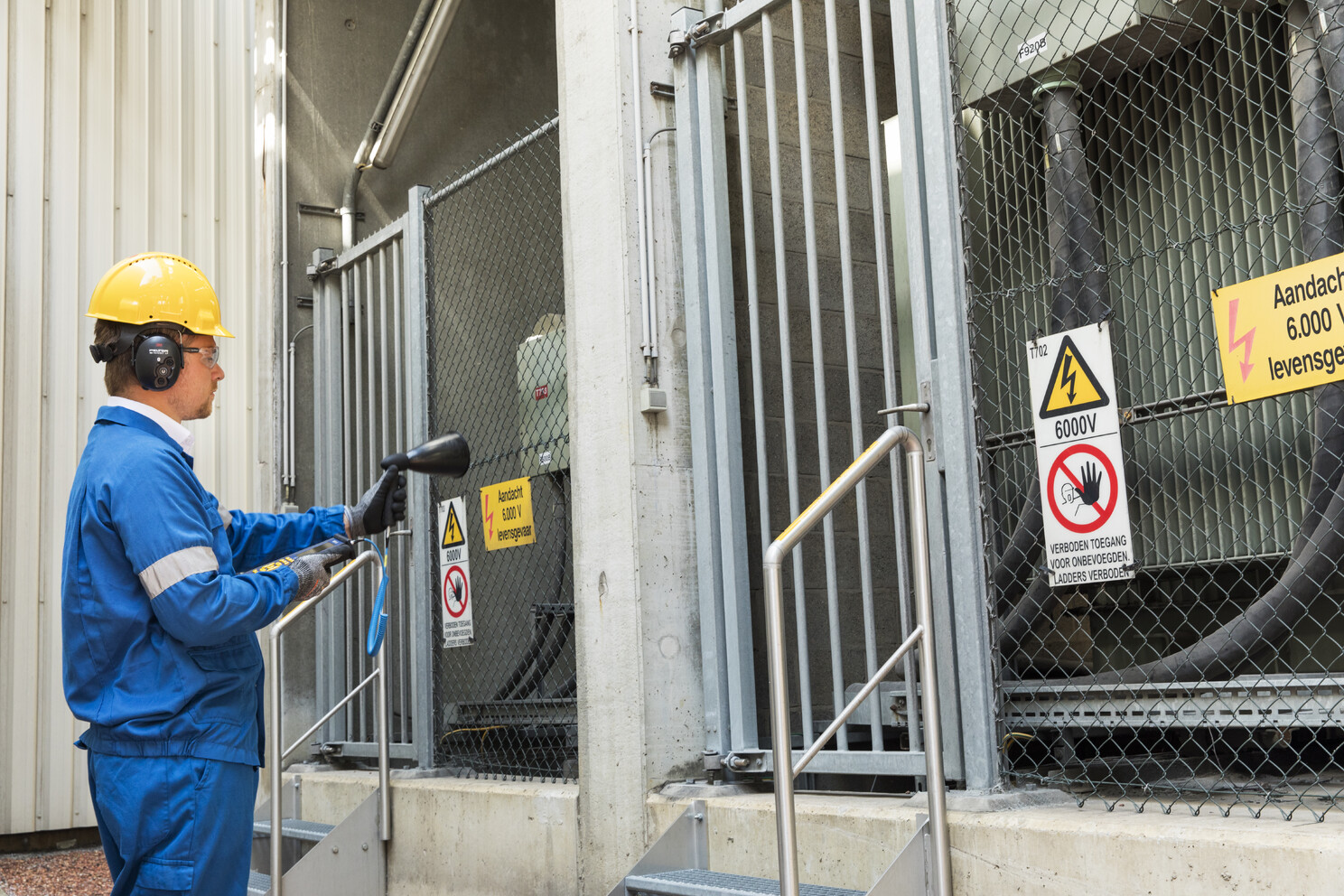
Conveyor systems also pose monitoring challenges. Guarding, height, and harsh environments limit access. But where other technologies fall short, airborne ultrasound excels with the ability to take readings through guarding and from a distance.
Ultrasound condition monitoring data collectors detect high-frequency waves generated by friction, turbulence, and impacting.
Ultrasound inspection is possible with both airborne and contact sensors, but airborne inspection is the preferred method for conveyor bearings. With airborne ultrasound, even a large conveyor system survey with thousands of roller bearings becomes a manageable task.
These inspections are fast, hands-free, and non-destructive. They can be performed safely from a distance, and through guarding, minimizing risk and downtime.
Friction and impacts generate directional, high-frequency signals that make bearing defects easy to detect and differentiate. And thanks to the sensitivity of ultrasound, as issues develop, they're revealed early—enabling a proactive maintenance approach.
A process called heterodyning transforms captured ultrasound signals into audible sounds and measurable values, allowing technicians to identify issues in the field by listening to the audible signature or over time by trending asset condition.
Ultrasound is also considered the most versatile condition monitoring technology thanks to its ability to perform bearing inspection, leak detection, electrical diagnosis, precision lubrication tasks, steam trap and valve testing and more.
These advantages make ultrasound not only ideal for conveyor system inspections, but also an essential asset in any condition monitoring program.
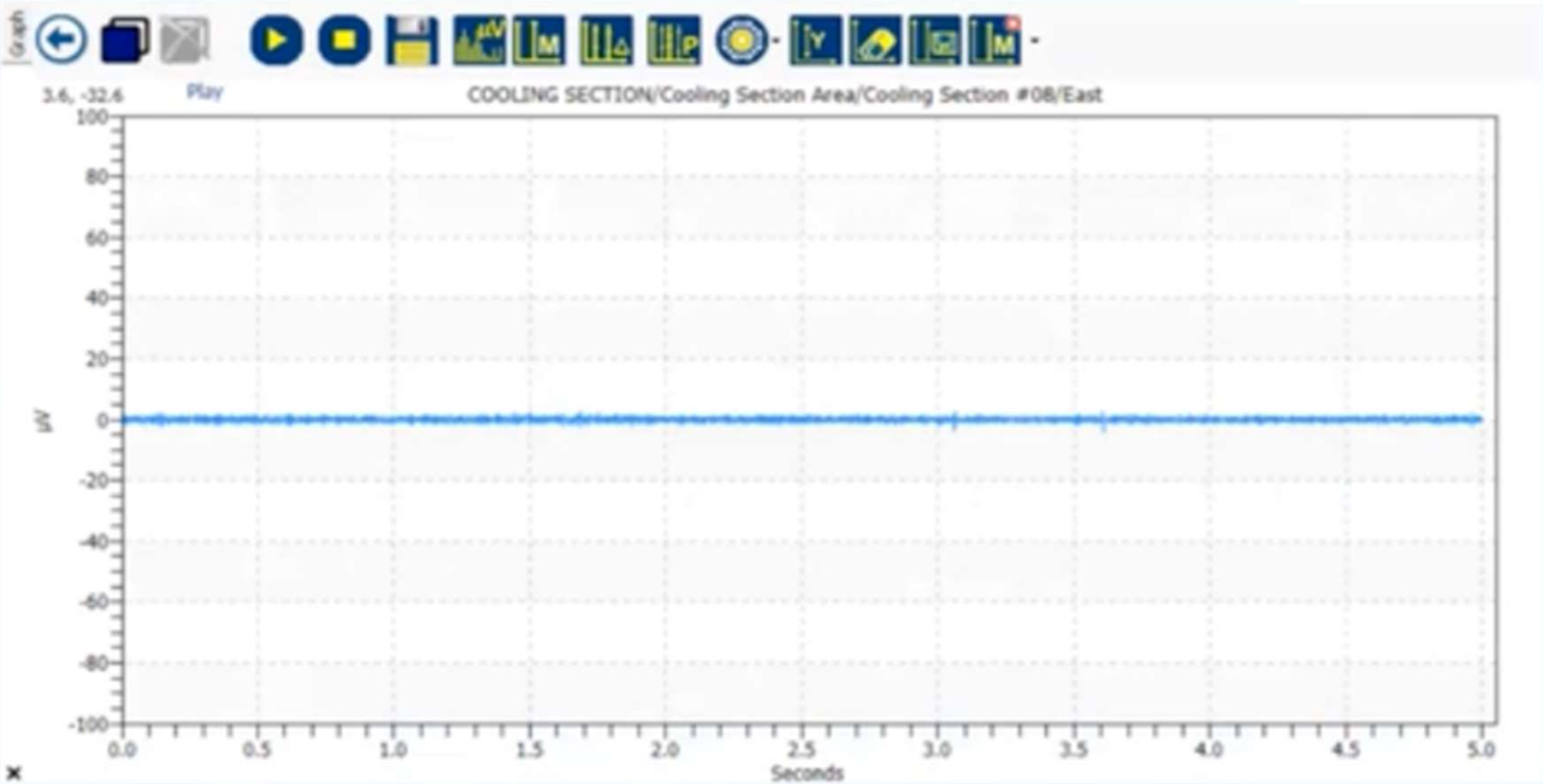
Figure 1 shows a healthy bearing with a clean and stable time waveform. The absence of peaks and a smooth audio playback confirms this is a healthy roller.
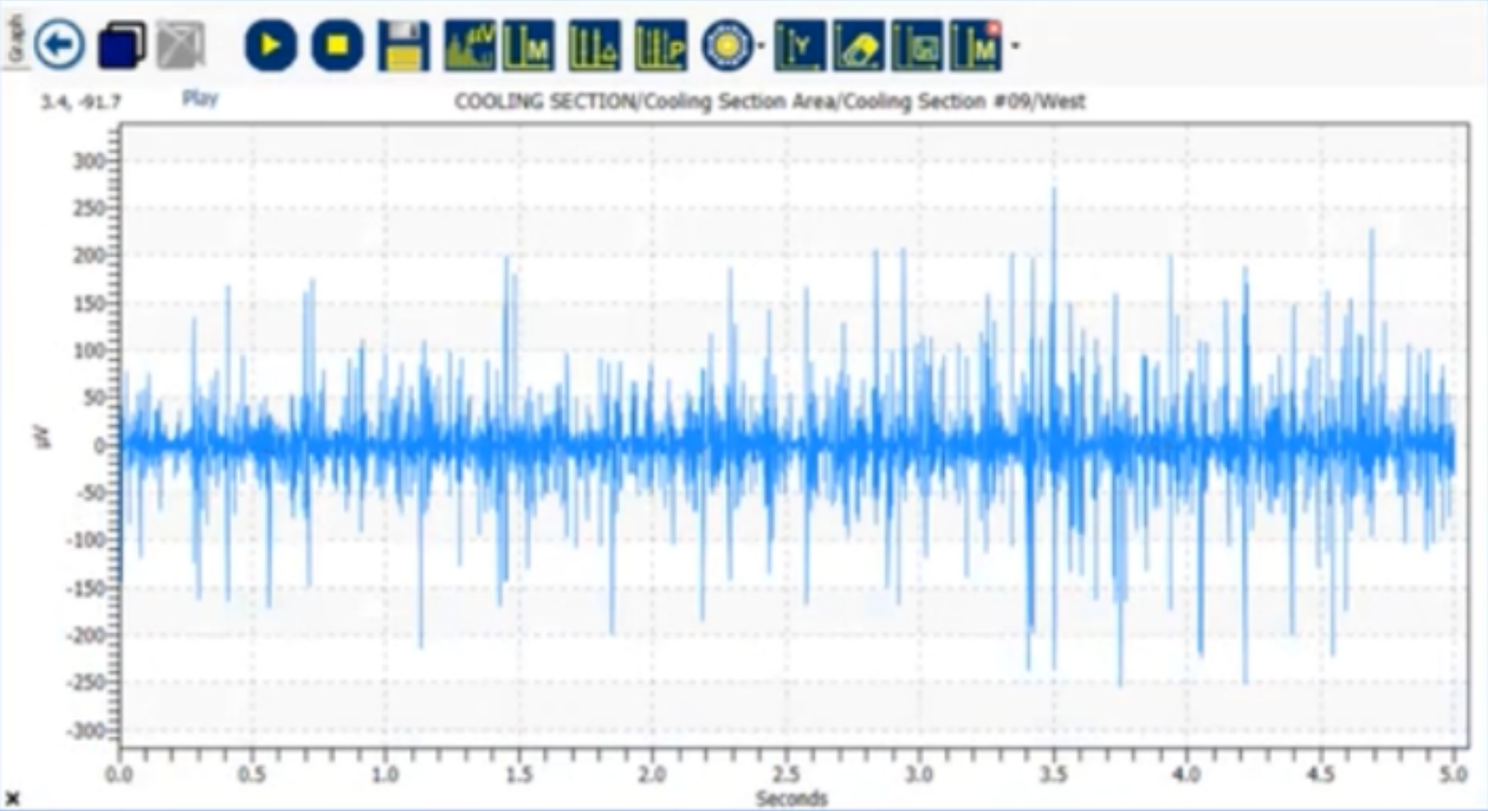
In contrast, Figure 2 reveals a failed bearing. Its time waveform features sharp peaks from increased friction and impacts, and the audio has a distinct crackling sound. This roller bearing is a clear candidate for replacement at the next scheduled shutdown.
While airborne ultrasound is proactive and simple, offering a fast and safe way to spot conveyor bearing issues early—Acoustic Imaging presents all new opportunities for these types of inspections.
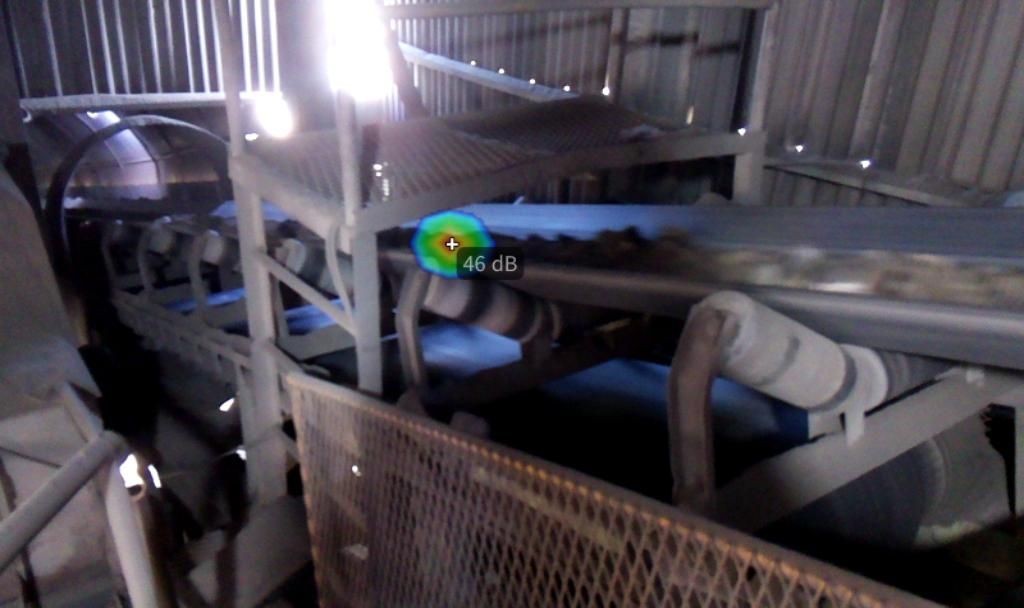
Acoustic imaging cameras simplify the task of inspecting long stretches of conveyor systems. By allowing inspectors to visualize sound in real time, noisy roller bearings instantly stand out as visual hot spots.
They work by using a sensitive microphone array and a visual display to turn high-frequency noise—often inaudible—into clear, real-time images.
Similar to SDT Ultrasound's airborne ultrasound sensors, acoustic imaging cameras such as the SonaVu™ eliminate the need for physical contact or in-depth analysis, quickly pinpointing problem rollers based on the intensity of the ultrasound signals they're producing.
Once anomalies are identified, the images—complete with dB levels and fault locations—can be saved for documentation, reporting, and streamlining follow-up with the maintenance and repair team.
Airborne ultrasound monitoring of conveyor bearings is a fast and easy inspection method that provides immediate audio feedback and supports detailed trending analysis. With quality data, reliability teams can confidently anticipate bearing failures and schedule proactive maintenance, significantly reducing the risk of production interruptions and asset damage.
Ready to #HearMore? Contact us: contact@hearmore.io