
Ultrasound Steam Trap Testing
Detect Failed Steam Traps to Prevent Corrosion, Steam & Energy Waste.
Steam traps are critical to your boiler & steam system health. By purging condensate, steam traps prevent corrosion, water hammer, and steam & heat loss.
Ultrasound is a fast, cost-effective, and accurate way to monitor trap condition, so failures aren’t missed and broken traps are replaced.
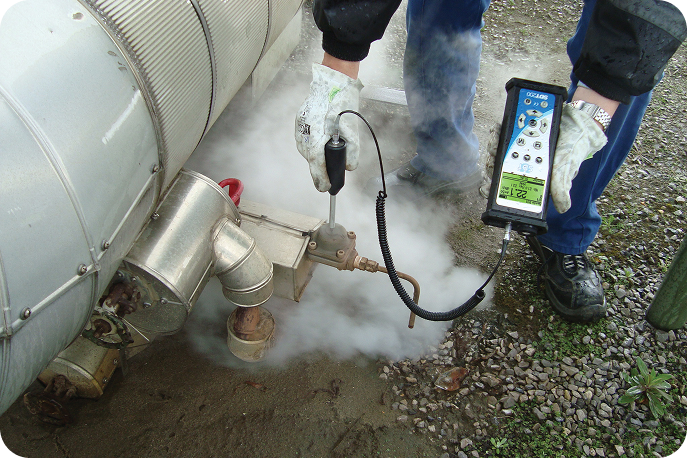
The Cost of Missing Steam Trap Failures
Replacing failed steam traps is important. When traps fail open, steam blows through the system unchecked, driving up fuel costs and damaging equipment as the steam cools and corrodes. And when they fail closed, processes stall.
But due to factors like limited resources, maintenance priorities, and lack of visibility of failures, steam trap maintenance is under-prioritized.
Even facilities that actively maintain their steam systems rely on time-based replacement programs… A seemingly proactive approach that wastes resources and misses failures between inspections.
3 – 5 Year Lifespan
Many mechanical steam traps begin failing within three to five years.
20 – 30% Failed
Facilities without annual testing often operate with 20–30% failed traps.
Cooling Effect
Condensate buildup reduces heat transfer and lowers process efficiency.
Corrosion Risk
Condensate accumulation can increase corrosion risk inside steam systems.
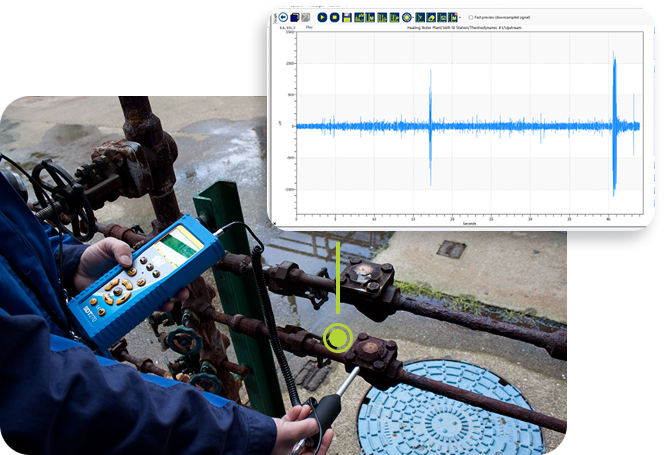
Ultrasound Steam Trap Testing
SDT’s ultrasound condition monitoring equipment listens to frequencies between 38 and 42 kHz, above the human range of hearing, where steam trap activity can be isolated from audible plant noise.
Using a process called heterodyning, these signals are converted into an audible output technicians can listen too, playback, interpret, and trend.
When steam and condensate interact with a steam trap, ultrasonic friction, impacting, and turbulence are created. A working steam trap shows a very recognizable ultrasonic pattern.
Quiet as condensate and steam collect, then a loud ultrasonic burst as the trap purges.
Anything else indicates live steam leakage, mechanical wear, or a trap that is no longer discharging condensate correctly.
Don’t rely on outdated metrics like temperature or subjective observations, you’re your steam traps with ultrasound condition monitoring.
How to Test a Steam Trap
Learn how to inspect steam traps using an SDT ultrasound device. Download the full process guide to learn about preparing your inspection route, collecting measurements from each steam trap, evaluating its operating cycle, identifying common failure conditions, and reporting the results.
01
Identify the Steam Trap
Determine the trap type, application it’s supporting, and normal operating conditions before beginning the inspection.
02
Measure with Ultrasound
Take repeatable ultrasonic measurements at the recommended inspection points while listening to the trap’s operating sound and recording the dynamic signal.
03
Evaluate Trap Condition
Interpret the ultrasonic signature to determine whether the trap is operating normally, passing live steam, blocked, or showing signs of another failure.
04
Document and Trend
Record the inspection results, generate a report, prioritize repairs, and compare future inspections to identify changes in condition that occur over time.
Know Your Steam Traps (and their Failure Modes)
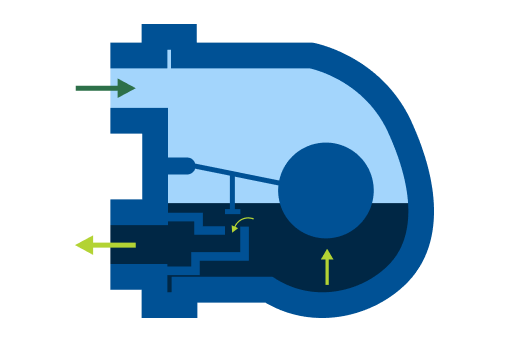
Use floats to discharge condensate and thermostatic elements to remove air.
Mechanically driven, suitable for moderate to high-pressure systems.
Simple, compact design ideal for high-pressure systems.
Use temperature differences to open or close the trap.
Common Steam Trap Failures found with Ultrasound
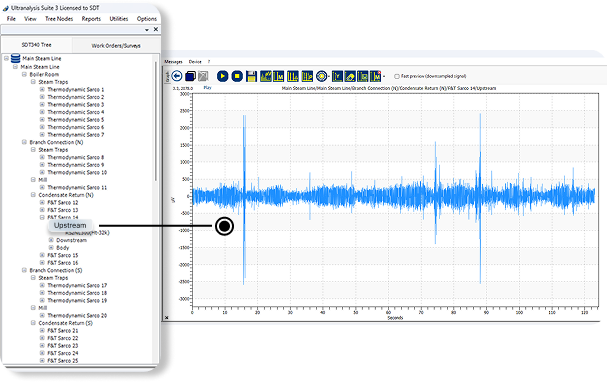
Steam traps commonly fail in one of three ways, and each failure mode is identifiable with ultrasound steam trap testing. During inspection, we listen for condensate and steam collecting in the trap, followed by the ultrasonic burst as the trap purges. Collecting can be very quiet and the purge can be very loud, or collecting can be very loud while the purge is difficult to distinguish like is the example shown.
This data is improved when a steam trap database is established and historic trap data is collected, documented and stored for each trap.
Steam Trap Failure Modes
Steam Trap Cycle Normal Operation
A properly operating steam trap should discharge condensate while preventing live steam from escaping. Ultrasonically, this produces a stable, repeatable sound pattern that reflects normal condensate flow and the trap's operating cycle.
Failed Mechanically
Mechanical wear, corrosion, dirt, pressure cycling, and age
can all degrade steam trap components over time. As your
steam traps wear down, they begin to lose their ability to
operate as intended.
This can result in a rapid cycling condition, but it’s
important to consider load and normal function for each trap.
Blowing Open
A trap that is blowing open allows live steam to pass
continuously instead of discharging condensate as designed,
wasting energy, increasing steam demand, exposing piping to
condensate, and accelerating corrosion.
This will often be equal parts loud upstream and downstream
of the steam trap. It could also present as a loud whistle.
It’s important to consider load and normal function for each
trap.
Stuck Closed
A trap that is stuck closed is often called a cold trap
because condensate and air remain trapped in the system.
This reduces heat transfer, lowers process efficiency,
increases corrosion risk, and can contribute to water hammer.
This will often be louder upstream than downstream. It’s also
possible that this trap takes several minutes to cycle, which
could be normal operation for that trap. Temperature
measurements can add clarity to the inspection.
Unreliable Steam System Consequences

Energy & Steam Waste
Failed-open steam traps continuously pass live steam, increasing fuel consumption, utility costs, and greenhouse has emissions. Steam trap failures reduce effective heat transfer and process efficiency.

Water Hammer
Failed-closed or blocked steam traps allow condensate to accumulate, increasing the risk of water hammer, pipe erosion, premature equipment wear, and costly repairs.

Reduced Performance
Poor condensate removal and steam losses reduce heat transfer efficiency, affecting everything from process consistency, pressure, product quality, and production capability.

Higher Costs
Undetected steam trap failures increase boiler workload, shorten equipment life, and force maintenance teams to react to avoidable failures instead of preventing them.
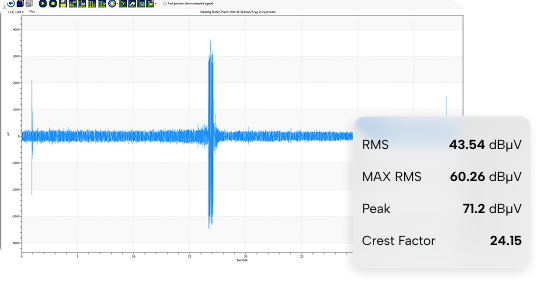
SDT Ultrasound Solutions' Four Condition Indicators as Steam Trap Cycling Metrics
When inspecting steam traps, the SDT340 and other SDT Ultrasound Solutions data collectors record the four condition indicators, RMS, max RMS, peak, and crest factor, with every single measurement period. Together, these values can provide a quick snapshot into the health of a steam trap, as to whether it is cycling normally, stuck open, stuck closed, or chattering, without the need for analyzing dynamic ultrasound data.
By comparing RMS and Max RMS, inspectors can quickly determine whether a steam trap cycled during the measurement period. When Max RMS is noticeably higher than RMS, the trap likely opened or closed while the reading was being collected. When the two values are very close, no clear cycle occurred during that measurement.
Steam Trap Inspection Services
SDT Ultrasound Solutions offers professional steam trap inspection services where we help you evaluate trap condition, identify failed traps, estimate energy losses, and prioritize repairs.
Building a Steam Trap Inspection Program
01
Take Inventory
Identify, label, and document every steam trap, including its location, trap type, application, pressure, and normal operating conditions.
02
Plan
Determine the frequency each trap should be inspected. This should be based on criticality which factors in importance to processes & safety, historical maintenance requirements, and more.
03
Collect Data
Load the route onto the SDT340 and collect repeatable ultrasonic measurements, dynamic signals, audio recordings, and inspection notes while documenting the condition of every steam trap.
04
Analyze and Report
Review the inspection data, identify failure modes, estimate energy losses, and prioritize repairs based on operational and financial impact.
05
Repair and Improve
Complete repairs, verify trap performance with ultrasound, and continue trending results over time to improve steam system reliability, energy efficiency, and maintenance planning.
Our Steam Trap Testing Tools
Modern steam trap inspection programs depend on tools that make testing consistent, practical, and easy to document. SDT Ultrasound Solutions Steam Trap Testing Solutions:
SDT340 is a versatile condition monitoring data collector that supports contact ultrasound measurements for steam trap testing, along with broad reliability tasks across your plant. With UAS3, the SDT340 plots your route, logs and analyzes data, and records temperature data.
Learn MoreTRAPChecker is an affordable, purpose-built option for steam trap testing. It allows technicians to quickly inspect steam traps, determine operating condition, and simplify the process of classifying failed traps in the field.
Learn MoreSonaVu+ is an acoustic imaging camera that helps technicians visualize ultrasound and quickly identify steam leaks in industrial environments. It is especially useful for locating leak points safely and efficiently across larger steam systems.
Learn More
Working Together
No two plants operate the same way. Our ultrasound experts will consult with you directly about your steam traps, steam system, and reliability objectives to deliver the solutions, training, and services that match your site priorities.
Partnering with SDT Ultrasound Solutions
SDT Ultrasound Solutions has been supporting industry for more than 50 years, helping organizations around the world get more out of their production processes, condition monitoring equipment, and reliability strategy.
Our purpose-built solutions, training, and services empower you to reduce unplanned downtime, optimize maintenance schedules, and protect your mission-critical equipment.
When you partner with SDT Ultrasound Solutions, you gain more than a vendor. You gain a proactive partner prepared to support your reliability journey with the tools, training, and partnership needed for success.
Steam Trap Frequently Asked Questions
A steam trap survey is the process of testing and inspecting steam traps across a facility to identify traps that are operating normally, leaking steam, or stuck closed. A steam traps survey helps maintenance and reliability teams prevent heat loss, corrosion damage, water hammer, steam leaks, and wasted energy while improving system reliability.
Ultrasound helps technicians evaluate trap activity while the system is operating. It makes it easier to detect leaking traps, cold traps, and abnormal trap behavior in real working conditions.
Ultrasound inspection filters out audible noise and only Listens to high-frequency sound produced by friction, impacting, turbulence. A functioning or non-functioning steam trap displays distinct ultrasonic characteristics that can be measured, trended, and analyzed
A steam trap inspection can be as simple as using a contact sensor on the body of the trap and listening for it to collect and then purge. If the inspecting technician believes the trap is acting abnormally additional measurements can be taken upstream and downstream of the trap to get an idea of decibel level and audible signal. Temperature measurements add additional depth to the analysis if the trap is behaving abnormally and not cycling.
Yes. Ultrasound steam trap testing is performed while the steam system remains in operation, allowing technicians to inspect traps without shutting down the process.
There are also ways to inspect steam traps in inaccessible locations, but temperature, and a deeper understanding of steam trap function and ultrasonic behavior does play a limiting factor to certain vendors.
It depends on budget, scope, and goals. And it’s important that these are all discussed with your vendor beforehand. The SDT340 offers airborne and contact ultrasound inspection as well as temperature. Routes can be built, scheduled, and executed, data can be logged, steam trap condition can be analyzed and acted on.
Simpler tools like the ULTRAChecker Utilize the same airborne in contact inspection but lack the robust software for data logging and analysis. But with a keen ear and an experienced inspector steam trap condition can be easily verified with simple ultrasound inspection tools as well.
Most facilities benefit from annual steam trap testing. Critical systems, older steam networks, or high-demand process areas may require more frequent inspection.
A failed steam trap can waste a significant amount of energy because each pound of steam contains roughly 970 BTUs of usable heat.
After the survey, you receive a report that documents trap condition, likely failure mode, and repair priority so your team can act on the most important findings first.
The most common steam trap failure modes are failed mechanically, blowing open, and stuck closed. Each condition can reduce system efficiency and contribute to energy loss, heat loss, corrosion, water hammer, etc.
A trap that fails open leaks live steam continuously, increasing energy waste and steam demand. A trap that fails closed cannot discharge condensate properly, which can reduce heat transfer and increase the risk of water hammer.
Yes. When condensate is not discharged properly, it can build up in the system and increase the risk of water hammer, while persistent moisture can also increase internal corrosion risk.
Facilities that have not completed recent steam trap testing often operate with 20–30% of traps in failed condition.
Many mechanical steam traps begin failing within three to five years, especially if they are not inspected regularly.
Yes. Steam trap surveys often produce fast ROI because they identify leaking traps that waste steam continuously. Once repaired, those traps can quickly reduce energy loss and improve system performance.
Contact ultrasound sensors like that used by the SDT 340 are better for inspecting steam traps but acoustic imaging cameras like the SonaVu+ are capable of identifying failures like steam leaks. In certain conditions an acoustic imaging camera can also identify cycling and not cycling steam traps.