Extending Bearing Life with Modern Greasing Practices

Extending Bearing Life with Modern Greasing Practices

Many organizations rely on outdated lubrication practices that compromise reliability, despite the importance of precision lubrication for optimum asset
performance.

While industries embrace automation and predictive maintenance, there are many lubrication programs that still utilize calendar-based lubrication strategies - the same methods dating back thousands of years, albeit with a few added correction factors.

Regardless of complexity, time-based lubrication formulas eventually lead to over- or under-lubrication. These lubrication outcomes decrease machinery performance, increase maintenance costs, cause unexpected bearing failures, excessive grease consumption, energy inefficiency, and sustainability compliance challenges.

Thankfully, ultrasound provides a simple, cost effective and easy method for managing and monitoring lubrication tasks.
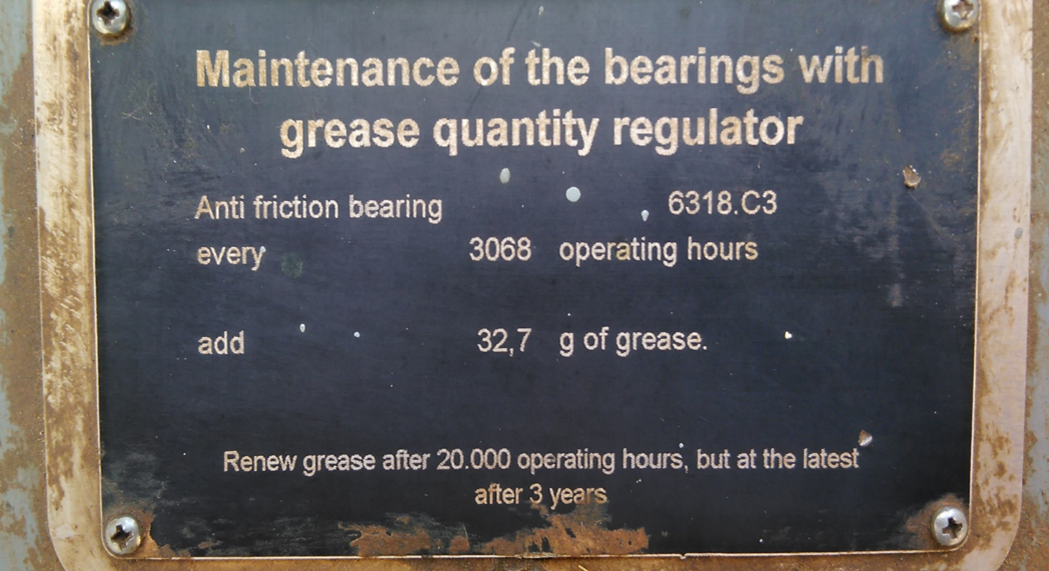
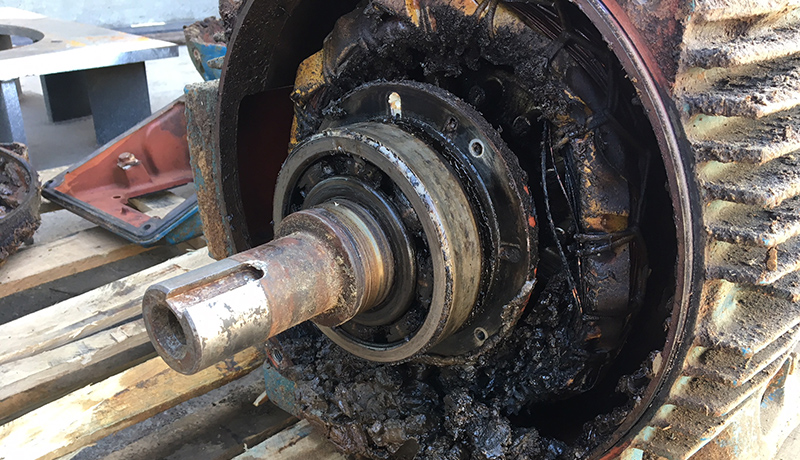
Figure 1: Motor Housing Plate with “Straight-Forward” Re-Grease Instructions
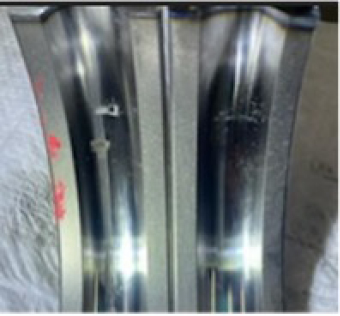
Figure 2: Electric Motor Ruined by Over-Greasing

Why is Lubrication so Important?

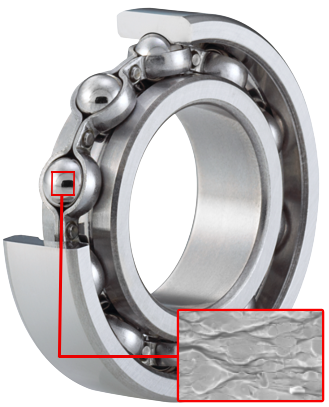
Lubrication in rolling element bearings forms a thin protective film that prevents metal-to-metal contact. Even the smoothest bearing surfaces have microscopic asperities. Without proper separation, these asperities make contact, causing impacts, wear particles, and accelerated degradation.

Modern rolling element bearings undergo precision grinding and superfinishing processes during manufacturing to achieve surface roughness values (Ra) as low as 0.01–0.1 µm. To ensure effective separation, the lubricant film must be thicker than the combined height of these asperities, but there is a delicate balance.

Lubricants do more than just reduce friction, they seal out contaminants, protect against rust, and help manage heat in high-speed applications. For stop-start applications, grease absorbs shocks, reducing stress on components.

Ultimately, it’s choosing the right grease with the proper additives, delivered in the correct quantity that ensures optimal performance and extended equipment life.

Ultrasound’s Role in Lubrication Management

Lubrication keeps machines running smoother for longer, but studies show that 80% of premature bearing failures are lubrication-related, with over- and under lubrication being the leading contributors. Applying the right amount is just as important as selecting the right lubricant for the job.

Over-greasing a bearing creates excess pressure, increasing friction and heat, while under-greasing leads to metal-on-metal contact, causing higher friction and impacting.

Ultrasound brings precision to this misunderstood maintenance task by listening  to the friction inside bearings before, during, and after they’re greased.

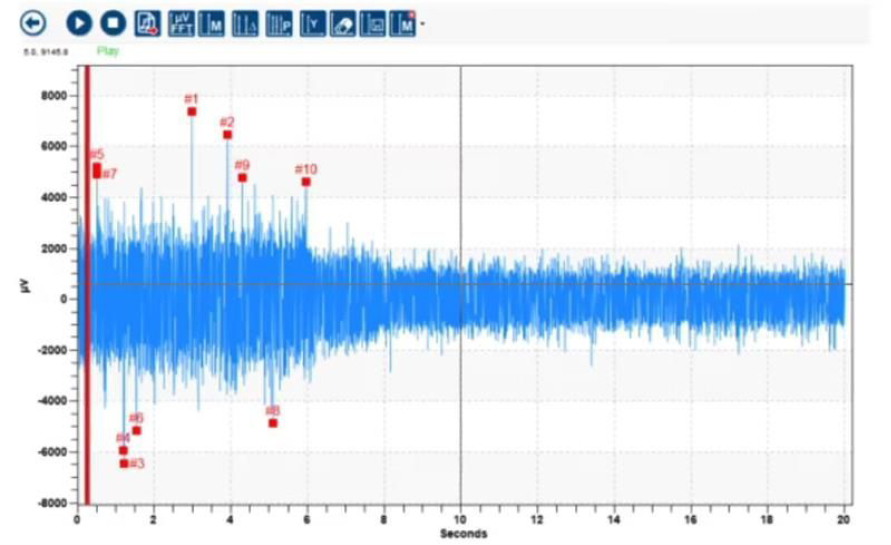
In Figure 5, an ultrasound time waveform captures a lubrication injection in real time. The data shows friction dropping from several thousand µV to below 2000 µV as the lubricant reaches the high-speed bearing, immediately dampening friction and reducing impacting.

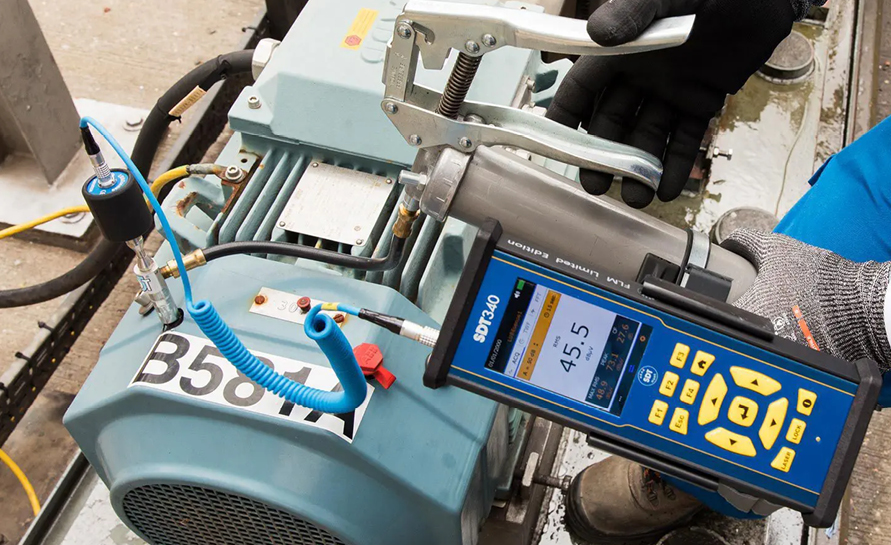
Figure 4: SDT340 Ultrasound Data Collector
Figure 5: Ultrasound Time Waveform of a Lubrication Injection

LUBExpert™ Case Study: Taking Data Before, During, and After Lubrication Tasks

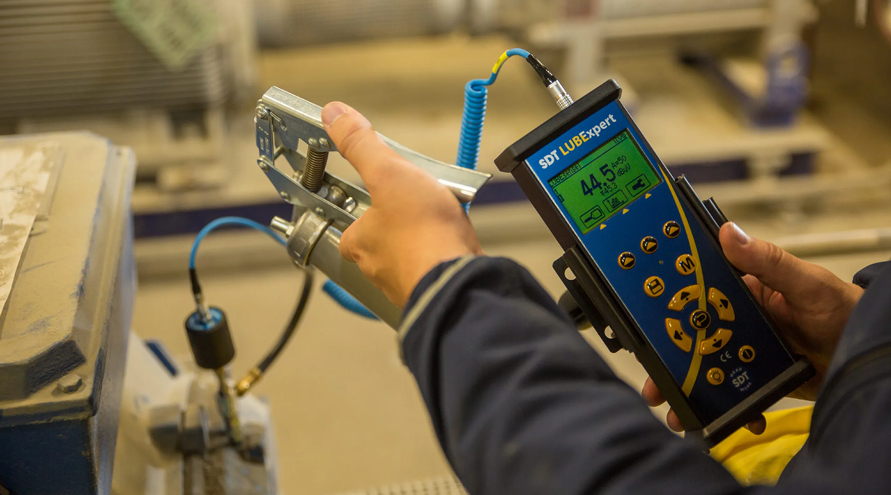
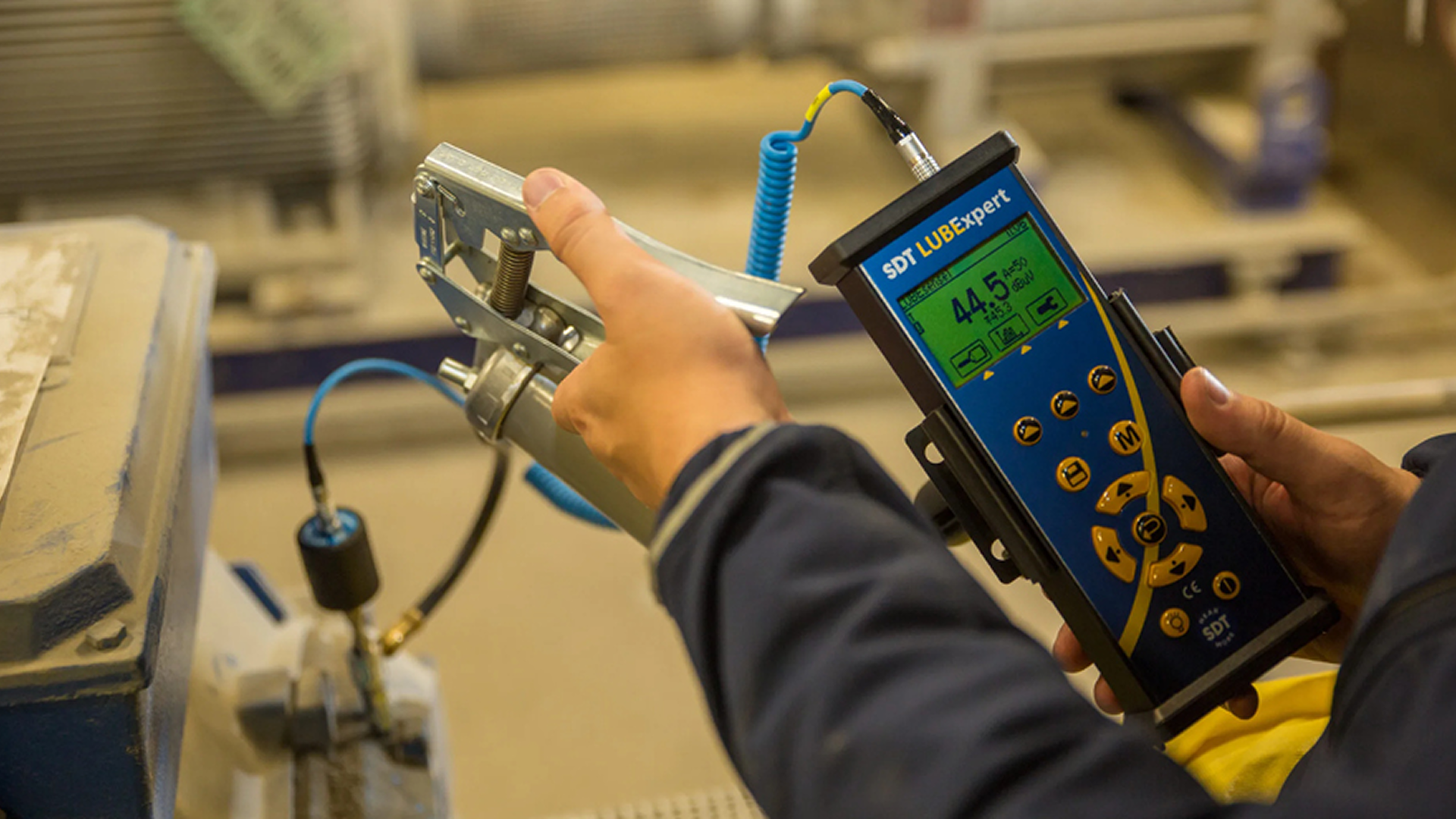
Figure 6: LUBExpert Ultrasound Data Collector & Lubrication Monitoring System

The LUBExpert from SDT Ultrasound Solutions is a precision lubrication system with advanced condition monitoring capabilities.

Recording ultrasound condition monitoring data during lubrication tasks provides maintenance and reliability teams with valuable information about the health of their factory, and as previously mentioned, with precision in mind, measurements must be taken before, during, and after lubrication tasks.

  1. The initial measurement is to determine if the bearing requires lubrication.
  2. The injection measurement confirms that the grease had a measurable effect when applied.
  3. The final measurement is taken a few hours to days after the injection to verify that the results last.

When lubrication tasks include these three condition monitoring checks, it not only brings Reliability and Lubrication teams closer together, but also adds these other measurable benefits:

  • Identifying bearing defects in their earliest possible detectable stage.
  • Optimizing re-lubrication schedules by analyzing real-time & historic data.
  • Preventing over & under-lubrication by guiding lubrication technicians to inject precisely the amount of lubrication needed.
  • Data integration & contributing to comprehensive maintenance records.

By consistently applying these measurements, teams can make informed, data-driven decisions that enhance their lubrication practices and asset reliability. The following case studies demonstrate how this approach translates into real-world success.

Lubricating Roll Mill

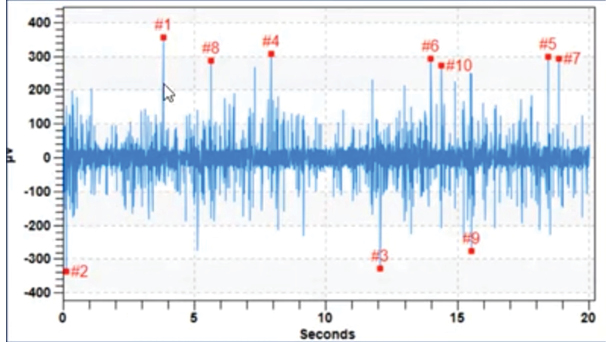
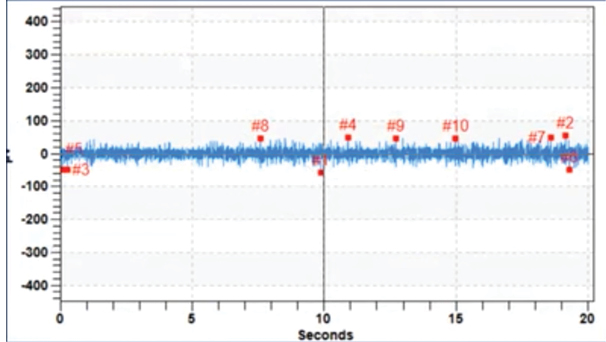
In this case, ultrasound time waveforms were captured before and after a lubrication injection.

Before lubrication: The initial time waveform showed high friction levels, indicating the bearing required grease. The LUBExpert system recommended lubrication based on historical trends for this asset.

Figure 7: Time Waveform Captured Prior to Grease Injection on Roll Mill

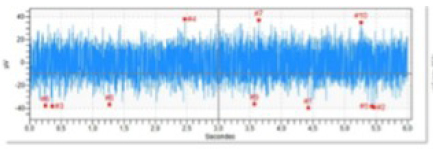
After lubrication: Once LUBExpert indicated the optimal amount of grease had been applied, post-lubrication measurements showed a significant reduction in friction, confirming the immediate impact of lubrication. Notably, the Y-scale remains consistent across both time waveforms, clearly illustrating the drop in friction—most notably, a substantial decrease in impacting.

Figure 8: Time Waveform Captured After Grease Injection on Roll Mill

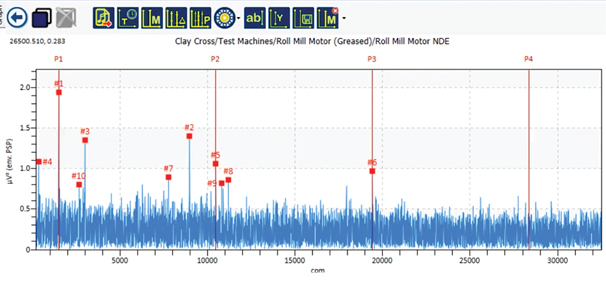
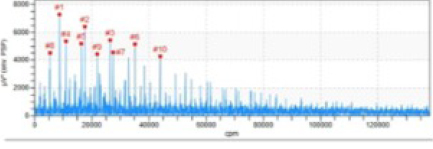
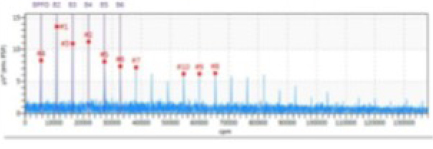
But, by leveraging LUBExpert’s high sampling rate and analyzing the recorded spectral data, we identified that while lubrication improved conditions, the underlying bearing defect remained, as shown in Figure 9.

Thus underscoring a critical point: Grease reduces friction and extends bearing life but it cannot eliminate bearing defects. Which is why lubrication tasks shouldn’t just be about replenishing grease—they should also be about assessing bearing health.

With LUBExpert, reliability teams can accomplish both, ensuring lubrication is applied precisely while also assessing asset health.

Figure 9: Ultrasound Spectrum taken After Lubrication on Roll Mill

Finding Severe Ball Pass Frequency Outer-Race Defect

In the next example, we see a similar case where ultrasound not only guided lubrication but also revealed a much more severe underlying bearing defect that needed to be replaced.

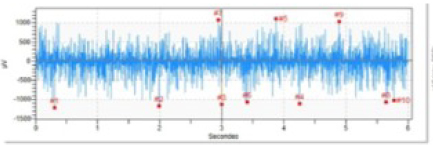
In Figure 10, the initial measurements recorded on an asset before the lubrication injection can be observed. Similar to the previous case, LUBExpert recommended greasing this bearing based on its historical data and real-time condition.

The initial data shows friction levels fluctuating around ±1000 µV in the time waveform, along with repeated impacting at running speed, as observed in the FFT.

Figure 10: Ultrasound Data Recorded Prior to Grease Injection

After the grease injection seen in Figure 11, the time waveform reveals a significant friction reduction, dropping from ±1000 µV to ±40 µV. However, the FFT still indicates persistent impacting at running speed.

Further analysis in UAS3 using the Bearing Toolbox confirmed the presence of a Ball Pass Frequency Outer Race (BPFO) defect, highlighting that while lubrication improved conditions, the underlying issue remained.

Figure 11: Ultrasound Data Recorded After Grease Injection

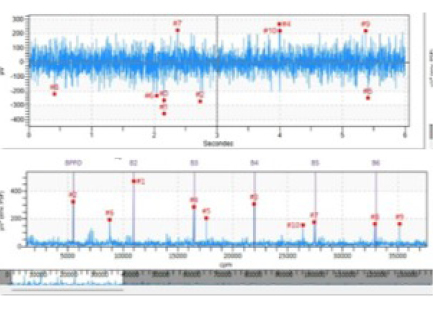
After the weekend, the technician returned to this bearing to find that friction levels had climbed back up to +/- 300 µV, this data can be seen in Figure 12. While grease temporarily suppressed friction, the defect remained. The bearing was near the end of its life and required replacement.

Ultrasound data collected before and after lubrication provided the maintenance and reliability team with the insights needed to make an informed decision on this asset.

Figure 12: Ultrasound Data Recorded Several Days After Grease Injection
Figure 13: BPFO Found During Lubrication Task

ON-GUARD Case Study: Maintaining Optimum Friction Levels Year Round

Maintaining optimal lubrication levels year-round is key to maximizing bearing lifespan, but the rate at which grease breaks down machine-to-machine can be unpredictable, and manually greasing bearings every few days to achieve this is incredibly labor-intensive. And while a well-planned lubrication program with ultrasound can improve timing, it’s still based on predictions—not exact needs.

To address this challenge, SDT Ultrasound Solutions developed ON-GUARD, an automated lubrication system that continuously monitors friction levels and applies grease only when necessary.

ON-GUARD ensures optimal surface separation by precisely injecting grease based on real-time asset condition, rather than a fixed schedule. Designed for critical rotating equipment, this system eliminates over- and under-lubrication, improving reliability and extending asset life.

Paint Shop Supply Fan

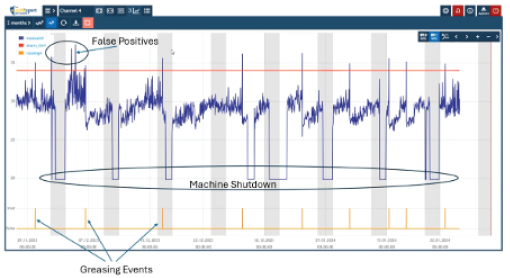
The next case study examines a supply fan in the paint shop of an automotive manufacturer. Since this section of the plant shuts down on weekends, the frequent stopping and starting of the fan causes temporary spikes in ultrasound levels. To prevent unnecessary grease injections, ON-GUARD can be programmed to ignore temporary energy level spikes (False Positives) so that it only injects grease based on true friction levels.

Figure 14 shows the two-month trend of a fan bearing monitored by ON-GUARD. During this period, the system automatically triggered nine greasing events when friction levels exceeded the designated alarm threshold.

The Red Line represents the alarm threshold set by the Condition Monitoring Team. The Yellow Line at the bottom indicates greasing events, while the Blue Trend Line displays the continuously monitored RMS data, reflecting the asset’s inherent friction levels.

ON-GUARD takes the guesswork out of lubrication by ensuring bearings receive the right amount of grease at the right time. By automating this process, it saves valuable time, reduces grease waste, and continuously monitors asset health.

Figure 14: ON-GUARD Two-Month Lubrication Snapshot

ON-GUARD Detects Suspected Bearing Failure

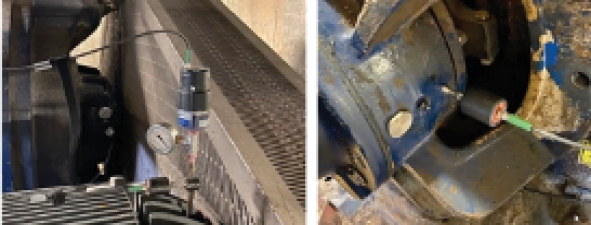
The following case looks at another ON-GUARD installation (Figure 15).

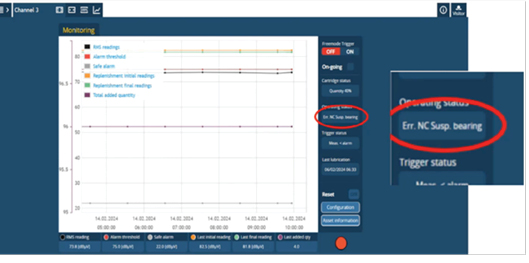
The data collected by ON-GUARD on the NDE indicated a suspected bearing failure as seen in Figure 16.

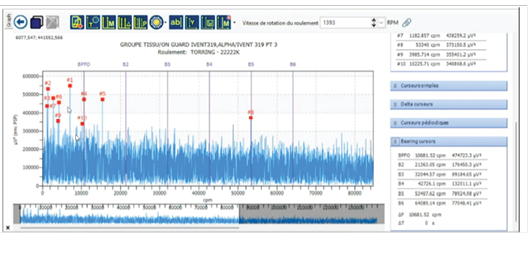
To verify the condition, additional dynamic measurements were taken using LUBExpert. As shown in Figure 17, this data confirmed the suspected bearing failure. Fault frequency cursors aligned with known BPFO defect frequencies, providing clear evidence of the defect.

Figure 15: ON-GUARD Installation DE & NDE
Figure 16: ON-GUARD Dashboard Indicating Suspected Bearing Failure
Figure 17: Dynamic Ultrasound Measurement Recorded with LUBExpert Indicating BPFO Fault Frequencies

The Future of Precision Lubrication

Lubrication-related failures account for the majority of premature bearing issues, yet outdated lubrication practices persist. Modern lubrication technologies, eliminate the guesswork by ensuring bearings receive the right amount of grease at the right time.

By integrating ultrasound condition monitoring, maintenance teams can detect lubrication needs in real time, prevent over- and under-lubrication, and identify early signs of bearing failure. Automated solutions further enhance reliability by maintaining optimal friction levels year-round, reducing labor costs, and extending equipment life.

Ultimately, precision lubrication protects critical assets, improves efficiency, and drives sustainable maintenance practices. Organizations that embrace these technologies will see fewer failures, lower costs, and greater confidence in their lubrication strategies.