Slow-rotating assets are notoriously difficult to diagnose with vibration analysis and other predictive technologies. The low energy output of slow rotating assets greatly increases the margin for error when detecting defects with vibration analysis.
It is not impossible to detect defects on slow-speed rotating assets with vibration analysis, but it does require highly skilled, experienced, and qualified vibration analysts.
Ultrasound condition monitoring differs by precisely measuring, trending, and analyzing friction and impacting levels – which are always present, regardless of rotational speed.
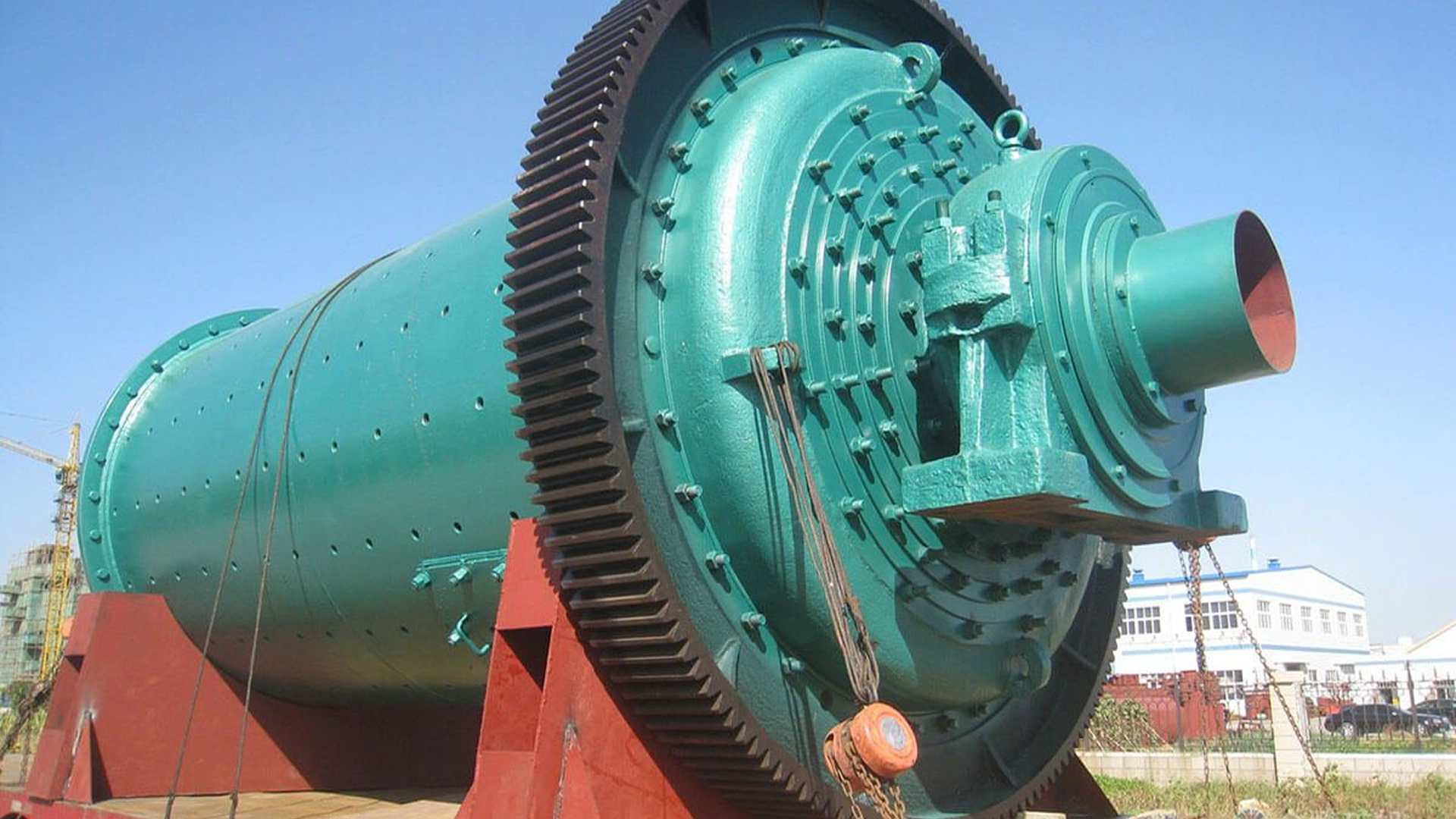
Take the following case for example; a slow-speed wastewater decanter at a Pulp & Paper Processing Plant.
SDT Ultrasound Solutions’ Partnered Ultrasound Team was brought to the facility under suspicion that either the pinion (2.95rpm) or bull gear (0.1rpm) of this asset was operating in a failed state.
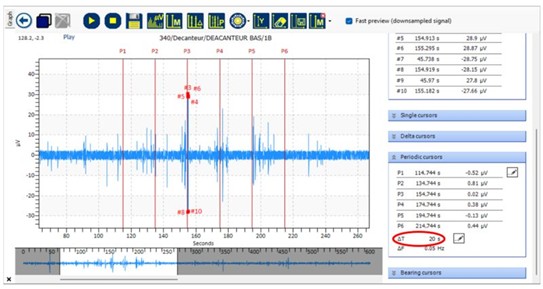
Thanks to the 10-minute acquisition time capability of the SDT340, reliability technicians were able to capture at least one full rotation of the asset. (SDT’s Recommendation for accurate repeatable data is at least 3 full rotations, but this was a unique circumstance).
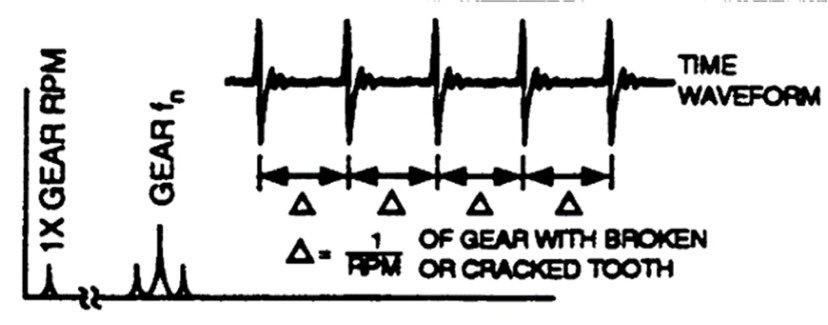
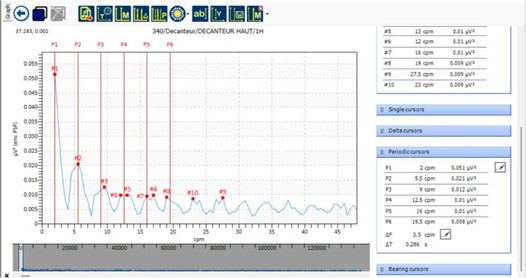
Based on the data in the Time Wave Form (Figure 1), and the FFT (Figure 3) below, we suspect there is a broken tooth on this slow-speed assets pinion.