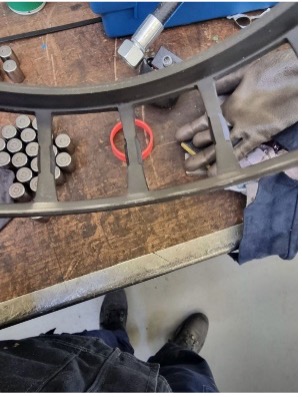
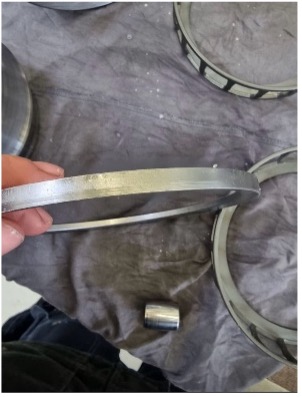
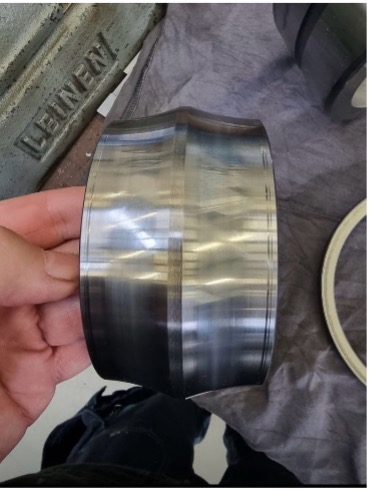
Roller cage bearings reduce friction by separating and evenly spacing rolling elements. The roller cage design improves efficiency and speed capability but is more susceptible to lubrication related failures. Insufficient or misapplied lubrication will lead to increased friction between the cage and the bearing, accelerating wear and shortening machine life.
The roller cage defect seen in this case study was discovered during weekly, route-based ultrasound data collection.
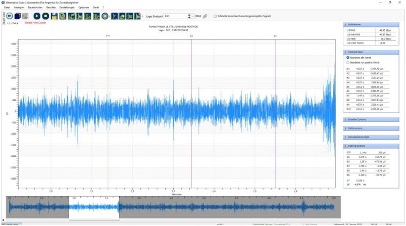
The time waveform seen in figure 1 indicates friction which is confirmed in the audio playback.
When the RMS (overall friction) increases over a historical baseline significantly, or demonstrates impacting like the example in Figure 1, it is a clear indication of bearing wear or the need for lubrication.