Airborne ultrasound monitoring gives maintenance and reliability teams the ability to detect mechanical issues with belt- and chain-driven systems before they become costly failures.
By capturing micro-sonic changes in friction and impacting, technicians can quickly identify misalignment, wear, lubrication issues, and more.
In this article, we explore why ultrasound is such an effective technology for detecting early-stage defects in belt- and chain-driven systems, and how these defects affect efficiency.
Belts transfer torque between rotating shafts using tension. They're ideal for medium and high speed applications, and are commonly found in pumps, compressors and conveyors.
Belts can tolerate minor misalignment and shock, but require precision installation, alignment, and tensioning for optimal performance and reliability.
Misaligned belts cause slippage, uneven wear, and energy loss. As we'll see, many belt drive problems manifest as friction and impacting making airborne ultrasound inspection ideal.
Chain-drives are great for timing sequences where slippage must be avoided, when torque demand is high, or in oily/greasy environments where belts would be susceptible to failure.
As a chain's pins, bushings, and rollers rotate around sprockets, lubrication is essential to reduce internal friction. When lubrication begins to fail, friction and impacting increase.
Common chain-drive failures include misalignment, elongation (caused by wear at the pin and bushing interface), fatigue, improper tensioning, improper lubrication and corrosion.
These failures cause distinct changes in friction and impacting, making airborne ultrasound ideal for trending and analysis.
Minor defects like friction from poor lubrication or misalignment drag can sap energy and accelerate wear — impacting efficiency by up to 10% when left unchecked.
These failures are inevitable but routine ultrasound inspections are great for catching minor changes in performance caused by tension issues, lubrication failures and misalignment.
By measuring, trending, and analyzing high-frequency signals that occur between 38-42 kHz, ultrasound data collectors find friction & impacting related defects as they occur.
When problems are caught early, the window for corrective action is lengthened, asset life is extended, and energy performance can be improved.
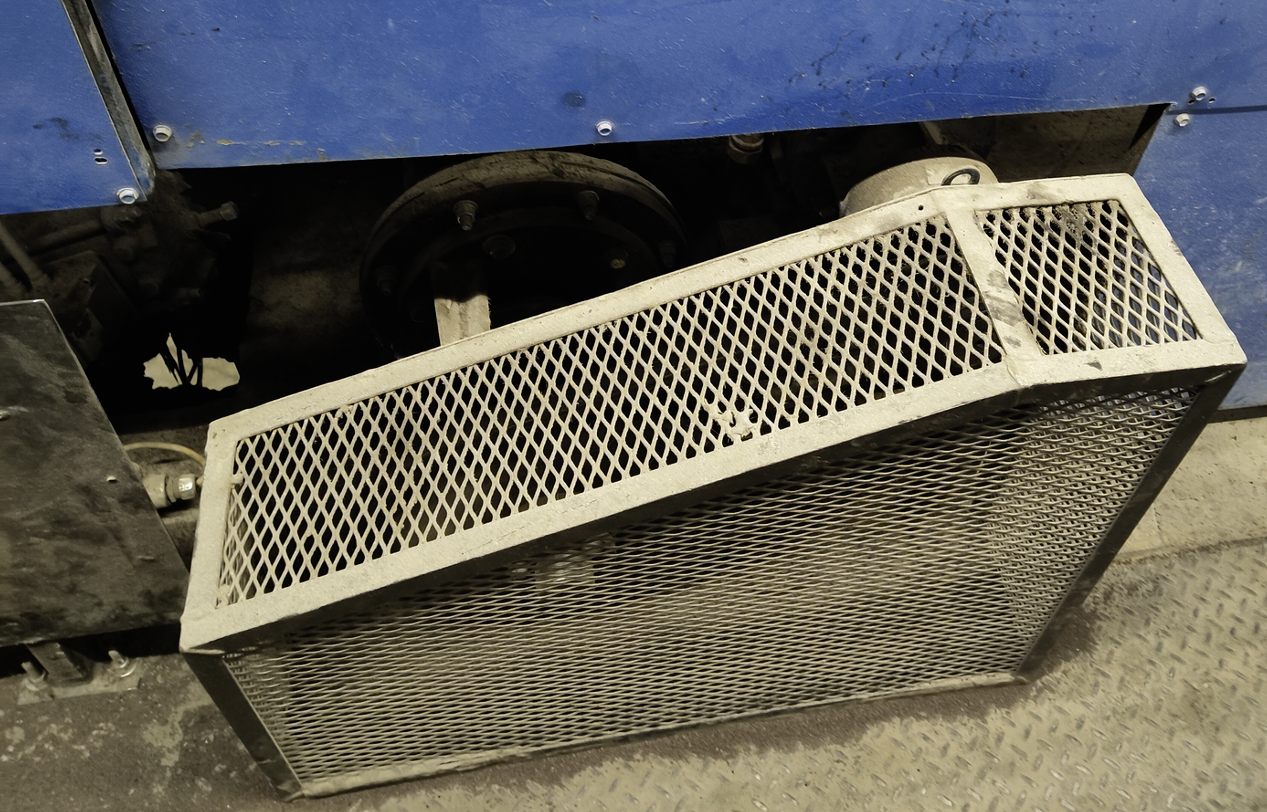
Four identical chain drives supporting a continuous material handling process were inspected using the SDT340 and flexible wand sensor through the guarding.
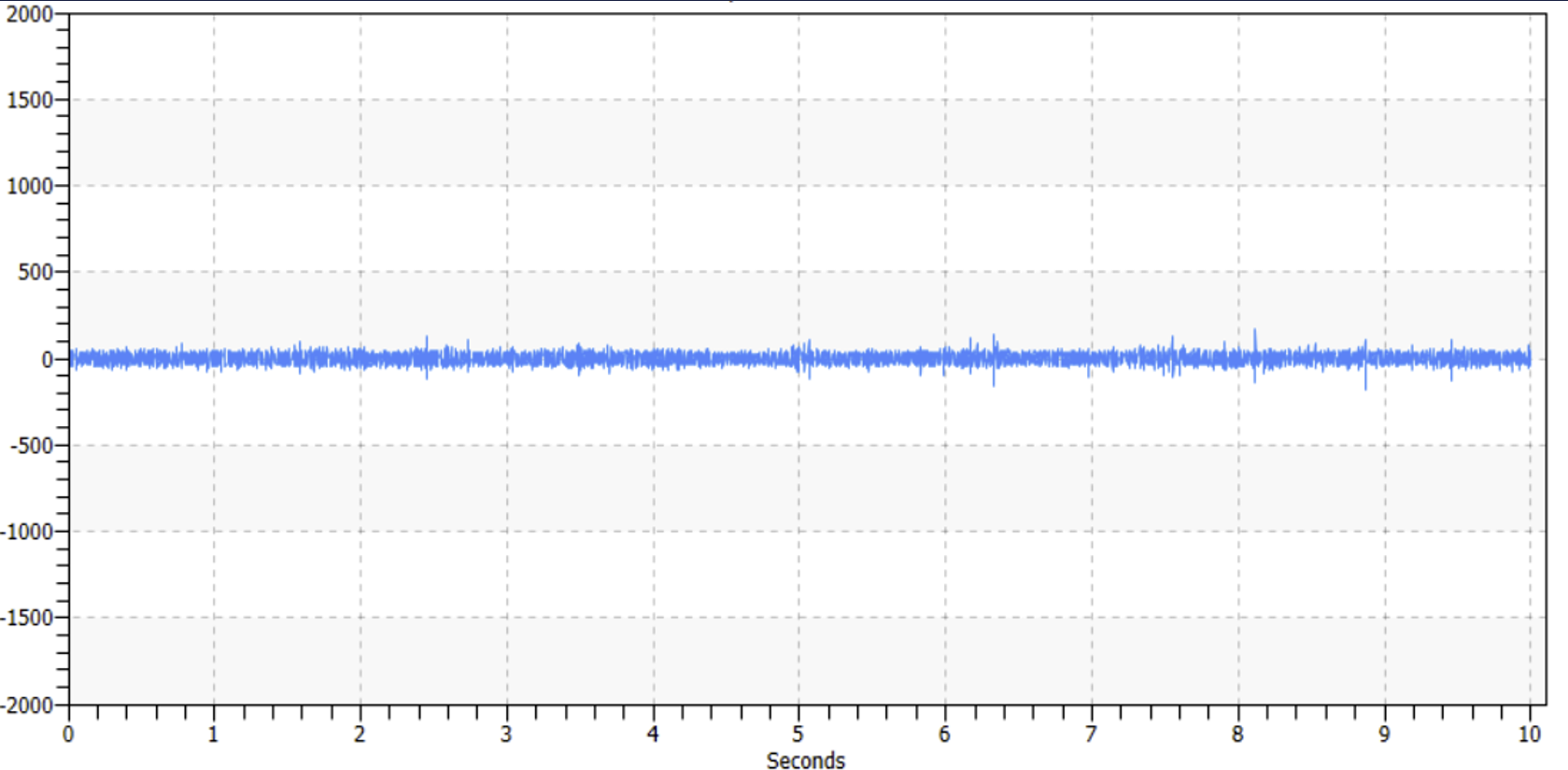
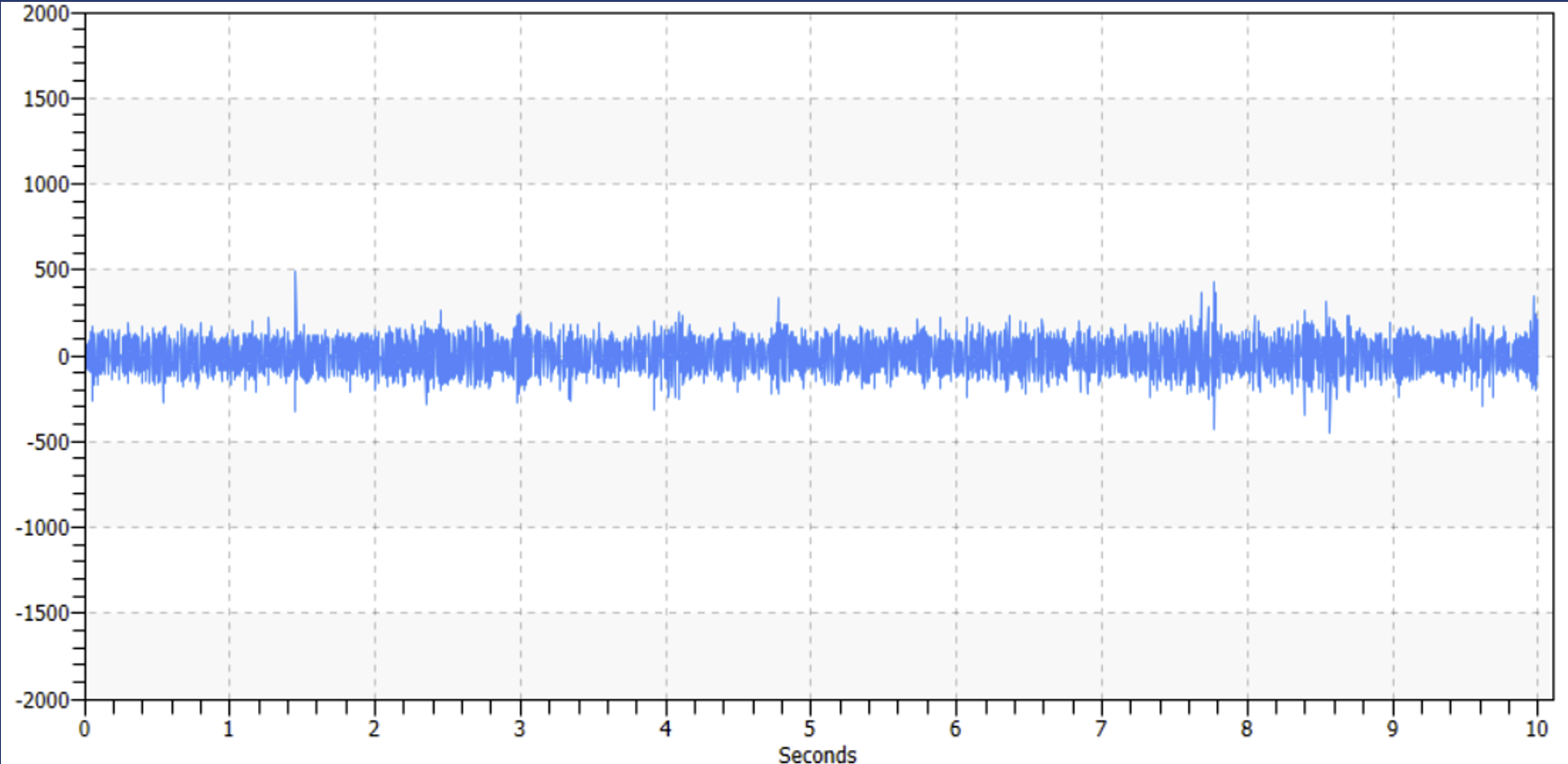
The ultrasound time waveform captured on this chain-drive exhibited all the signs of a well-lubricated, properly tensioned, and aligned chain drive. No corrective action necessary.
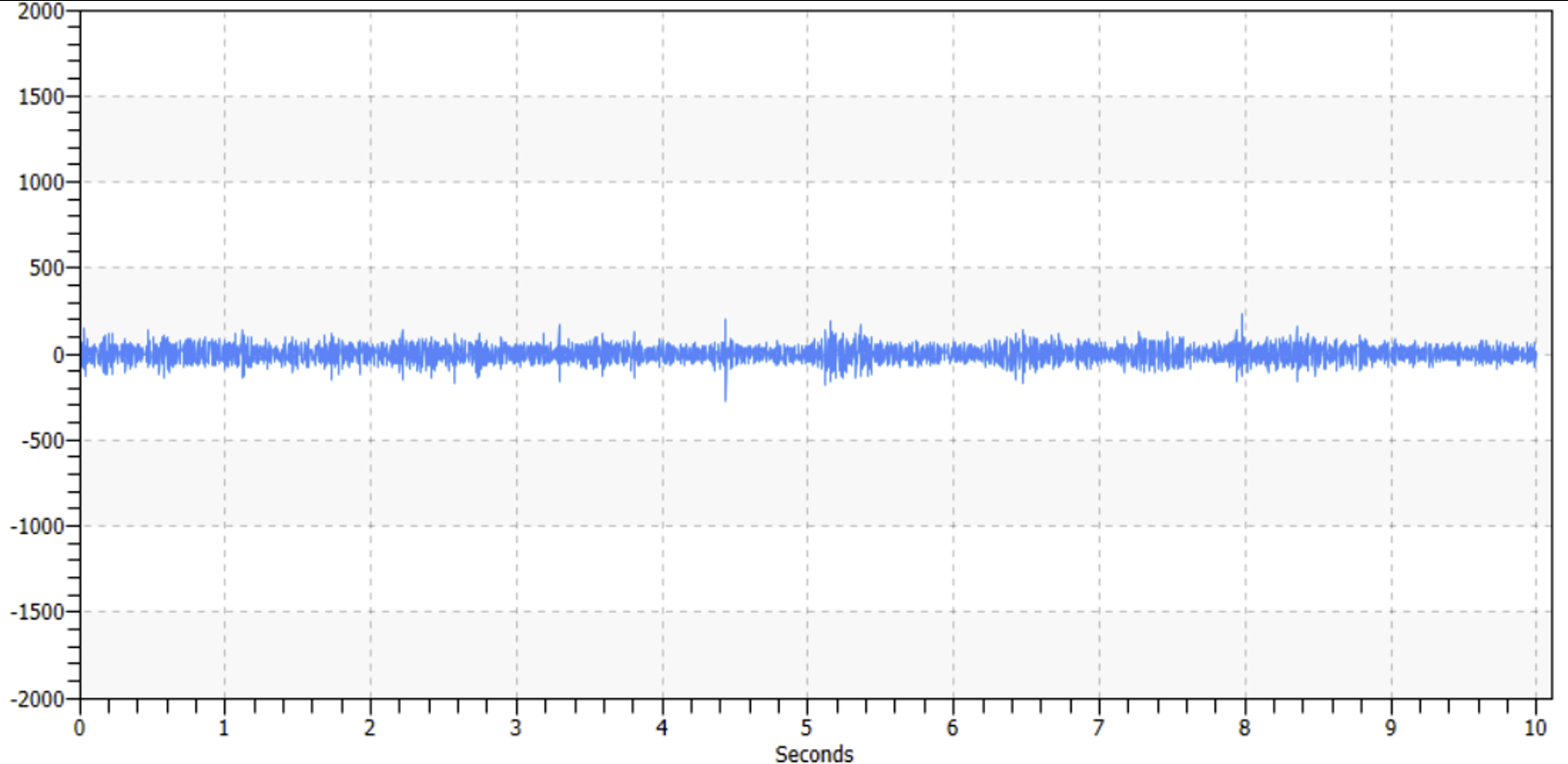
While slight increases in RMS and a more noticeable "rasp" in the heterodyned audio output are observed, this chain can still be considered healthy based on this data.
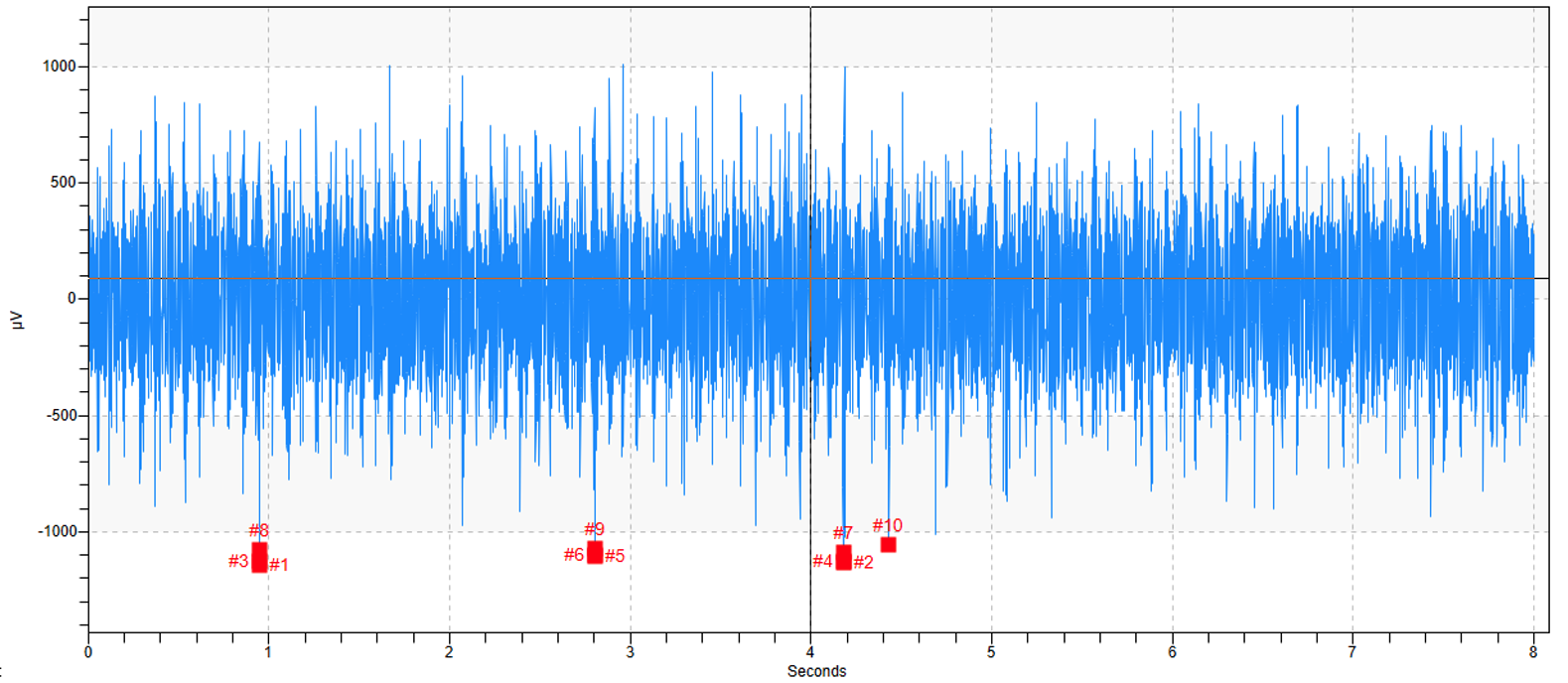
A slight increase in RMS with more noticeable "peaks" suggests this chain has developed a minor lubrication fault that can be corrected with replenishment.
Nothing from this data suggests the chain-drive is at risk of failure, and most likely replenishing the chains lubricant will reduce friction levels and improve asset condition.
However, a multi-disciplinary reliability team might also order oil analysis samples to gauge whether the lubricant has degraded or become contaminated with metallic wear particles.
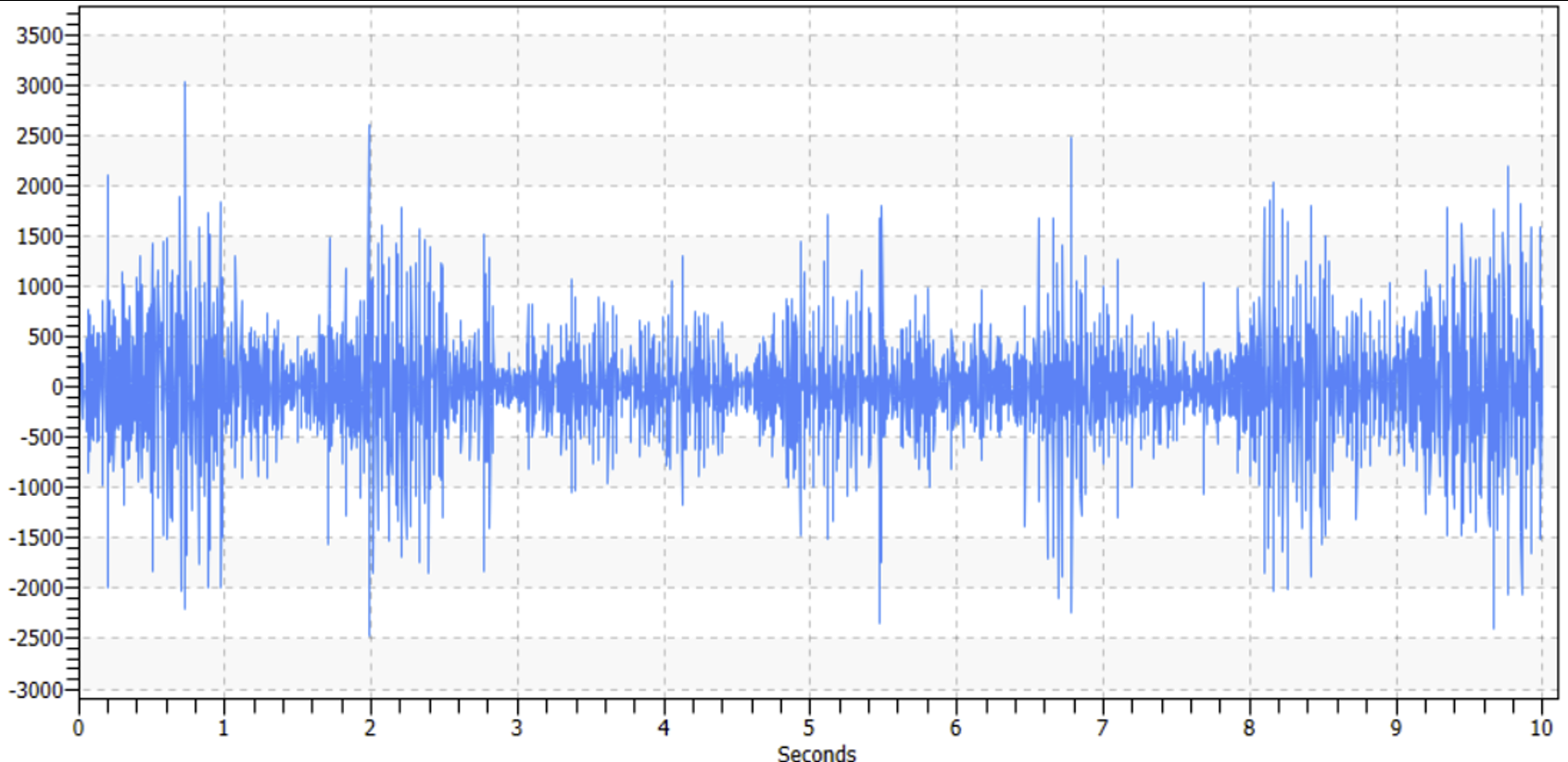
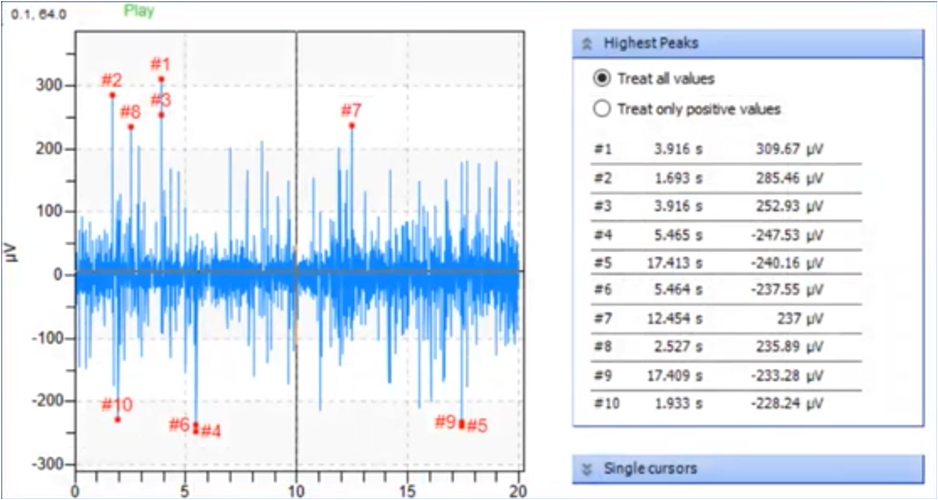
In comparison to previous chain-drive measurements, this one appears to be in severe condition with waveform amplitudes spiking above ±3000 µV.
With little uniformity, the heterodyned audio produced loud crackling noises, characteristic of advanced mechanical degradation brought on by wear, misalignment, and tooth damage.
As part of a condition monitoring inspection, measurements were taken on a low-speed chain-drive sprocket using an SDT340 and flexible wand sensor.
This chain drive system drives a bulk material reclaimer, where chains are preferred for their tensile strength, resistance to slippage, and rugged durability in demanding conditions.
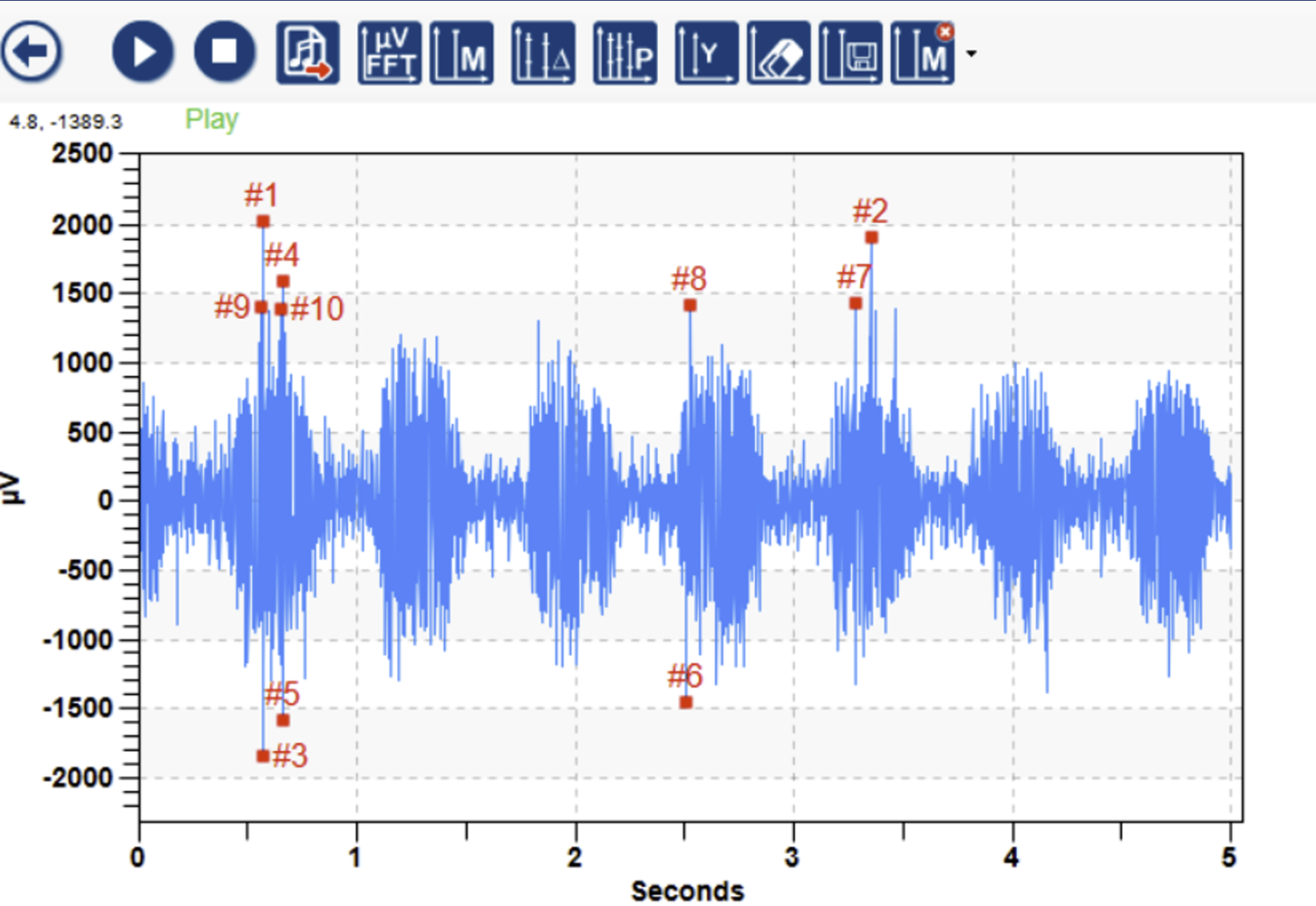
The technician noticed periodic ultrasound spikes that occurred roughly every sprocket revolution. This repeat pattern pointed to a mechanical issue, likely sprocket misalignment.
The chain was removed for inspection. While there was no measurable elongation, one edge showed signs of surface polishing, consistent with lateral rubbing.
After realigning a new sprocket, a follow-up ultrasound reading confirmed that the signal returned to baseline levels with minimal amplitude and no recurring spikes.
A motor and blower assembly connected by six V-Belts were inspected. While most maintained proper tension, one had loosened and had ultrasound signatures to confirm it.
When belts lose tension they no longer can maintain uniform contact with the pulley grooves, reducing frictional engagement.
Under a dynamic load, this slack causes oscillation leading to flapping between pulleys, commonly referred to as "belt slap."
As tension is lost, so is the intensity of the slapping phenomena. What happens is the belt eventually loses close to all frictional engagement, making it quieter but more dangerous.
Left uncorrected, it risks catastrophic failure: belts snap under fluctuating tension, pulleys wear unevenly, and shock loads can transfer directly to motor or blower bearings.
In this case, angular misalignment led to tension loss—but early detection with ultrasound allowed maintenance to correct the defect and prevent unplanned downtime.
Ultrasound enables Operator Driven Reliability (ODR) strategies by empowering operators to assist maintenance by using ultrasound to monitor the equipment they oversee.
Ultrasound is ideal for ODR because it’s easy to use, delivers instant audible feedback, and helps operators detect subtle faults early.
While performing an inspection, an operator noticed a distinct squeaking coming from a belt sheave on a circulating fan system, despite no prior maintenance concern.
The sheave appeared to be in far worse conditions than similar sheaves at the facility, so corrective action was taken immediately to avoid a more catastrophic failure.
The corrective action, though minor, reduced RMS and peak values. Corrective action included cleaning the pulley & greasing the bearing to spec, with no re-tensioning required.
Acoustic imaging cameras use digital MEMS sensors to visualize ultrasound emitted by friction and impacting.
While acoustic imaging cameras are not suited for in-depth failure mode identification or analysis, they are great for quickly identifying which components warrant further inspection.
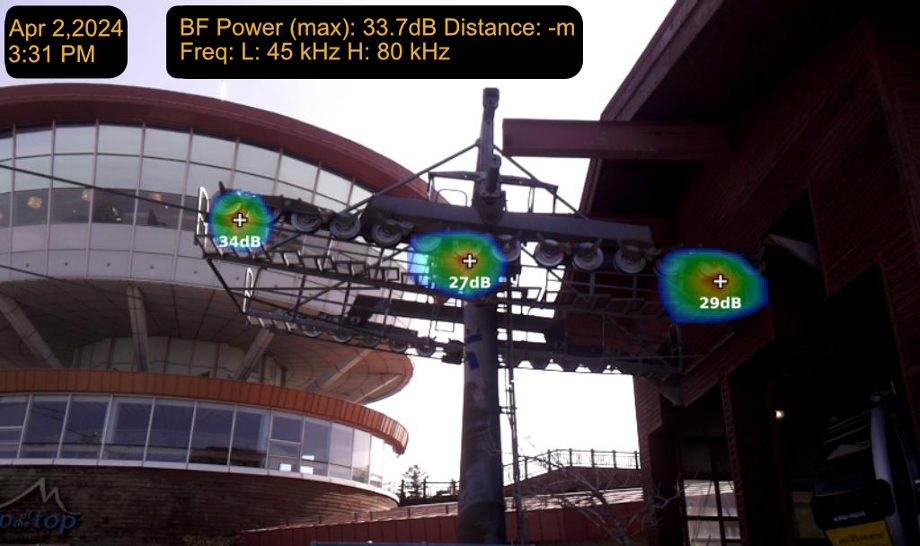
During a reliability survey of a cable-driven ski lift system, technicians used the SonaVu+ acoustic imaging camera to scan upper and lower station sheaves and haul rope.
The first acoustic image revealed three distinct ultrasonic hotspots. They may have been caused by various conditions such as poor lubrication, misalignment, or bearing defects.
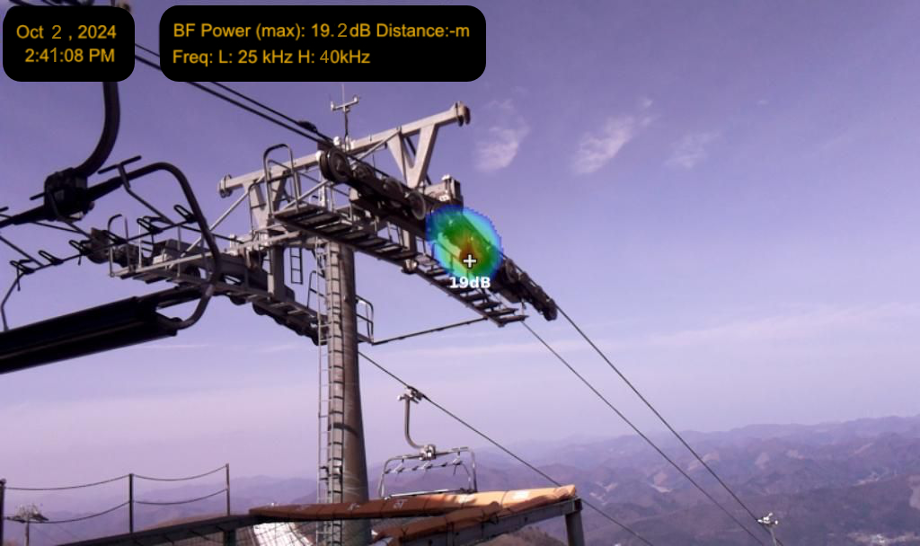
A second acoustic image later in the inspection revealed only a single concentrated hotspot on another sheave.
Unlike the earlier multi-source scenario, this isolated ultrasonic signature strongly suggested a localized mechanical issue.
By capturing the changes in high-frequency friction and impacting that occurs over the lifespan of drive systems, ultrasound can identify mechanical defects and anomalies early.
With ultrasound, maintenance and reliability teams are empowered to find squeaking sheaves, misaligned sprockets, slapping belts, and more... EARLY!
Mitigate unplanned downtime, extend asset life, and improve overall equipment efficiency with ultrasound condition monitoring. Contact us to #HearMore.
hearmore@sdtus.com