In the era of Industry 4.0, predictive and proactive maintenance strategies are crucial for ensuring asset reliability and operational efficiency. One of the most advanced tools revolutionizing maintenance analytics is ultrasound technology. Traditionally used in medical diagnostics and non-destructive testing, ultrasound has emerged as a powerful asset in industrial maintenance, enabling early fault detection, precise monitoring, and data-driven decision-making.
This article explores the application of ultrasound technology in maintenance analytics, the latest trends driving its adoption, and its future trajectory in the industrial landscape.
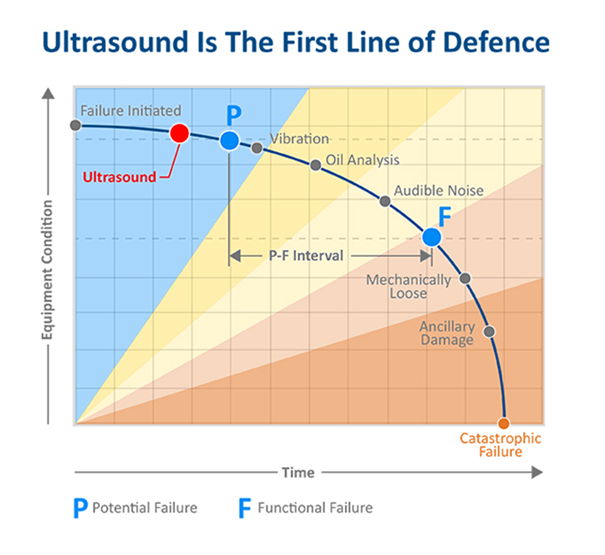
Ultrasound technology in maintenance is based on detecting high-frequency sound waves beyond the range of human hearing. These signals provide valuable insights into the health of mechanical and electrical components. The PF curve is a good example of how Ultrasound demonstrates it’s potential in Predictive Maintenance
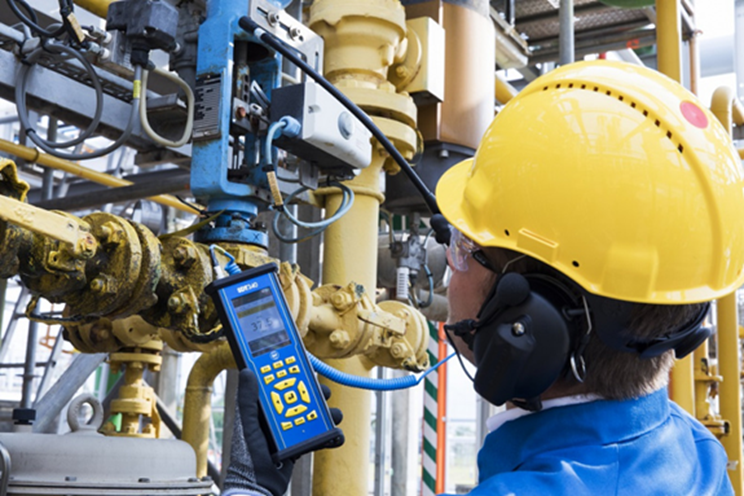
Ultrasound sensors can detect early-stage bearing failures before they escalate into costly breakdowns. By measuring friction levels and detecting anomalies in lubrication, ultrasound helps maintenance teams optimize lubrication schedules and prevent equipment failure.
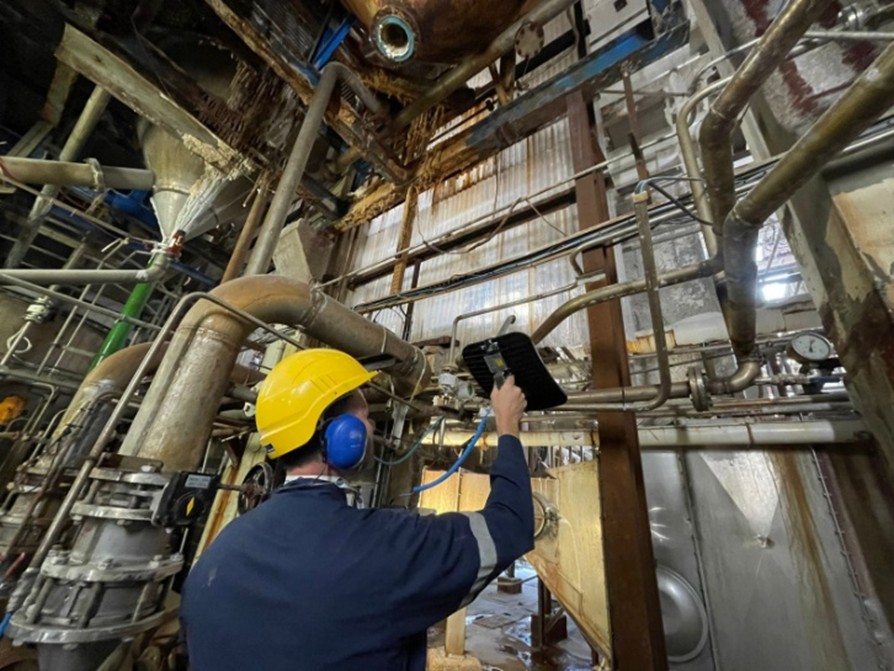
Compressed air leaks are a major source of energy loss in industries. Ultrasound detectors can pinpoint leaks in compressed air, gas, steam, and vacuum systems with high accuracy, reducing energy costs and improving system efficiency
Composite manufacturing requires a perfect vacuum integrity before products can be cured.
The methods available to check for leaks are tedious, time-consuming and heavily user-dependent.
Ultrasound imaging is a novel technology that provides a real-time visualization of leaks from a distance. With an ultrasound camera, anyone can pinpoint vacuum leaks 10x faster than before, which improves the process efficiency.
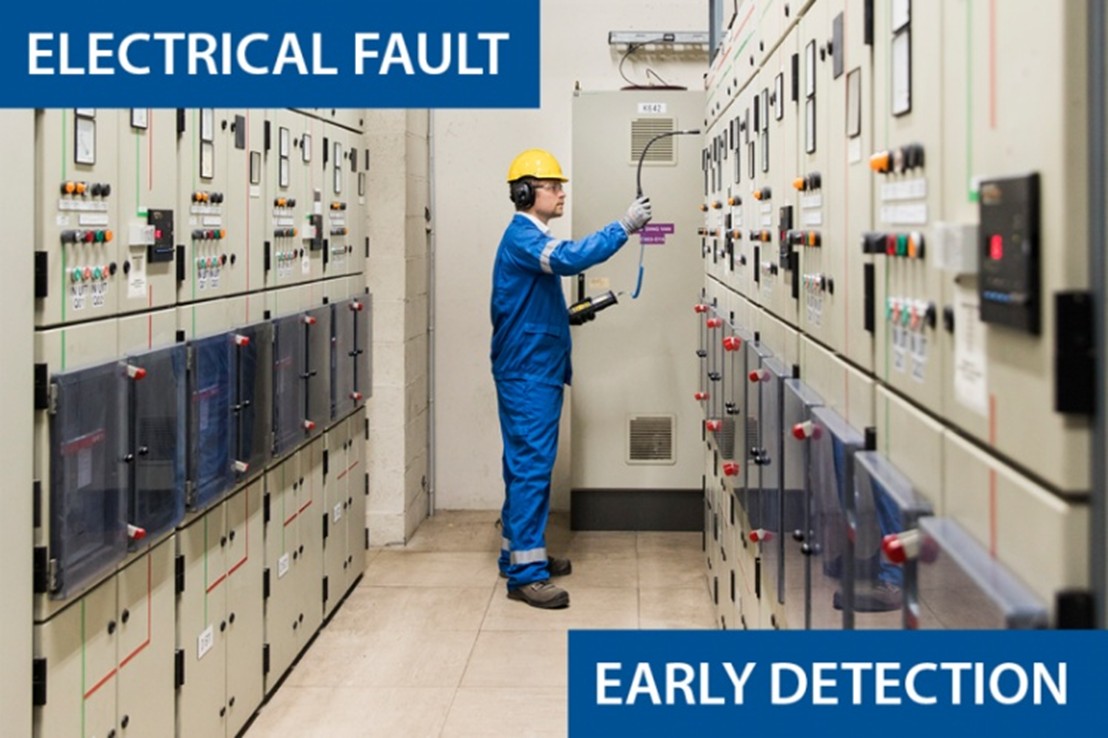
Ultrasound plays a vital role in detecting electrical faults such as corona discharge, tracking, and arcing in high-voltage systems. This helps prevent insulation breakdowns, electrical failures, and potential fire hazards.
Malfunctioning steam traps and valves can lead to significant energy losses. Ultrasound sensors can determine if a valve is leaking, blocked, or functioning inefficiently, allowing timely maintenance interventions.
Ultrasound-guided lubrication ensures that bearings receive the right amount of lubrication, preventing both over- and under-lubrication. This approach extends equipment lifespan and minimizes unplanned downtime.
The rapid evolution of ultrasound technology has introduced several cutting-edge trends that are transforming its application in industrial maintenance:
Modern ultrasound tools now incorporate artificial intelligence (AI) and machine learning (ML) to analyze sound patterns and predict potential failures with greater accuracy. AI-driven diagnostics reduce the reliance on human expertise and provide real-time recommendations for maintenance actions.
The integration of ultrasound sensors with Internet of Things (IoT) platforms allows for remote monitoring of critical assets. Wireless ultrasound sensors continuously stream data to cloud-based analytics platforms, enabling predictive maintenance strategies and reducing the need for manual inspections.
Augmented reality applications are being integrated with ultrasound technology to provide real-time visualization of maintenance insights. AR headsets can overlay ultrasound data onto equipment, helping technicians locate faults and take corrective actions more efficiently.
Advancements in cloud computing allow organizations to store, analyze, and compare ultrasound data over time. Cloud-based platforms facilitate historical trend analysis, enabling better decision-making and asset performance optimization.
Modern ultrasound sensors are becoming smaller, more sensitive, and more accurate, allowing them to detect even the slightest anomalies in mechanical and electrical systems. This enhances their effectiveness in early fault detection.
As industries continue to embrace digital transformation, the future of ultrasound technology in maintenance is poised for significant advancements. Key future developments include:
With the convergence of AI, IoT, and ultrasound, future maintenance systems will be self-learning and fully autonomous, requiring minimal human intervention. These systems will continuously monitor equipment, detect early warning signs, and trigger automated maintenance actions.
Ultrasound data will be increasingly integrated with digital twins—virtual replicas of physical assets. This will allow organizations to simulate and predict failures with high accuracy, leading to data-driven maintenance strategies.
Future ultrasound systems will incorporate edge computing, enabling real-time data processing at the source. This will reduce latency, enhance security, and improve response times, making predictive maintenance even more effective.
AI models will continue to evolve, providing more precise fault classification based on ultrasound signals. Maintenance teams will receive detailed diagnostics and prescriptive recommendations, further streamlining maintenance workflows.
While ultrasound is widely used in manufacturing, power generation, and oil & gas, future applications will expand into smart buildings, transportation, and healthcare. Autonomous ultrasound monitoring could play a key role in maintaining infrastructure assets like bridges, pipelines, and rail networks.
Ultrasound technology has proven to be a game-changer in maintenance analytics, enabling industries to shift from reactive to predictive maintenance strategies. With advancements in AI, IoT, edge computing, and digital twins, the technology is becoming more intelligent, efficient, and widely adopted.
As industries continue to pursue zero unplanned downtime, energy efficiency, and cost reduction, ultrasound technology will remain at the forefront of maintenance innovation. Organizations that invest in these emerging ultrasound-driven analytics tools will gain a competitive edge by ensuring asset reliability, operational efficiency, and sustainability in the future.