Learn how measuring, trending, and analyzing the friction, impacting, and turbulence inherent within an asset can transform reliability programs. With ultrasound, reliability teams gain the ability to detect subtle changes in asset condition, long before they become visible through other monitoring technologies. By capturing and interpreting these high-frequency energy signals, teams can move beyond reactive maintenance and toward a more proactive, data-driven approach to asset health. Humans have always relied on sound as an early warning system. In industrial environments, ultrasound extends that capability far beyond human hearing. It filters out the constant roar of production equipment and isolates the frequencies that actually carry meaning.
Wherever surfaces slide, rotate, or lose proper separation, friction is generated. Ultrasound is especially valuable for monitoring: • Bearings • Gears • Motors • Conveyors • Lubrication programs Rising friction levels often indicate: • Inadequate lubrication • Surface degradation • Early-stage wear Detecting these changes early allows teams to intervene before damage escalates.
Ultrasonic impacts are short-duration, high-frequency bursts of energy caused by surfaces striking as defects begin to form. This makes ultrasound ideal for detecting: • Bearing faults • Gear damage • Mechanical looseness • Valve issue • Steam trap discharge irregularities Impacting signals often appear before traditional vibration thresholds are exceeded, providing a critical window for early action.
Turbulence occurs when gases or liquids interact with surfaces, restrictions, or changes in geometry. Ultrasound excels at detecting: • Compressed air leaks • Gas leaks • Vacuum leaks • Flow irregularities in valves and steam traps By identifying turbulence-related anomalies, teams can quickly pinpoint inefficiencies and energy loss across their systems.
The SDT340 and UAS3 software work together to create a seamless, connected workflow. The result is inspections that are consistent, repeatable, and easy to execute across teams.
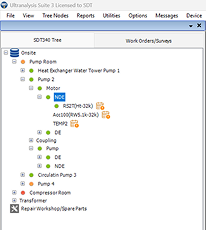
Inspection routes and measurement points are organized in a logical structure that mirrors your facility. This ensures clarity and consistency across all assets
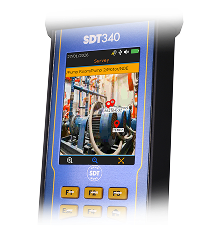
Visual references guide technicians directly to the correct inspection points, reducing guesswork and improving accuracy.
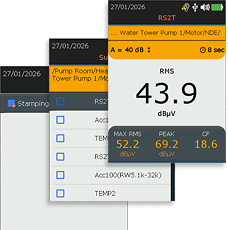
Routes are created and managed in UAS3, then executed directly on the SDT340, keeping data aligned from planning through execution.
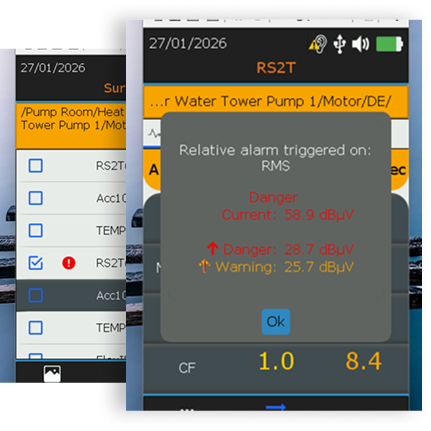
Safe, relative, and absolute alarm thresholds automatically flag abnormal conditions, helping teams prioritize action and maintain control over asset health.