
Compressed Air Leak Survey Services
Ultrasound Inspection Services
Large industrial operations lose 30-40% of their compressed air supply to system leaks. A single compressed air leak survey often pays for itself once the leaks are repaired.
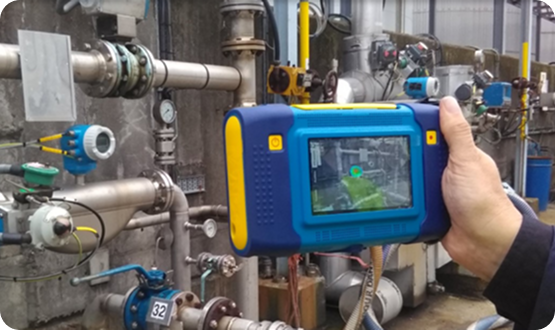
Our trained technicians use precision ultrasonic leak detection tools to scan your facility while systems are operating. We locate, tag, and quantify compressed air leaks and deliver a prioritized repair report with estimated energy savings and payback.
What Compressed Air Leaks are Costing You
Compressed air leaks develop over time, and without routine inspections and surveys, a significant number of leaks have already occurred. Regular compressed air leak surveys help keep your compressed air system operating cost effectively and energy efficiently.
Reduce unnecessary strain on your air compressor and supporting pneumatic system and equipment with regular compressed air leak surveys.
30-40%
of Compressed Air Supply is Lost to Leaks in an Unmaintained System
25-30%
of Energy Lost to Leaks is Recovered after 1 Leak Survey
5-15%
Realized Plant-wide Energy Expenditure Reduction after 1 Leak Survey
$5k-$100k +
Massive Savings Potential – Varies based on Plant Size and Last Leak Survey
A Faster Way to Identify and Quantify Air Leaks
Compressed air leak inspection services provide a practical way to uncover hidden losses without adding more work to your maintenance team.
Using ultrasonic leak detection equipment, our technicians can scan piping systems, fittings, hoses, and air drops while the system remains in operation. Each leak is tagged, documented, and quantified so maintenance teams can focus repairs where they will have the greatest impact.
Instead of spending weeks searching for leaks, facilities receive a clear report showing leak locations, estimated air loss, and potential energy savings.
What are Compressed Air Leaks Costing You?
Compressed air is very common in manufacturing. But it is also very expensive, even small leaks can quietly waste large amounts of energy while forcing compressors to work harder to maintain system pressure. Before we arrive, it’s common for our customers to be losing 20–30% of total compressed air demand to leaks, turning a reliable utility into a hidden operating expense.
Left unchecked, compressed air leaks:

increase cost of electricity

reduce available system pressure

force compressors to run longer

accelerate wear on equipment
Why Compressed Air Leak Surveys Often Get Delayed
Maintenance teams know compressed air leaks waste energy, but finding and fixing them isn’t often prioritized for many reasons.
Leak detection can be time consuming, especially without the right tools, dedicated resources, or implemented processes. Production demands, staffing limitations, and competing maintenance tasks makes consistently inspecting compressed air systems in-house a challenge.
For many teams, the challenge is not knowing leaks exist, it is having the time and technology to locate and document them effectively.


Air Leak Detection Leads to Fast Return on Investment
SDT’s Industrial Air Leak Detection Services are fast, practical, and measurable. Surveys routinely uncover leaks responsible for 30–40% of compressed air losses in a facility and after repairs are made, some customers have noticed up to a 15% drop in plant-wide energy consumption.
In addition, their compressors run less, system pressure stability improves, and emissions are reduced. Often times, the savings identified during a single compressed air leak survey pays for the service in the first few hours.
SDT Ultrasound Solutions Approach to Condition Monitoring Services
No two plants operate the same way. Our service team works with your maintenance and reliability staff to tailor inspections, reporting, and implementation to your site priorities, ensuring compressed air leak detection and other condition monitoring services deliver practical results.
01
Define the Scope
We define the survey scope to your compressed air system and site priorities.
02
Detect and Tag Leaks
Technicians scan your system while it remains in operation locating and tagging each leak.
03
Quantify and Report Losses
Prioritize repairs by reviewing the provided report with leak locations and estimated savings.

Working Together
Spend less time searching for leaks and more time improving system efficiency and reliability.
Partnering with SDT Ultrasound Solutions
SDT Ultrasound Solutions has been supporting industry for more than 50 years, helping organizations around the world get more out of their production processes, condition monitoring equipment and reliability strategy.
Our purpose-built solutions, training, and services empower you to reduce unplanned downtime, optimize maintenance schedules, and protect your mission-critical equipment. When you partner with SDT Ultrasound, you gain more than a vendor. You gain a proactive partner prepared to support your reliability journey with the tools, training, and partnership needed for success.
Compressed Air Leak Detection Frequently Asked Questions
Compressed air leak detection is the process of locating and documenting air escaping from a pressurized compressed air system. Using ultrasonic leak detection tools, technicians scan piping, fittings, hoses, regulators, and more, while the system is operating and under pressure to identify and quantify leaks.
During a compressed air leak survey, technicians use ultrasonic instruments to scan the distribution system while it remains in operation. Each leak is located, tagged, and documented so maintenance teams receive a report showing leak locations, estimated cost impact of the leaks, and notes to prioritize repairs.
After the survey, you receive a report that documents leak locations, estimated air loss, energy cost impact, and repair priorities. This allows maintenance teams to focus on fixing the leaks that will produce the greatest savings.
A compressed air leak survey typically includes piping, fittings, hoses, regulators, quick couplers, air drops, drain traps, valves, and other common leak points throughout the compressed air distribution system.
Leaks are prioritized based on estimated air loss, energy cost impact, severity, accessibility, and repair urgency. This helps maintenance teams focus first on the leaks that offer the greatest return.
Yes. Each survey includes documented leak locations, estimated air loss, estimated energy cost impact, repair notes, and priority rankings so your team can take action quickly.
A leak detector helps you find leaks. A professional compressed air leak survey gives you trained inspection support, documented findings, quantified savings opportunities, and a repair priority list without adding work to your maintenance team.
Yes. Compressed air leak surveys can be performed while the system is running and under pressure. Using ultrasound, technicians can detect leaks during normal operation without requiring a shutdown.