
Diesel powered vehicles serve a wide range of applications such as moving goods from landpoints to seaports and beyond. They are used to plant, maintain, and harvest crops excavate earth, and move billions of tons of raw materials from quarries and open pit mines every day. Although their size can vary between 30 to more than 350 MT, they all share one thing in common; an internal combustion engine to provide power to move the vehicle and operate its hydraulics.

Mining Maintenance – Diesel Engine Dust Ingress Prevention with Ultrasound Tightness Testing

Mining operations are especially dependent on their fleets of heavy-duty vehicles and getting maximum value from these assets means maintaining them for peak performance. But these machines work in harsh environments and perform tasks that impart tremendous wear and tear. For example, Iron Ore Company of Canada located in Labrador City, Newfoundland withstands temperatures that range from +30°C in the summertime to -40°C in winter. Rugged terrain in the pit and along the roads see sand particles the size of baseballs in winter and thick mud during the spring thaw.

Unexpected breakdowns are the norm with mobile mechanics on call 24/7 to provide emergency repairs. While a quick patch may keep these mighty machines digging, a preferred strategy must always be to determine the cause of the failure and seek strategies to eliminate them permanently.
The engine is the heartbeat powering these machines and the replacement cost of the Cummins Diesel in a Komatsu 930E Haul Truck or a LeTourneau 1850 loader starts at $500,000 and goes north from there. Surprisingly, failure comes not from the daily strain of moving thousands of tons of ore, but something much smaller, practically invisible, but equally nefarious. The biggest threat to these diesel engines is dust, and more specifically, silica (Si);one of the most common substances on earth! Talk about your classic Daviversus Goliath or mouse versus elephant story.
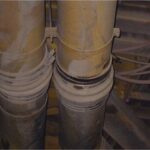
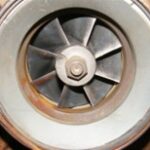
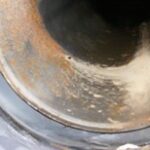
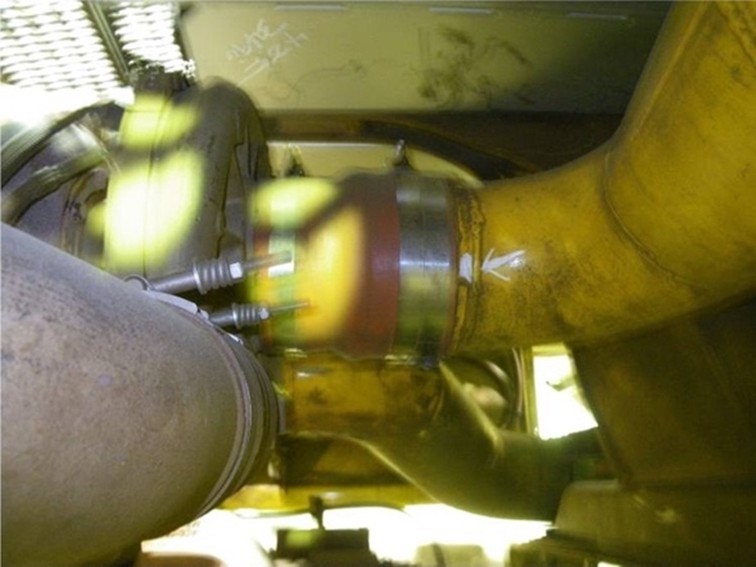
Like our own human bodies, an internal combustion engine must breathe to function. Just as we inhale air to our lungs, an engine’s turbocharger receives air via breather tubes like the ones pictured here. Constructed of heavy-duty materials these tubes must withstand the extreme climates associated with so many mining operations.
In Canadian climates these breather tubes endure massive ice buildup. If there are any doubts about the power of ice one only need look at the glacial carvings left behind from the last ice age. If ice burgs can carve fjords and valleys from solid rock, steel breather tubes offer zero resistance and stand little chance of surviving multiple Canadian winters.
When the air we breathe is impure we do not function well and eventually we get sick. Extended exposure to contaminated air contributes to irreversible lung diseases like emphysema and cancer. But unless you’re breathing purified air from a Unexpected breakdowns are the norm with mobile mechanics on call 24/7 to provide emergency repairs. While a quick patch may keep these mighty machines digging, a preferred strategy must always be to determine the cause of the failure and seek strategies to eliminate them permanently. The engine is the heartbeat powering these machines and the replacement cost of the Cummins Diesel in a Komatsu 930E Haul Truck or a LeTourneau 1850 loader starts at $500,000 and goes north from there. Surprisingly, failure comes not from the daily strain of moving thousands of tons of ore, but something much smaller, practically invisible, but equally nefarious. The biggest threat to these diesel engines is dust, and more specifically, silica (Si);one of the most common substances on earth! Talk about your classic Daviversus Goliath or mouse versus elephant story.
Like our own human bodies, an internal combustion engine must breathe to function. Just as we inhale air to our lungs, an engine’s turbocharger receives air via breather tubes like the ones pictured here. Constructed of heavy-duty materials these tubes must withstand the extreme climates associated with so many mining operations.
In Canadian climates these breather tubes endure massive ice buildup. If there are any doubts about the power of ice one only need look at the glacial carvings left behind from the last ice age. If ice burgs can carve fjords and valleys from solid rock, steel breather tubes offer zero resistance and stand little chance of surviving multiple Canadian winters.
When the air we breathe is impure we do not function well and eventually we get sick. Extended exposure to contaminated air contributes to irreversible lung diseases like emphysema and cancer. But unless you’re breathing purified air from a controlled source, some particles held in suspension will enter your lungs and while some of these particles are harmless, others represent a danger. Similarly, internal combustion engines operate more efficiently and last much longer when only clean air can enter. Therefore, both diesel engines and our lungs are equipped with filtration systems that remove potentially damaging particulate instead of allowing them to be sucked in where they can wreak havoc.
Silica ranks as one of the hardest elements on earth, only surpassed by topaz, corundum, and diamond and is very damaging when it enters an engine. But silica also ranks as one of the most abundant elements on earth and is ever present in the airborne dirt and dust ubiquitous in the conditions where mobile machines operate. Good filtration systems can keep silica out, but only if the entire breather system if free of leaks.
Diesel engines have primary and secondary filters fitted between the air intake vents and the breather tubes feeding the turbocharger. When the engine is operational a negative pressure is created in the air intake system and any leaky orifice (loose clamps, cracked pipes and hoses, thinned or corroded metal, and pin hole leaks.) downstream of the filters means the engine is breathing without filtration. Damaged breather pipes are an easy entry path for silica enriched dust to enter the engine and shred pistons, rings, sleeves, and other engine components. Depending on the amount of silica ingested, the engine’s life can be reduced to a few days!
To protect the investment in these mobile assets preventative and predictive maintenance is performed on a regular basis. Fleet maintenance relies on laboratory fluid analysis to identify the presence of contaminants and wear metals from both the engine and hydraulic oil. Other condition monitoring technologies (Ultrasound, Vibration, Infrared) are seldom considered as adding any benefit.
Chapter 4 discusses the symbiotic cooperation between condition monitoring technologies and explains how these techniques, when used in concert, provide a higher level of insight. For example, ultrasound when partnered with infrared thermography increases an inspector’s chance of finding surface partial discharge. And ultrasound helps vibration analysis to discover failures in slow-rotating bearings. What is not emphasized is how oil analysis and ultrasound inspection partner up to discover the presence of leaks in the breather systems of diesel-powered assets.
Oil Analysis Reveals Contaminants and Engine Wear
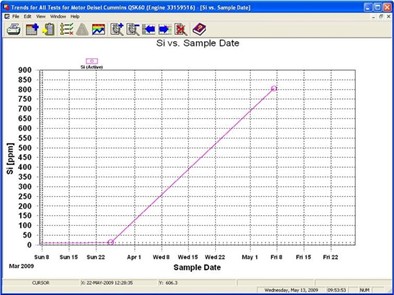
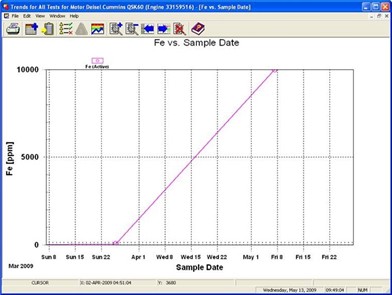
One condition monitoring technique used to detect the presence of silica ingress is Oil Analysis. Oil Analysis, sometimes called Fluid Analysis, compares metal content and silica found in oil samples collected during engine servicing. Particle amounts measured in parts per million (PPM) are compared against limit values set according to engine manufacturers. The acceptable benchmark set for silica content ranges from 15PPM to 50PPM. When a sample exhibits values over this limit, diesel technicians know the source of the contamination needs to be found and fixed quickly to avoid further damage. The inherent reliability issue this represents means a multimillion-dollar asset cannot deliver its engineered value until all potential leaks are removed from the breather system. The summary oil analysis data set reveals high levels of aluminum (Al), nickel (Ni), chromium (Cr), iron (Fe), copper (Cu), and Lead (Pb) which indicates the presence of engine wear particles inherent in the spent oil.
Finding the Leaks
Oil analysis revealed that this engine had a problem with leaks in the air intake system. But it cannot tell the mechanics where those leaks are. Instead, they must conduct an exhaustive visual inspection of the entire air intake system which often ends in frustration and failure. Inspections can take several hours, and many times no leaks are found. Production demands from the mine means the assets must be returned to service. With their engine oil flushed and replenished and the breather system fitted with new air filters, they are sent back into duty. But fleet mechanics know the next time the excavators require service that oil samples will still show high silica levels and ever-increasing wear metal values; an indication that the continuous presence of silica is taking its toll. After an alarming increase in premature engine failures that procurement estimated at $8 million per year, the Iron Ore Company of Canada sought an alternative inspection method that was faster and more effective than the current visual one. Could ultrasound testing using non-organic, artificially produced ultrasound sources be used to find leaks in air breather systems? And if so, could this technique nets results much faster than visual inspections AND provide the added benefit of confirming that repairs effectively corrected the problem? This was the finding of Glen Oldford, a progressive reliability leader at Iron Ore Company of Canada who had recently attended a Level One ultrasound. certification delivered by then SDT instructor, Thomas J. Murphy. Glen recalled the module on tightness integrity testing and from the lessons learned, he proposed two testing procedures; one that listened for leaks naturally produced by the vacuum effect of the running engine, and one that introduced artificially generated ultrasound inside the air filter basket and flooded the innards of the breather system.Inspection While Engine is Running
Using this method of inspection is based on the premise that any turbulent flow from a potential leak produces ultrasonic sound pressure waves which are detected with an ultrasonic detector. Turbulent flow is produced between two adjacent volumes when those volumes have: a. differential pressure, and b. any leak paths. Turbulent flow will exist where the leak path exits for so long as there is differential pressure between the volumes. Start the engine and leave it to idle. With noise attenuating headphones in place adjust the amplification of the ultrasound detector according to other competing sources of ultrasound near the engine. If your ultrasound equipment includes the FLEXID2 flexible sensor, it is a good option to use if for safety. Inspect the entire intake system starting from the air breather and ending at the turbocharger. Potential vacuum leaks produce ultrasonic signals similar in character to the hissing and whooshing sounds heard from compressed air leaks. A well-trained ear can pick this sound quickly despite the competing noises from the engine itself. Additional training teaches ultrasound inspectors how to deal with parasite noise common to high-noise environments like this. Techniques known as shielding, covering, blocking, and positioning are learned keys that assist inspectors in high noise areas. Even with these techniques in an inspector’s arsenal, it has often been reported that the ultrasonic signals produced by leaks are simply not loud enough to overcome the competing noise from the engine. Therefore, it is more desirable to inspect with the engine off.
Inspection With the Engine Off
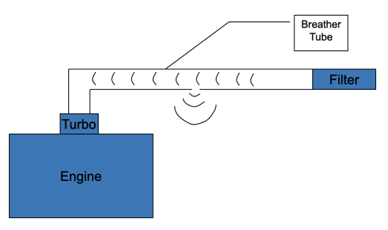
Glen listened to his mechanics when they complained that trying to distinguish the rushing, turbulent sound of a leak over the competing noise produced by the diesel engine proved too great of a challenge. He recalled Tom Murphy’s use of the word “tightness” when describing vehicle inspections. When one of the mechanics used the same word to describe the problem with leaking breather tubes, he immediately connected the dots. He quickly retrieved his SDT ultrasound gear from Stores to test his hunch that the same principles could solve his diesel engine dusting dilemma. He surmised that the air intake system can be inspected for leaks when the engine was not running. In fact, he saw it as a more desirable method having witnessed firsthand the struggle his mechanics had with the presence of engine noise. Parasite noise from the engine tended to interfere with the inspector’s ability to distinguish the noise of a leak from the noise of the engine. But if the engine is not running then there is no air suction to the breather and consequently, no turbulent flow. Turbulence would have to be artificially created inside the air filtration compartment.
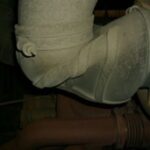
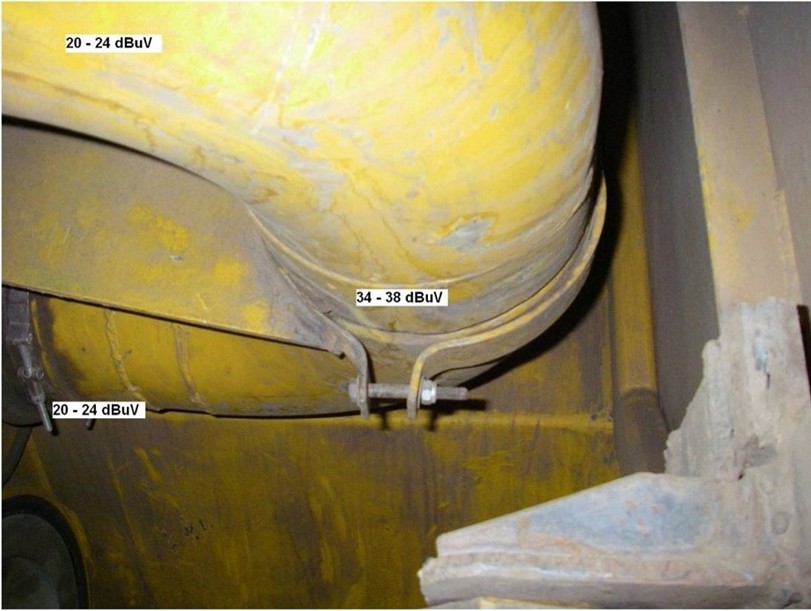
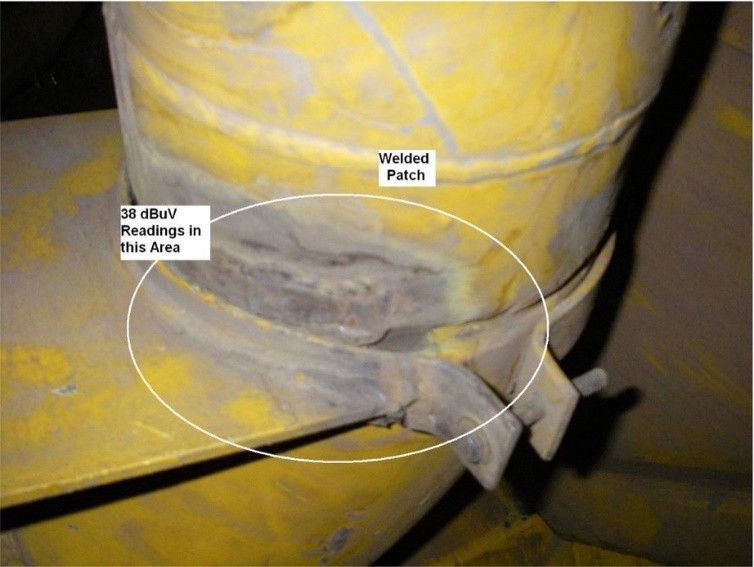
Oldford recalled the methods described in the application case study Fumigating a Flour Mill, and the weathertightness inspection of hatch covers on container ships. Why can’t the same principles be applied to diesel engine breather systems? When it is impossible to have differential pressure in the test volume, cargo surveyors inject non-organic ultrasound signals. Glen was confident this would work for air breather systems. Finding the first leak was fast and deafeningly obvious. The mechanic’s ears were instantly drawn to a section of corroded steel pipe where the breather tube clamped into the air filter basket’s exit hole. Previously, someone had attempted to cover the rusted area with a clumsily welded patch. But if their work was intended to shield the engine from dust ingress, on all accounts they had failed.
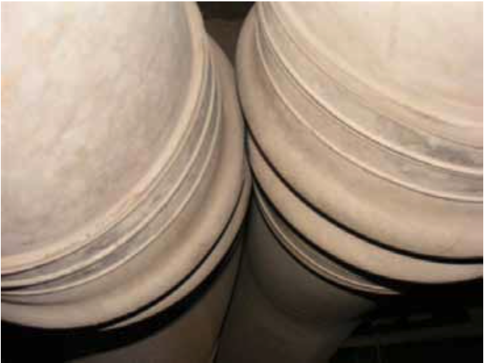
Images were taken with a digital camera and labelled with the corresponding ultrasound measurements observed upstream, downstream, and directly at the patch. Closed hatch readings of 20-24 dBmV were registered up and down stream versus 34-38 dBmV around the shoddily welded covering. The fix was simple. A certified welder installed a temporary over the initial one and a work order was initiated to replace the breather tube, which had to be ordered from the OEM, in two weeks’ time. The mechanic who had previously performed the frustratingly long and fruitless visual inspection, said that finding the leaks with ultrasound inspection was far quick, effortless, and even FUN! What’s more, he was gratified because he knew his work served to extend the asset’s life. Additional leaks were found in places where visual inspection proved ineffective. A section of breather tube pairs installed too close were constantly rubbing against each other. The friction eventually wore a hole which remained concealed from the mechanics during their visual inspection. But once armed with their ultrasonic detector even this blind leak could not remain hidden.
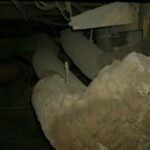
The sections of pipe were gently pried apart to reveal the gradual damage caused by constant friction. This leak too allowed dust, silica, and iron to enter the engine and chew away at its precision components. The fix was easy. Replace the tubes and install spacers to prevent future rubbing. Two weeks later the production loader was brought back to the mechanic’s bay to be refitted with the newly ordered breather pipes. Even though the air filters and oil were not due for service, a special case was made. They were replaced along with a fresh fill of 15W40 diesel engine oil. Oil samples rushed to the lab confirmed acceptable levels of Fe and Si. It seems that dusting issues were solved by the repair and replacement of these two leaking pipes. Substantial drops in aluminum, nickel, and chromium provided additional assurance that no additional wear of engine components was occurring. Bottom Line Savings This is an easy procedure to implement at any mobile repair shop because of the relative cost of good quality ultrasound inspection equipment. The dollars spent on IOC’S SDT equipment, along with training the mechanics, paled in comparison to the engine costs which in 2010 were estimated at $500,000 each.
In the ensuing months leaks were discovered on one Letorneau 1850 Production Loader and four Komatsu 830E Haulage Trucks. All of the engines are Cummins QSK60’s and the dusting issues were discovered and repaired between May and November 2009 using a combination of Oil Analysis and airborne ultrasonic inspection. The cooperation of these two predictive technologies contributed to a reported savings of $1,147,029. Tio Tinto’s business analyst estimated the figure much higher, around $8 million annually when they included additional costs such as labour, parts, and production loss and engine replacement. Not a bad day’s work!
Share: