
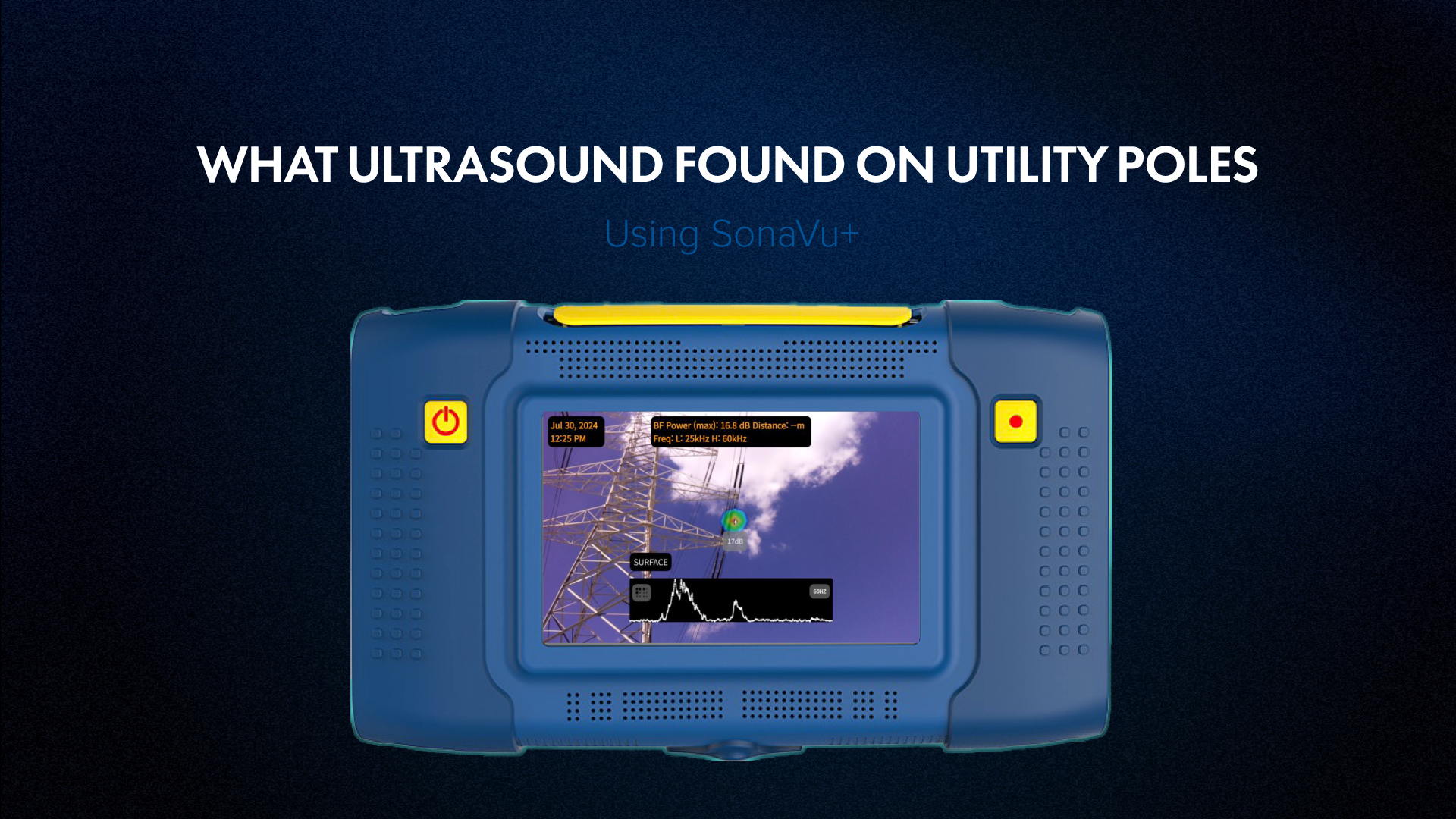
Finding Insulator Electrical Faults on Utility Poles
Powerlines are found in almost every place on Earth with a human population. As our planet becomes more and more reliant on technology, power becomes increasingly important. In many areas, powerlines are located above busy roads or residential areas, and keeping them in proper working condition is essential to daily operations and public safety.
Power lines carry high-voltage electricity, which can cause severe injuries, or fatalities, if come into contact with. Additionally, faults in electrical wires or insulators may cause electrical fires which can spread rapidly. Aside from public safety, maintaining powerlines is crucial in maintaining electrical grids, and keeping a steady power supply to thousands of people, avoiding impacting homes, business, and critical services.
There are a few major issues preventing the continuous maintenance of powerlines and insulators. Two main problems maintenance teams face are the lack of electrical fault visibility and inadequate resources for proper electrical inspections.
On many instances, electrical faults are hard to detect. They can be difficult to see and are often only noticed because they create a buzzing sound. However, this buzzing may be inaudible to the human ear and not always able to be heard.
Up until recently, there have been only a small number of methods for thorough inspections. Budget constraint and heavy workloads also lead to less comprehensive and frequent inspections.
Detecting Electrical Faults with SonaVu
Now though, with the improvement of monitoring technologies, like the SonaVu Acoustic Imaging Camera, finding electrical faults has never been easier.
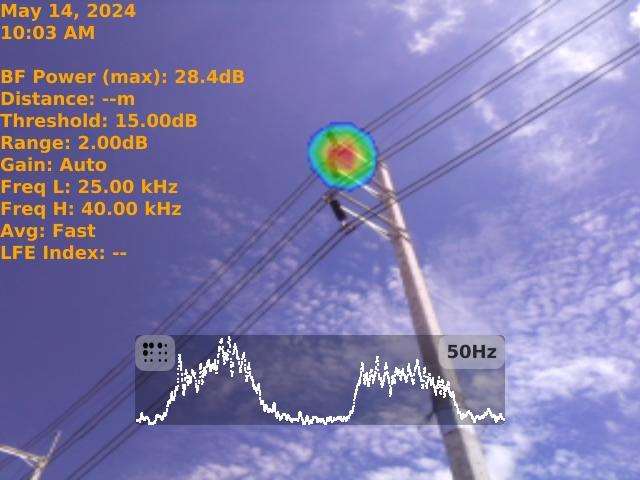
A great example of this occurred just recently. Using a SonaVu Acoustic Imaging Camera, a maintenance team was able to detect an electrical fault on a utility pole insulator during a transmission and distribution electrical line survey. With the SonaVu, the maintenance team was able to easily determine that the electrical fault was causing floating partial discharge (Figure 1).
When inspected, this insulator showed signs of wear (Figure 2). If left for longer, this insulator would have likely been a fire hazard, and a threat to the safety of passersby. Further down the powerline, less than an hour after the initial discovery, the maintenance team discovered another electrical fault. This fault was discovered at a further distance, using the SonaVu’s 50-meter distance detection. The SonaVu picked up that the electrical fault was causing surface partial discharge (Figure 3). Like the first, this insulator showed signs of wear and was needing to be replaced before anything negative were to occur (Figure 4).
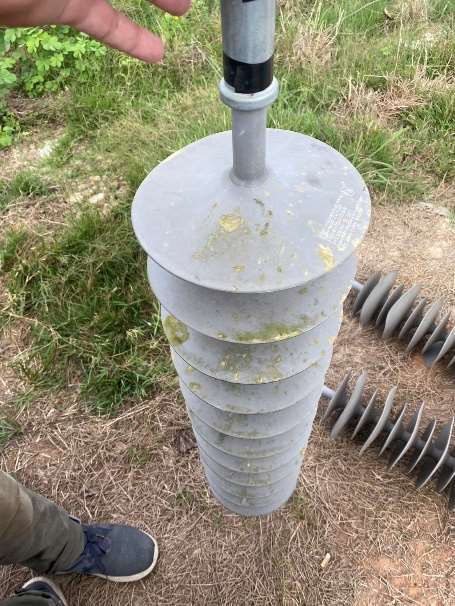
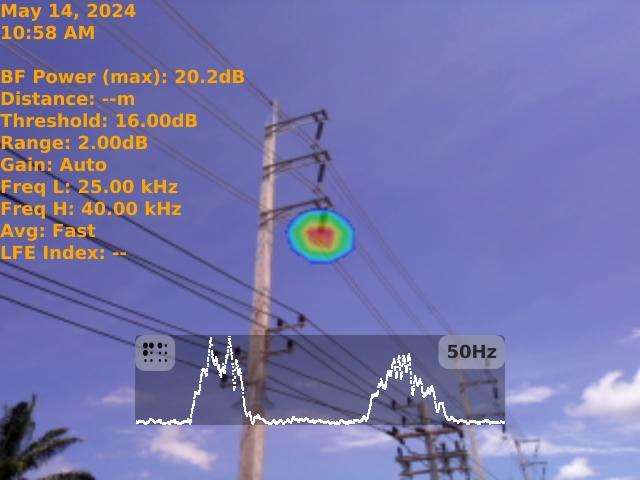
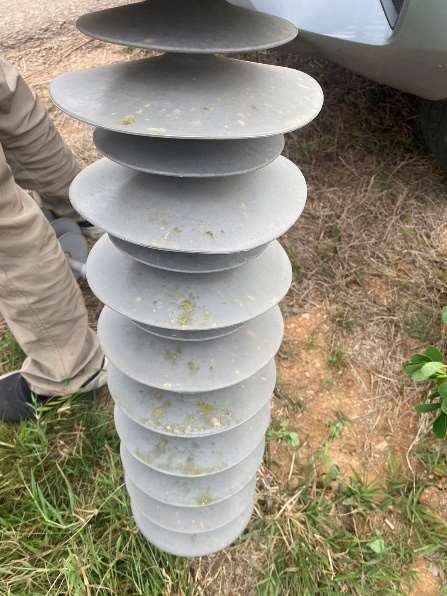
Figure 4: Second Insulator Showing Signs of Wear
Thankfully, with the help of the SonaVu Acoustic Imaging technology the electrical team was able to discover both of these electrical faults easily. Because of this, they were hasty to remove and replace each insulator, keeping the system running and everyone safe.