
Locating Loose Connection with Acoustic Imaging
SonaVu(R) PLUS Acoustic Imaging Case Study
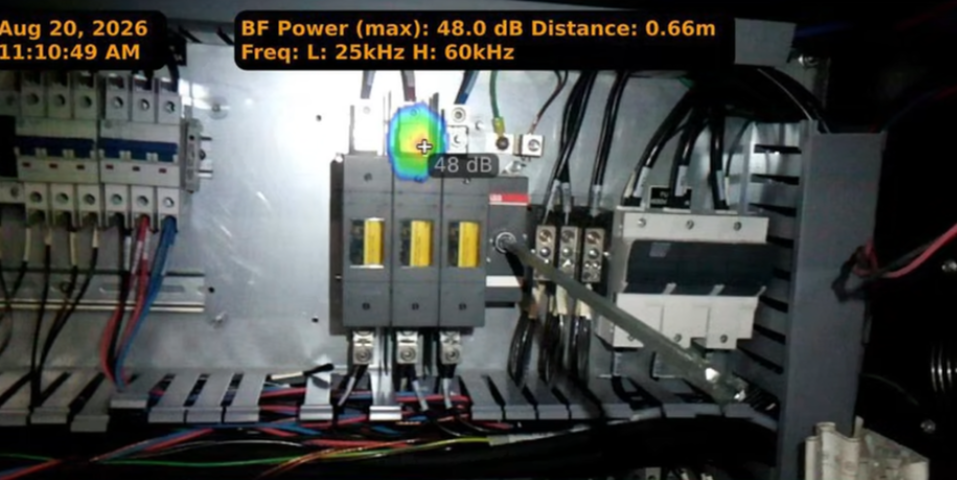
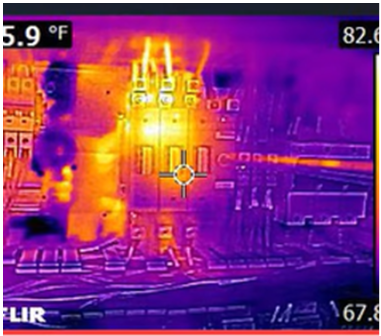
During an infrared electrical inspection of the LN14 Case Packer, a hot spot was identified around the Phase A and B connections inside its electrical cabinet. An audible buzzing noise was also coming from the cabinet. Together, these findings prompted further inspection with an acoustic imaging camera.
Bringing Electrical Defects into Focus™
Acoustic imaging cameras use an array of microphones to detect high-frequency sound and overlay its location on a live image. For electrical inspections, this helps technicians locate discharge activity and narrow their investigation to a specific component or connection.
Inspection procedure
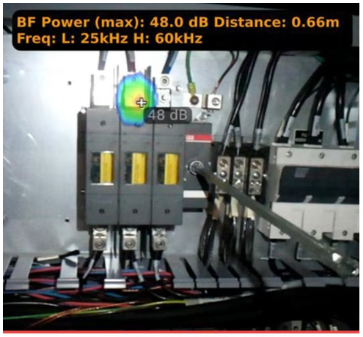
Gilles used a SonaVu Plus to scan the suspect area and locate the strongest ultrasonic signal. The acoustic image pinpointed activity at the upper terminal/contact region on Phase B, displaying a maximum level of 48 dB.
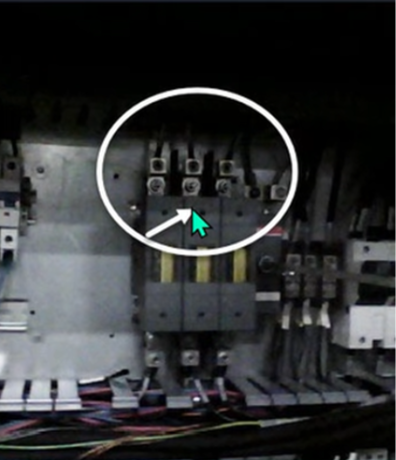
The infrared image showed where abnormal heating was present, while the acoustic image helped focus the investigation on the source of the ultrasonic activity. The equipment was then safely isolated so the suspect component could be disassembled and inspected.
Results
Disassembly revealed visible heat and contact damage in the same area identified by acoustic imaging. By combining an audible warning with infrared and ultrasound measurements, the team was able to narrow the investigation and confirm damage at the suspected location.
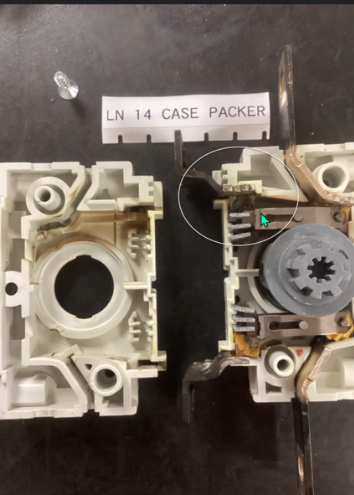
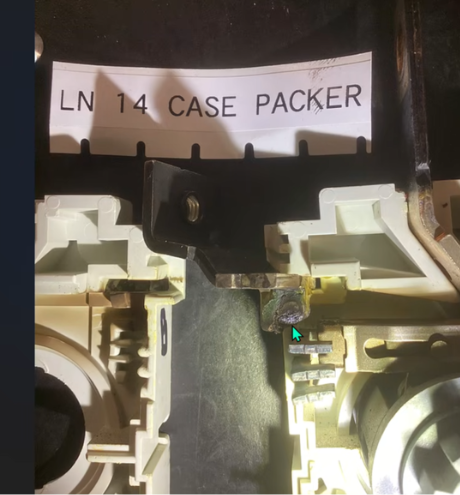
This case highlights the value of using complementary inspection technologies. Each provided a different piece of evidence, helping the team move from an abnormal sound and hot spot to a focused inspection of the affected component.