Ultrasound first gained notoriety in the 1970s as a simple method for detecting compressed air and gas leaks. This is around the same time when SDT Ultrasound Solutions released their first airborne ultrasound detection device.
Since then, SDT has helped maintenance teams around the world significantly reduce operating costs by pinpointing costly and sometimes hazardous leaks.
But today, ultrasound has shed its image as just a niche maintenance and reliability tool; gaining widespread legitimacy as a versatile condition monitoring solution for detecting mechanical and electrical system faults, ensuring bearings are re-lubricated precisely, and verifying the proper function of steam traps and valves, among other uses.
This growing adoption is driven by a few distinct advantages that set ultrasound apart from other condition monitoring technologies.
Industry’s adoption isn’t accidental. It’s driven by key acoustic behaviours which make high-frequency sound the ideal solution for detecting, measuring, trending, and analyzing the health of your most mission critical assets.
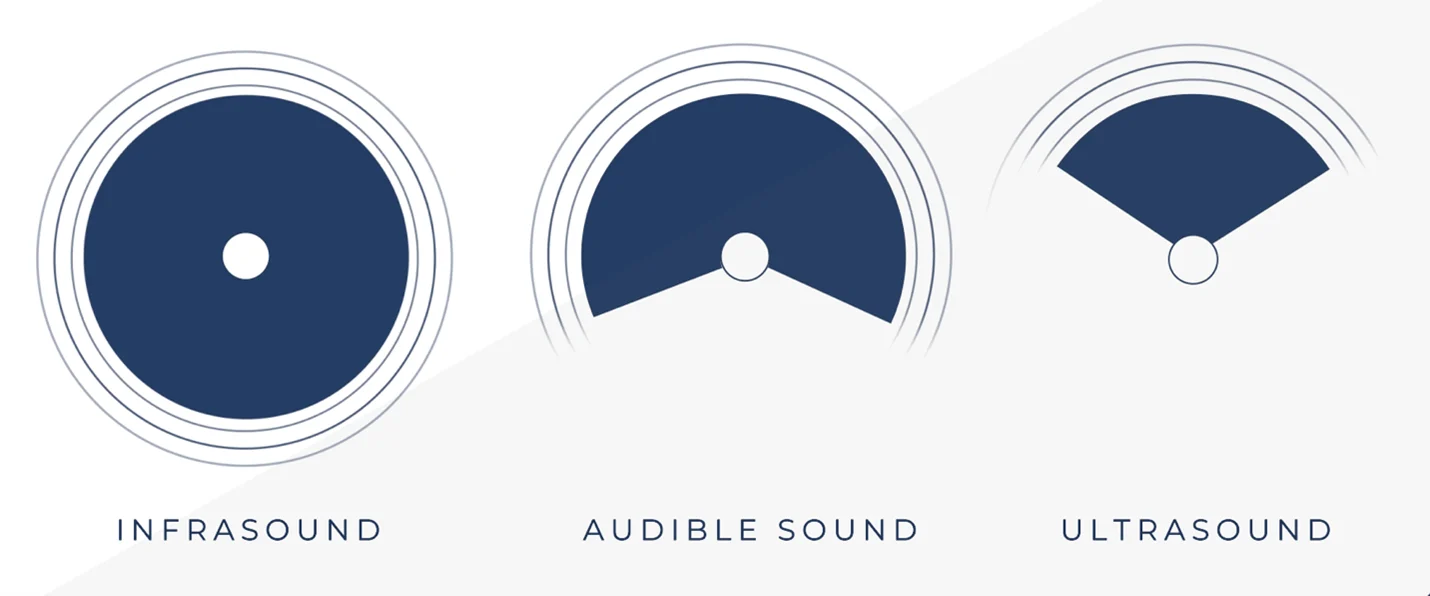
But first, a quick breakdown of sound wave frequency ranges:
Infrasound: Frequencies below 20 Hz (inaudible to the human ear)
Audible Sound: 20 Hz to 20,000 Hz (the range human ears can hear)
Ultrasound: Above 20,000 Hz (beyond human hearing)
Where SDT’s ultrasound devices find their sweet spot is in the 38,000-42000 Hz range, a high-frequency, short-wavelength band, giving the three distinct acoustic advantages which make ultrasound ideal for industrial inspections.
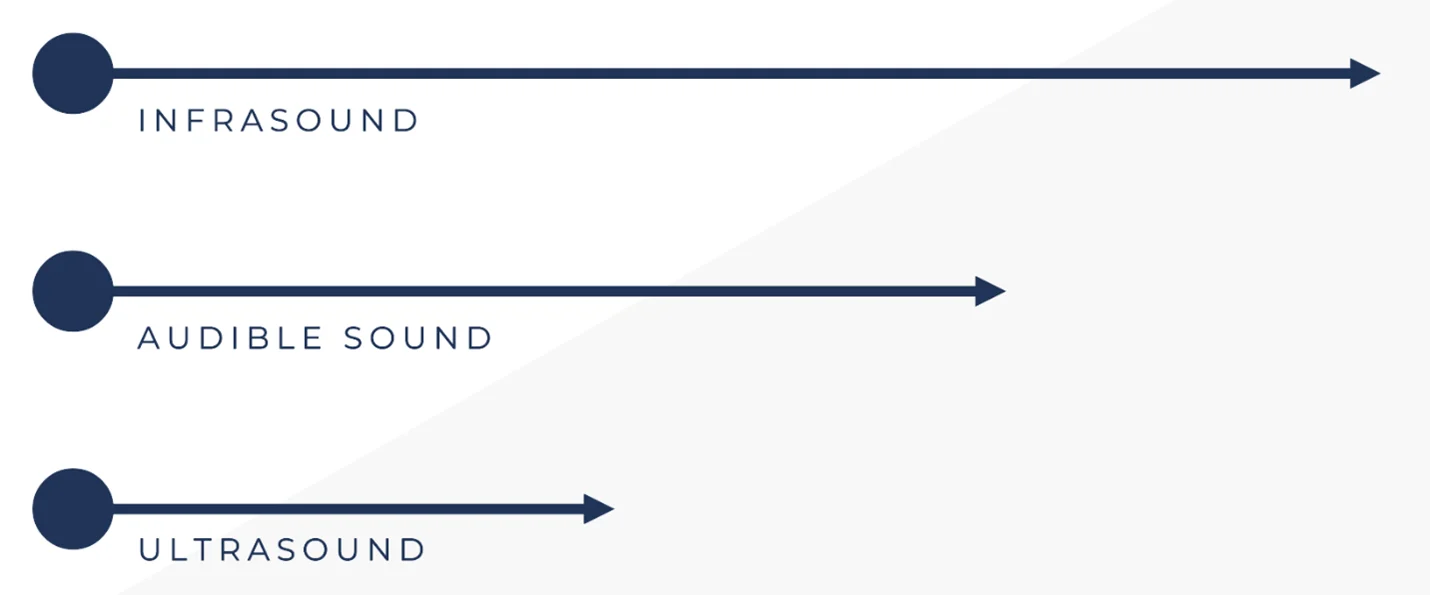
Higher frequencies attenuate faster in air, meaning that their signals don’t travel as far. This makes it easier for inspectors to isolate nearby defects without interference from competing ultrasound sources.
Higher frequencies attenuate faster in air, meaning that their signals don’t travel as far. This makes it easier for inspectors to isolate nearby defects without interference from competing ultrasound sources.
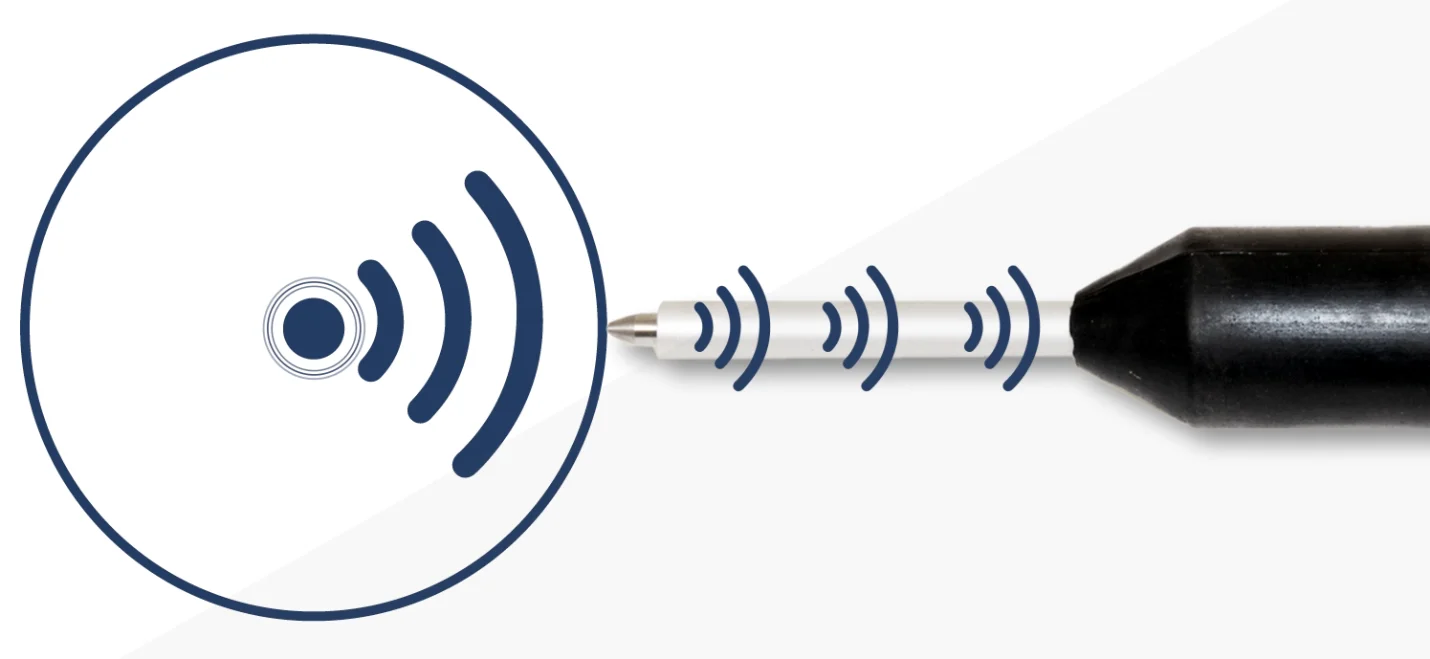
Ultrasound tends to reflect or be absorbed at boundaries rather than pass through them, making it easier for inspectors to pinpoint the exact origin of an elevated ultrasound signal within a piece of machinery, like a gearbox, or motor-pump assembly.
While these acoustic qualities are what make ultrasound highly effective at isolating defect sources, its true value goes beyond how it behaves. Ultrasound’s true value is what it detects.
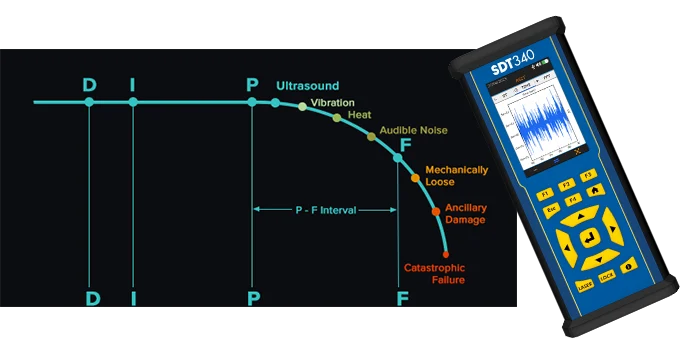
Most rotating and sliding mechanical asset failures first develop sub-surface. And often times the first sign of change in an assets condition is indicated by subtle friction and impacting. Ultrasound’s sensitivity to these forces gives maintenance teams the ultimate early warning system. Often times, ultrasound detects signs of failure before other technologies, helping maximize the window for repair, corrective action, and spare parts ordering.
In addition to friction and impacting, ultrasound also excels at detecting airborne turbulence, produced by air and gas leaks, electrical system defects, and more.
Detecting these forces with both airborne and contact ultrasound sensors makes for far more than a single-purpose tool.
Airborne ultrasound allows for the easy identification of bad couplings, belts, and chain drives; compressed air, gas, and vacuum leaks; electrical defects like arcing, tracking, corona, and partial discharge; and even tightness testing of sealed spaces.
Contact inspection gives you direct insight into rotating asset health, steam trap and valve condition, pump impeller deterioration, and even the ability to optimize bearing re-grease quantities.
Interested in learning more about how to use acoustic properties to the advantage of your maintenance and reliability team?
Schedule a demonstration with one of our condition monitoring experts to #HearMore
Schedule a Demo
The Hear More Newsletter is written to bring you practical, proven ways to turn sound into a maintenance and reliability strategy.