Condition Monitoring with Airborne Ultrasound for Grid Couplings

Using airborne ultrasound is a great method for condition monitoring grid couplings. Although vibration analysis can be effective at identifying 1x shaft speed and harmonic frequencies in the velocity spectrum, it’s hard to determine whether the forcing frequency is due to misalignment, imbalance, or damage from the grid couplings themselves.

Using SDT’s Airborne Flexible Sensor connected to an SDT270 data collector, the ultrasound signal from this grid coupling was observed from a distance of approximately 15cm through air gaps in the guarding.

Listening with SDT’s noise attenuating headphones, a distinctive ticking was perceived. Peaks in the ultrasound spectrum at 1X shaft speed are revealed in the ultrasound spectrum (Figure 1).
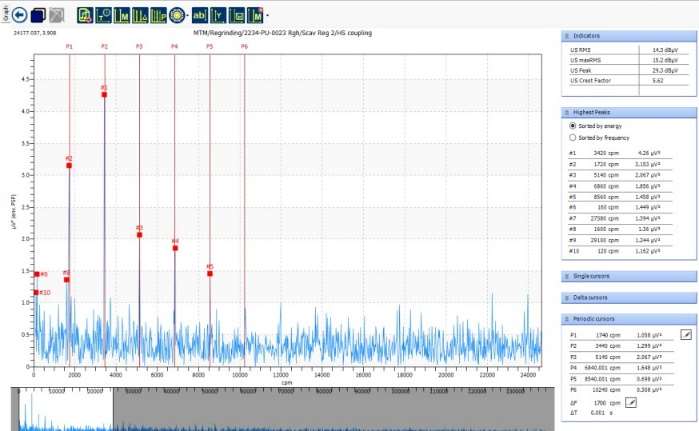
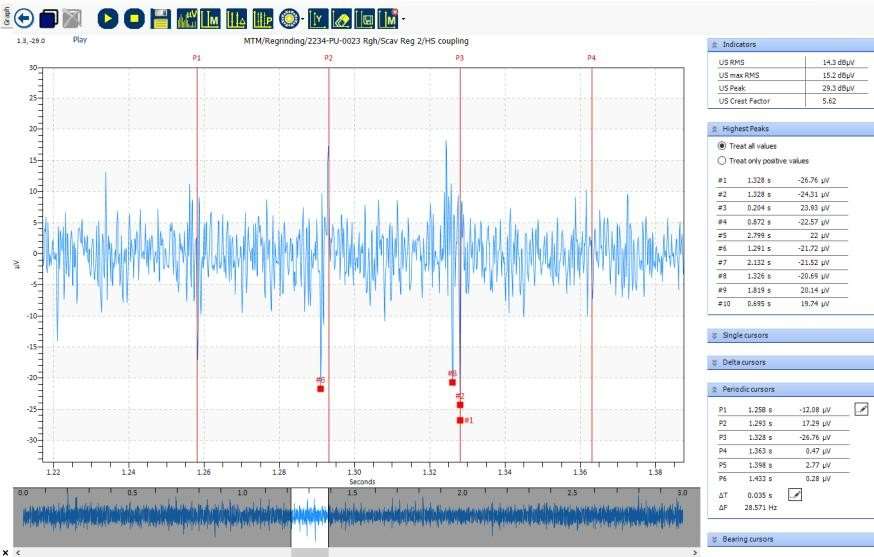
Figure 1: Ultrasound Spectrum of High-Speed Grid Coupling – 2238-PU-0023 Falk 1120T – 1740cpm Shaft Speed

By hearing the ticking noise and examining the severity of the peaks, the maintenance team identified a mechanical fault on this high-speed grid coupling. The same can be seen in the time waveform of this coupling (Figure 2).

Figure 2: Ultrasound Time Waveform of High-Speed Grid Coupling – 2238-PU 0023 Falk 0T – 1740cpm Shaft Speed

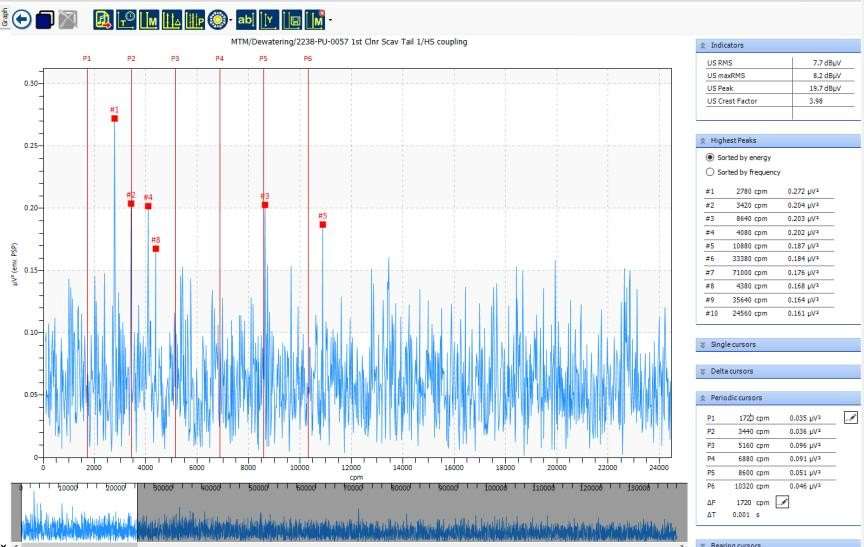
Further inspection revealed that this coupling severely lacked grease. After lubrication it was returned to service. The ultrasound spectrum of a comparatively healthy coupling is shown in Figure 3. There was no discernable ticking noise heard through the headphones. At this facility there are 25 couplings across 17 different units

Each inspection requires two millwrights to spend roughly three hours opening, inspecting, regreasing, and reassembling the coupling. This planned maintenance is scheduled once per quarter.

Given the success of testing grid couplings with ultrasound, this organization is expanding this technique to all grid couplings throughout their facility, saving many hours on unnecessary, outdated, and intrusive inspections. Replacing physical inspections with ultrasonic testing wins many hours for
the company.

Rolling out this technique across all 25 couplings represents a recovery of 400+ hours annually. By implementing a monthly ultrasound condition monitoring inspection route for all couplings, labour dedicated to servicing couplings will be reduced by 75%.

Figure 3: Time waveform of 2234-PU-0057 Falk 1120T high Speed Coupling; 1740cpm Shaft Speed