

SDT340 – Integrating Condition Monitoring & Lubrication Data (Real Example)
The SDT340 LUBExpert Mode Upgrade helps integrate asset condition monitoring and lubrication management data in one connected platform. The simple SDT340 workflow walks users through executing lubrication work orders, monitoring bearing response, and logging the condition monitoring data.
Users start by building their asset hierarchy to match plant structure. Helpful features like navigational images can be added to help guide technicians.
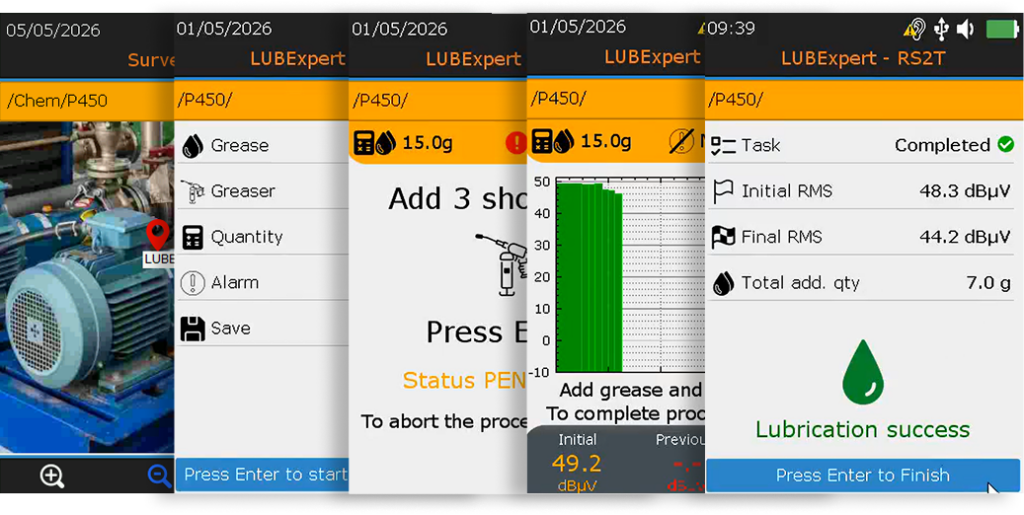
Each data point is configured with the necessary details like bearing type, rotational speed, grease requirement, and calibrated grease gun output. When the technician arrives at the point, they have the information needed to lubricate consistently and document the result. Overtime as your database matures, alarm thresholds can be configured and refined to support better decision-making. The more history each asset has, the more context teams have to evaluate lubrication response, identify abnormal behaviour, and track long-term asset health.
Mechanical Looseness Case Study
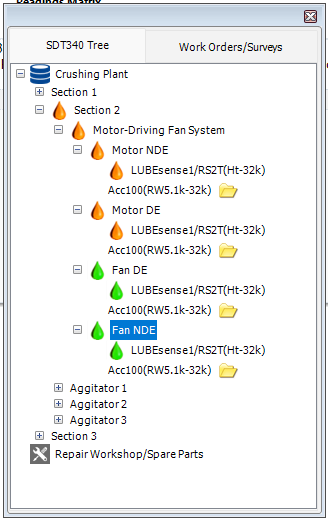
Four points were monitored and lubricated on a direct-drive motor fan assembly during an initial lubrication route with the SDT340 LUBExpert Mode.
There was no previous condition monitoring history available for comparison.
The most notable finding came from the Fan DE bearing. While lubrication successfully reduced friction on the fan bearings, the dynamic data showed impacting at 1X running speed with harmonics. This pattern is consistent with mechanical looseness.
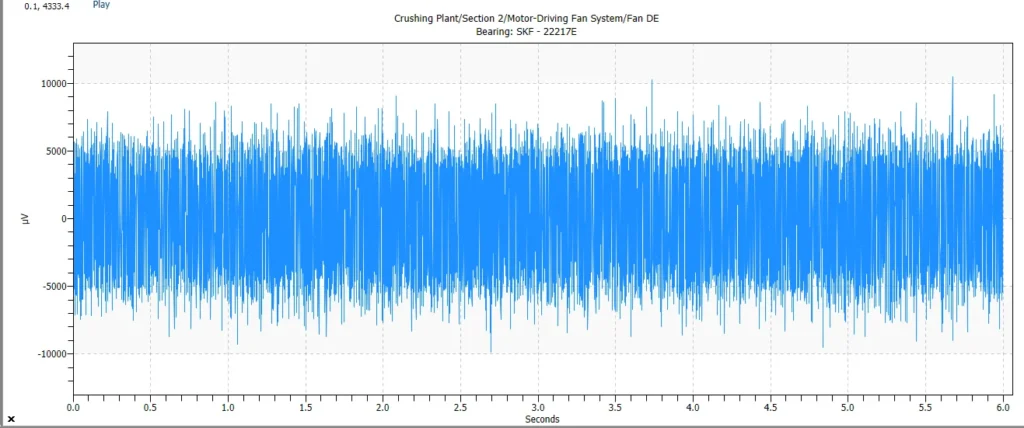
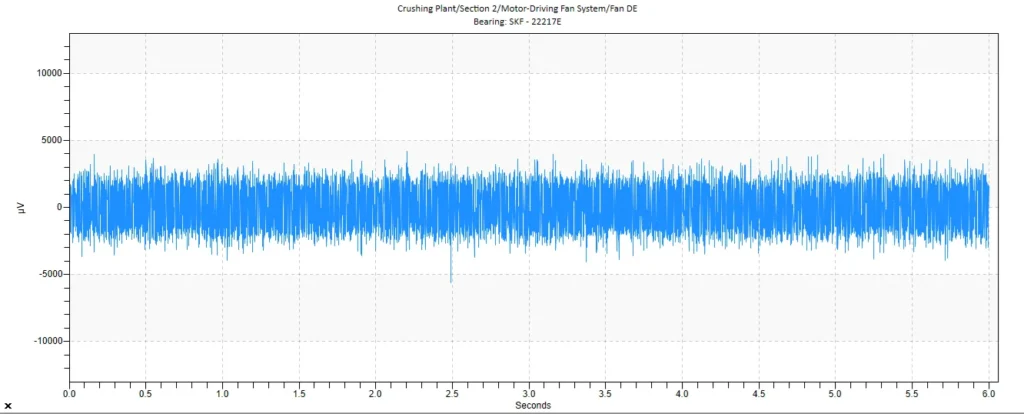
The same frequency pattern was visible, but less pronounced, on the fan’s NDE bearing and as measurements moved closer to the motor.
The strongest response was found at the Fan DE bearing, making it the suspected source of the looseness.
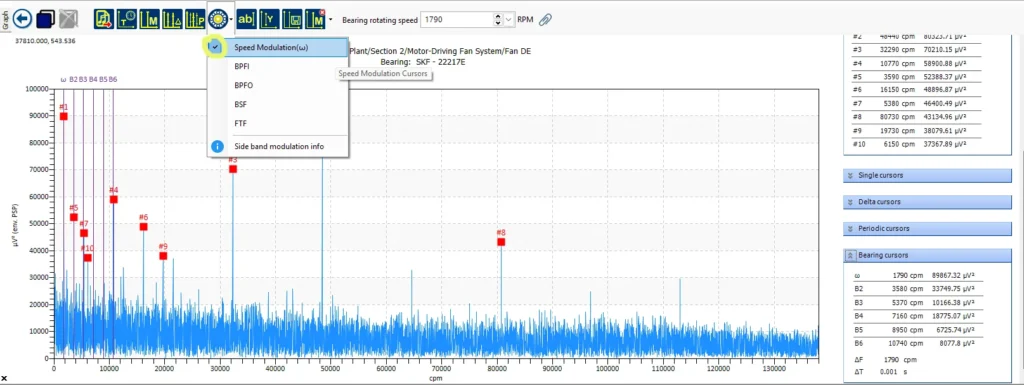
This is the value of combining lubrication data with dynamic ultrasound analysis. The bearing responded to grease, but the spectrum showed a separate mechanical condition that lubrication could not correct.
In the full case study, we break down the before-and-after readings, time waveform, and spectrum data that helped point to the Fan DE bearing as the suspected source of looseness.