
Protecting a National Treasure with Ultrasound – July 4th Edition
The American Flag is easily the most recognizable national symbol in the world. To the American people, the Star- Spangled Banner evokes a universal feeling of patriotism, courage, and resilience.
The Story of the First Flag
Contrary to popular belief surrounding the stitching of the first American flag, Betty Ross is often mistaken for sewing the first American flag. While Ross was a Philadelphia upholsterer who made flags during the Revolutionary War, no historical evidence ties her directly to the design or stitching of the first official flag.
In truth, it was Mary Young Pickersgill who was commissioned by Major George Armistead to sew two flags at Fort McHenry in Baltimore, MD. The larger of the two was intended to be an unmistakable symbol of American resistance, visible from miles away.
For 7 weeks, Mary, her daughter Caroline, nieces Eliza and Margaret Young, and Grace Wisher, assembled the two flags. For the sections of the flag too large for Mary's house, they used a local brewery.
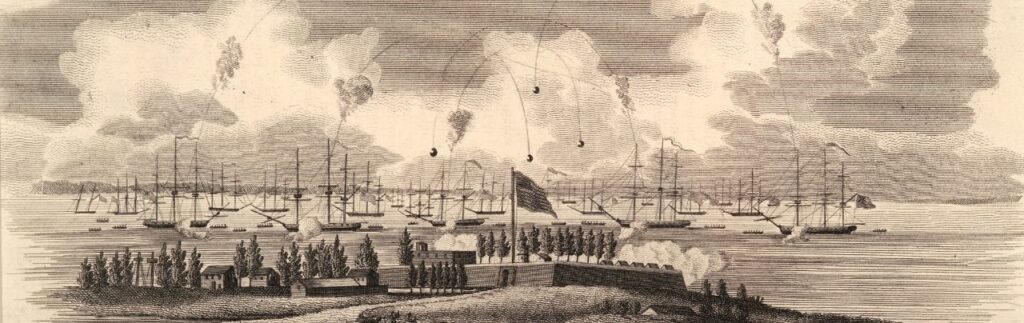
The final flag, which bore 15 stars and 15 stripes to represent the states in the Union at the time, flew proudly over Fort McHenry during the British bombardment of September 13–14, 1814.
"The Star-Spangled Banner" (the flag) was the inspiration for Francis Scott Key's lyrics which became America's national anthem in 1931. The flag remained a Armistead family heirloom for 90 years. But as the song gained patriotic popularity, the flag was too elevated to a national treasure.
In 1912, the flag was gifted to the Smithsonian Institution under the condition that it would remain forever on display and so began the task of preserving the deteriorating fabric of this important national symbol.
Protecting a National Treasure
By 1994, the Smithsonian Institution recognized that the deteriorating condition of the flag's fabric required urgent conservation. In 1998, a state-of-the-art conservation lab was constructed at the National Museum of American History, where a team of textile preservation experts began the decade long restoration process.
Since the project's completion in 2008, the flag remains in a climate-controlled, low-light display gallery designed to preserve it for generations to come.
Thomas Batzer is an engineering technician inside the Office of Maintenance & Reliability/Systems Engineering Division at the Smithsonian. Batzer described the Star-Spangled Banner display as a two-story, specially designed chamber featuring waterproof membranes that encase the exhibit, a dedicated HVAC unit with tightly controlled environmental conditions, and a fire suppression system that halts combustion by lowering oxygen levels in the chamber.
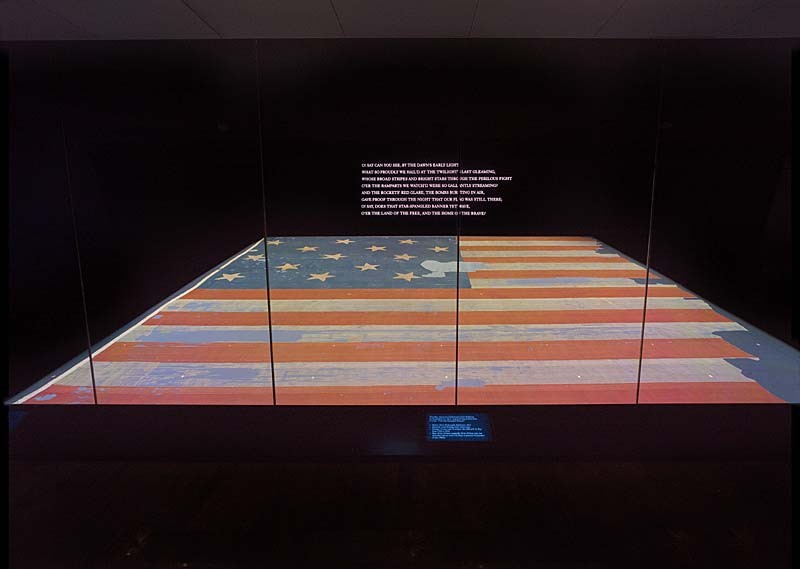
He and John Pheulpin are the primary ultrasound inspectors at the Institution and were called upon to ensure the tightness of the flag's display. Before the exhibit chamber could be used for housing this national treasure it had to be guaranteed air tight.
"Using airborne ultrasound, and the ultrasound transmitter, we tested all of the seams in the glassed portion of the exhibit," recalls Batzer. "We found numerous leaks in the caulking and even several leaks through the block walls of the exhibit."
Today, using ultrasound testing, maintenance and engineering confidently ensure the tightness of the exhibit chamber to 10⁻⁴ Pa·m³/s. This is the smallest leak flow rate possible without introducing tracer gas testing.
When speaking about ultrasound tightness testing the first applications that come to mind are commercial applications in automotive and shipping, not preservation of national treasures.
It's refreshing to retell an ultrasound inspection story that is framed around the preservation of national history.
Batzer reminisces, "Working in the Star-Spangled Banner exhibit was probably one of the biggest thrills that I have had working at the Smithsonian. That flag represents our country."
Happy Independence Day!