
How to Detect Hydraulic Cylinder Internal Bypass with Ultrasound
A hydraulic cylinder can lose force without leaking a drop of oil.
When pressurized fluid slips past the piston seal inside the cylinder, the pressure loss stays internal. The cylinder may still move, but it can become slower, weaker, unstable under load, or unable to hold position. That makes internal bypass one of those faults that can send technicians chasing pumps, valves, pressure settings, and other causes before the cylinder itself is confirmed.
Contact ultrasound helps narrow that search. Fluid forced through a restricted internal leak path creates high-frequency activity that can travel through the cylinder structure. By comparing that activity under controlled conditions, maintenance teams can determine whether the cylinder is producing a pattern that deserves closer investigation.
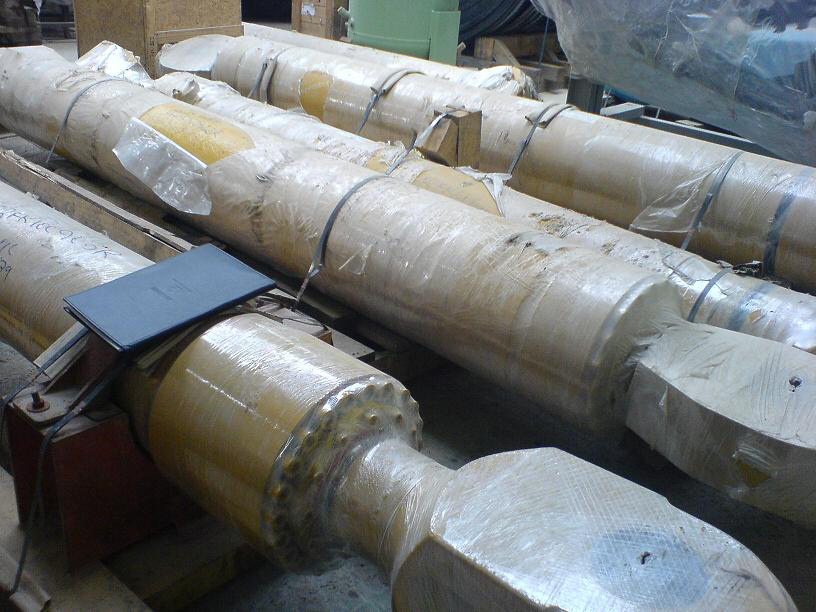
Typical hydraulic cylinders on a shovel loader
What Internal Bypass Actually Means
In a double-acting hydraulic cylinder, the piston seal separates the pressure zones on either side of the piston. That separation is what allows hydraulic pressure to become controlled linear force.
When the piston seal is worn, damaged, contaminated, or no longer sealing effectively, pressurized fluid can pass from the high-pressure side to the lower-pressure side. Instead of using all of the available pressure to move or hold the load, part of that energy circulates internally.
This is different from an external rod-seal leak, where hydraulic oil is visible around the rod. It is also different from the wiper, whose primary job is to limit dirt and contamination entering around the rod. For internal bypass, the piston seal is the component that matters.
Common Signs of Hydraulic Cylinder Internal Leakage
• Reduced lifting, pushing, or clamping force under load.
• Slower cylinder movement even when pump output appears normal.
• Cylinder drift or an inability to hold position.
• A cylinder that stalls sooner than expected as load increases.
• Higher system temperature or longer pump operating time as the circuit works harder to maintain performance.
None of those symptoms proves that the piston seal is bypassing. Valve leakage, pump wear, incorrect pressure settings, restrictions, contamination, and other circuit faults can create similar behavior. A good troubleshooting process does not jump to the cylinder. It gathers enough evidence to make the cylinder the most reasonable next suspect.
Why Conventional Cylinder Troubleshooting Can Take Time
Traditional cylinder checks often require a controlled test condition, hydraulic pressure measurements, isolation of part of the circuit, or disconnection of components. Depending on the machine and OEM procedure, the asset may need to be returned to a repair area before the technician can confirm what is happening internally.
Those checks are sometimes necessary. The question is whether they need to be the first step.
Ultrasound can be used as a screening and localization method before disassembly. If the ultrasonic pattern supports the suspicion of internal bypass, the technician can move into confirmation with a better-defined target instead of opening the system simply to find out where to start.
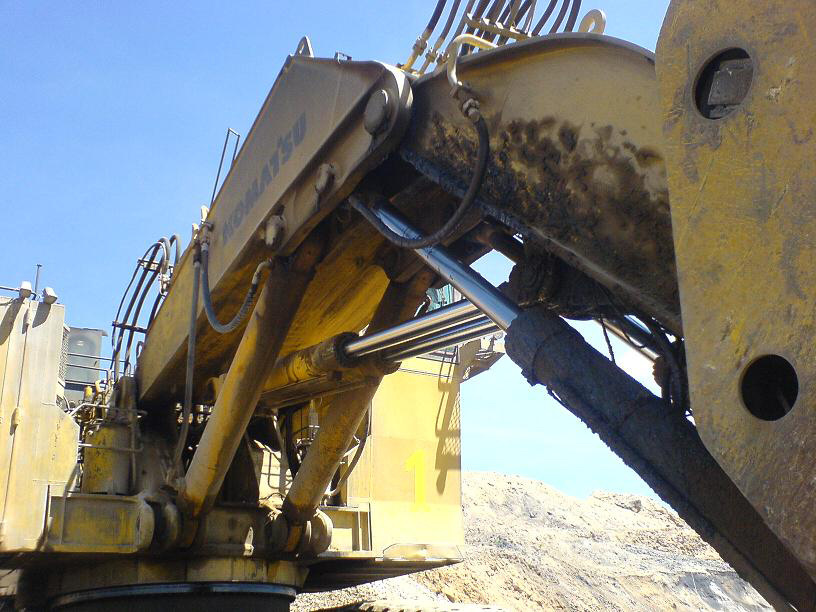
Hydraulic cylinder positioned for a conventional end-of-stroke troubleshooting procedure in the source paper
How Contact Ultrasound Helps Find Internal Bypass
The SDT340 can collect structure-borne ultrasound from the cylinder barrel using a contact sensor. When pressurized fluid crosses a compromised piston seal, the restricted flow can produce ultrasonic activity that transfers into the metal around the piston region.
You are not trying to diagnose the cylinder from one dB value. You are looking for a repeatable pattern under repeatable conditions.
A useful inspection compares multiple points around the cylinder barrel while pressure, position, load, and sensor placement are kept as consistent as practical. A concentrated increase in activity near the piston region can strengthen the case for internal bypass, especially when the pattern repeats and agrees with the cylinder symptoms.
A Practical Ultrasound Workflow for Hydraulic Cylinders
- Start with the equipment manufacturer's hydraulic and safety procedure. Secure the machine, control stored energy, and establish a safe test condition that can be repeated.
- Apply a consistent hydraulic load or pressure condition. Comparison loses value when pressure, cylinder position, temperature, or load changes significantly between readings.
- Place the contact sensor on repeatable locations along the cylinder barrel near the piston region. Keep sensor pressure and orientation consistent.
- Compare the ultrasonic response around the barrel and, where practical, at more than one cylinder position. Look for a focused increase that repeats under the same condition.
- Correlate the ultrasound finding with pressure data, cylinder performance, fluid condition, valve checks, and other available evidence before authorizing a repair.
- After repair, repeat the same ultrasound check under similar conditions. The objective is to confirm that the abnormal activity has been reduced or eliminated.
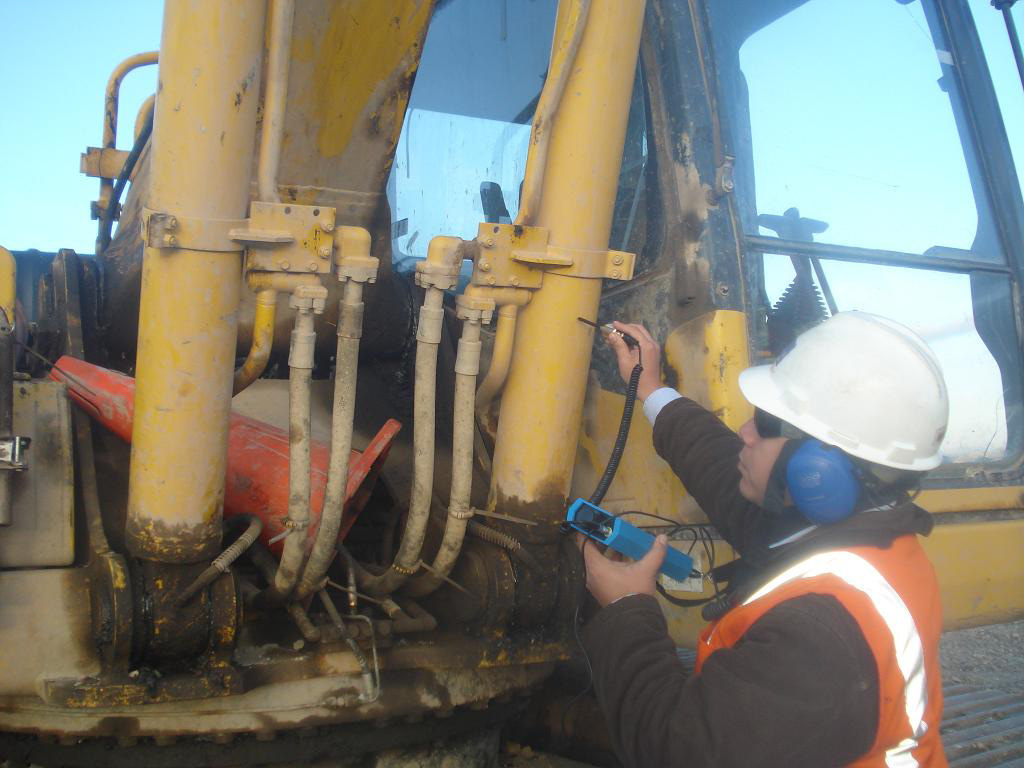
Contact sensor positioned on the hydraulic cylinder barrel near the piston area
Repeatability Matters More Than a Single Reading
A hydraulic cylinder can sound different simply because the test condition changed. Pressure, fluid temperature, cylinder position, load, and sensor contact all affect what reaches the instrument. If those variables are not controlled, the technician may be comparing the test more than the asset.
For cylinders that matter to production, document the measurement points, cylinder position, operating pressure or load, fluid temperature when relevant, and the sensor method. If no historical baseline exists, a similar cylinder performing the same duty can provide a useful comparison.
The more repeatable the setup, the easier it becomes to separate normal hydraulic activity from a genuine change in condition.
Use Ultrasound with Hydraulic and Fluid Data
Internal bypass does not happen in isolation. Contamination can accelerate seal and barrel wear. Valve leakage can mimic cylinder drift. Pump problems can reduce available force. Temperature changes can alter how the entire circuit behaves.
That is why the strongest diagnosis combines technologies. Fluid analysis answers questions about contamination and wear. Pressure and flow measurements show how the hydraulic system is performing. Ultrasound helps locate high-frequency activity associated with internal leakage and turbulent flow.
Each method does a different job. Together, they give the technician a much clearer picture than any one measurement can provide on its own.