
Ultrasonic Detection of Arcing in a Motor Terminal Box
Found by Gilles Lanthier
Reported by Tristan Rienstra
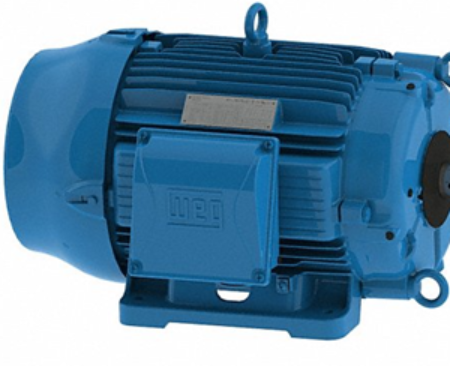
Figure 1: Motor Terminal Box
Reliable electrical connections are a critical part of electric motor reliability. Inside the terminal box, incoming supply conductors connect to motor leads. For safe and reliable operation, secure connections, sound insulation and effective grounding are essential.
Maintenance and reliability teams don’t always have time to investigate every unusual reading. But when the opportunity allows, following an unexpected signal can uncover a problem beyond the asset being inspected. The following case study demonstrates why abnormal readings should be investigated.
Investigating the Unexpected Signal
Abnormal ultrasound detected during a bearing inspection led to the discovery of a damaged motor-lead connection and evidence of arcing inside the terminal box, highlighting a potential source of unplanned downtime.
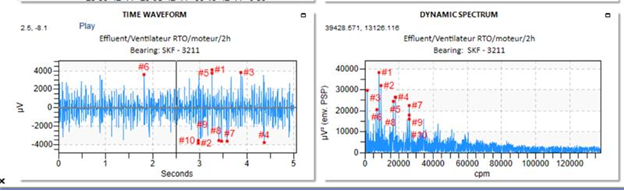
Figure 2: Initial Motor Bearing Measurement
During a bearing inspection, Gilles Lanthier recorded an unexpected ultrasonic signal with his SDT340. Rather than attribute it to the bearing, he investigated further.
identified an abnormal electrical noise not typically present during ultrasonic bearing measurements. Rather than assume the bearing was the source, he investigated further.
Spectral analysis revealed a repetitive peak at 20 Hz. While this alone did not identify the fault, it reinforced the unusual audible signal and prompted investigation beyond the bearing.
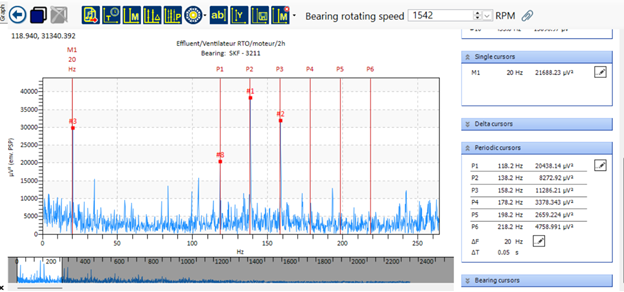
Figure 3: Ultrasonic spectrum recorded during the inspection.
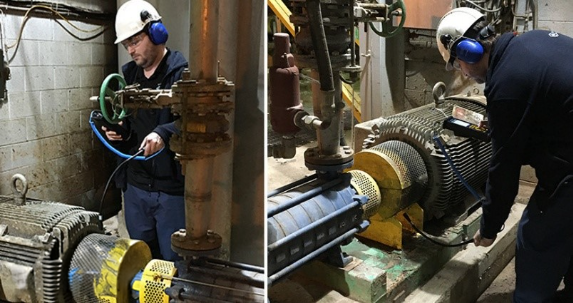
Using his flexible wand sensor, Gilles scanned around the electric motor, listening to the bearing housing, coupling, mounting bolts and finally the motor terminal box. On the motor terminal box is where Gilles located the strongest source of ultrasound and what appeared to be the source of the electrical signal.
During the next planned shutdown, the motor was safely isolated and the box opened for inspection. A taped motor-lead connection was found contacting the metal enclosure, with damage to the insulation and arc marks inside the box.
Potential Consequences
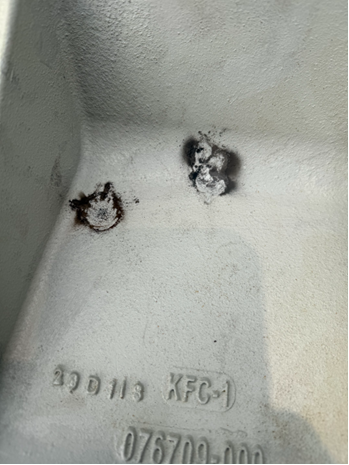
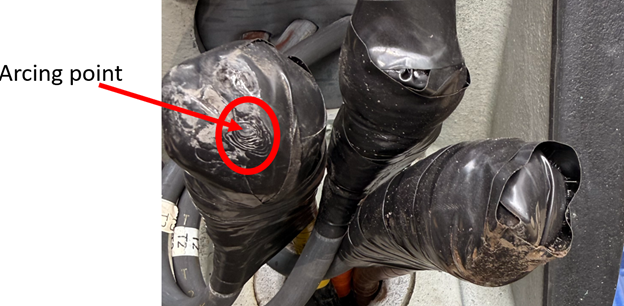
Left undetected, continued arcing could further damage the connection and insulation, potentially causing a protective trip, loss of motor operation or unplanned downtime. The extent would depend on how the fault developed and the protection in place.
Conclusion
What began as a bearing inspection uncovered an electrical defect inside the motor’s terminal box. Following the unexpected signal beyond the bearing brought a potentially disruptive problem to light.