
Introducing Precision Lubrication to a Steel Mill
Case study presented by Tyler Beckett, Newton Industrial Solutions.
For the past 7 years, this steel mill has operated 19 large drive motors without any documented lubrication activity. This case study follows the introduction of an ultrasound-guided lubrication program and the impact it had on bearing condition, grease use, and asset reliability.
At a steel mill, 19 large drive motors had gone seven years without any documented lubrication activity. At a steel mill, 19 large drive motors ranging from 750 to 2,000 horse power have been operating for the past 7 years without any recorded lubrication history.
No recorded lubrication history doesn't necessarily mean the motors went ungreased during that period. What was missing was a documented history showing how often lubrication was performed, how much grease was added, and how the bearings responded to each lubrication event.
Without that information, it's difficult to know whether existing lubrication practices actually improved bearing condition.
Periodic vibration data was collected on these assets, but there was no existing data for friction and temperature history.
The condition of the grease was also a mystery, but after years in service, old grease had oxidized and hardened. In several locations it had been packed into the bearing cavity rather than moving effectively through the rolling elements. Purge and relief paths were also restricted.
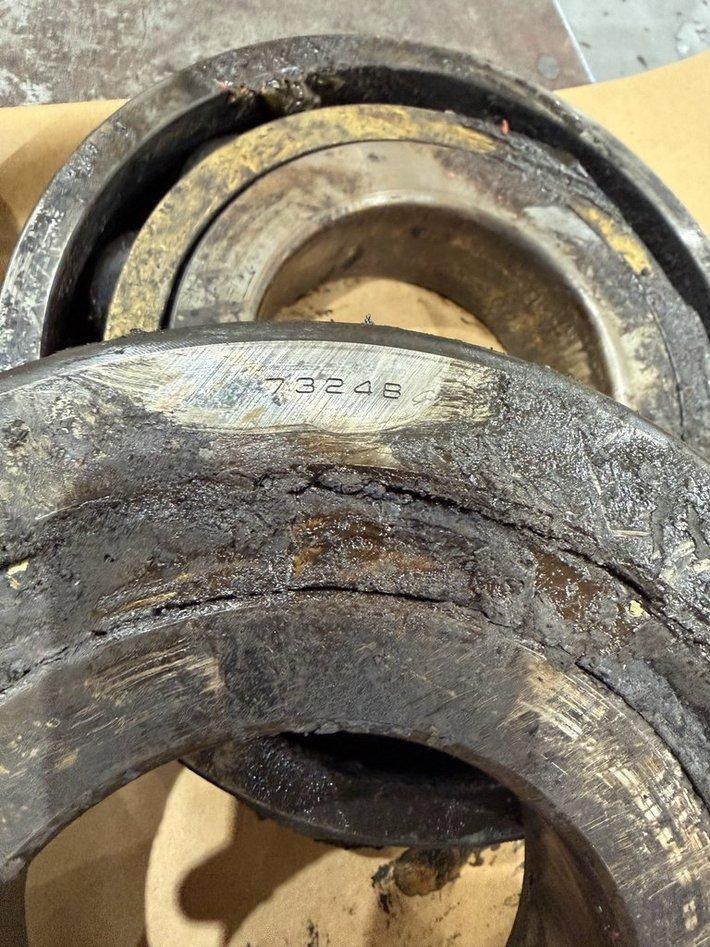
The immediate objective was to establish a new baseline based on the motors’ current condition. From there, as corrective actions were taken to move the bearings toward a more reliable operating condition, each new reading could be compared against that baseline to measure the response.
Contamination was another concern. Dust, moisture, and mill scale could enter the cavity while hardened lubricant and blocked purge paths limited the ability of fresh grease to flush old material out.
How We Assessed the Motors
Before touching a grease gun, the motors were assessed using the SDT270. The goal was to establish bearing condition, identify obvious problem points, and create a baseline that could be compared against each subsequent lubrication event.
Ultrasound Data: Contact ultrasound measurements were used to establish a baseline for friction and metal-on-metal impacting.
Dynamic Data: Ultrasound and vibration measurements were analyzed to rule out repetitive impacts that could signal bearing failure.
Review Manufacturers Recommendations: We reviewed each motor’s utilization and the manufacturer’s lubrication recommendations to help establish an appropriate measurement interval.
Visual Inspections: Performed a walk-around to observe each asset and confirm purge plug condition.
The lubrication work was performed with an SDT270 using LUBExpert functionality. Each bearing took Chevron Multifak EP2 ISO 220 grease.
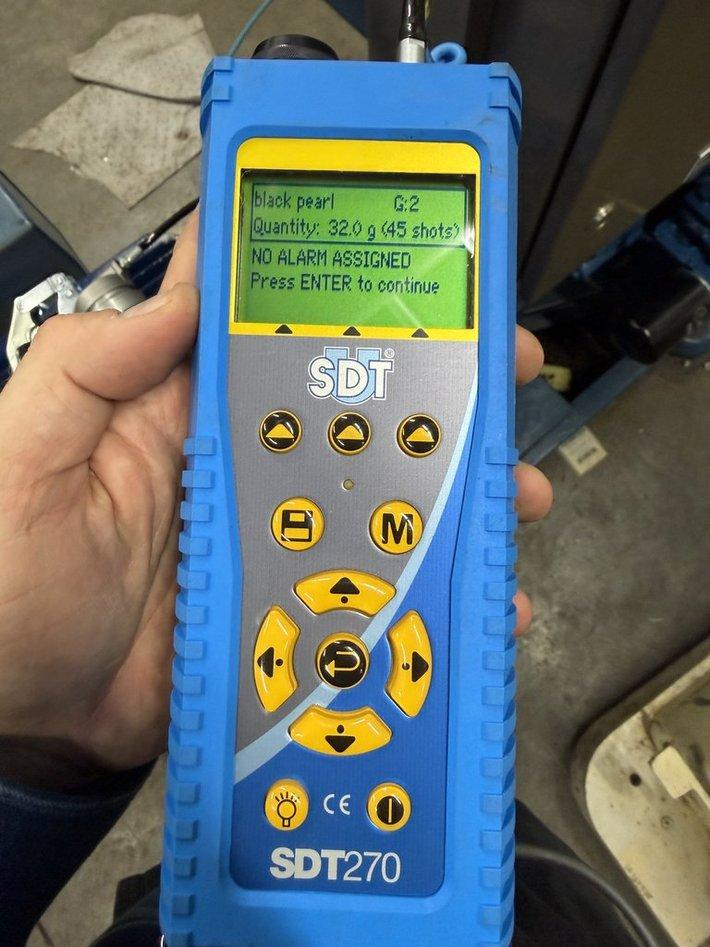
SDT270 displaying the on-screen lubrication workflow guidance. The task requires the grease gun named "Black Pearl," The maximum regrease quantity for this bearing is 32 g—equivalent to 45 shots at 0.71 g per shot with that grease gun. No alarm threshold was designated at the start of the lubrication task.
Why we Approached this in Stages
The first visit made it clear that the bearing and lubrication condition could not be restored in one session without major downtime. Several points barely accepted grease. In many cases, old grease had hardened on the inlet and the purge paths were clogged leaving nowhere for grease and pressure to escape.
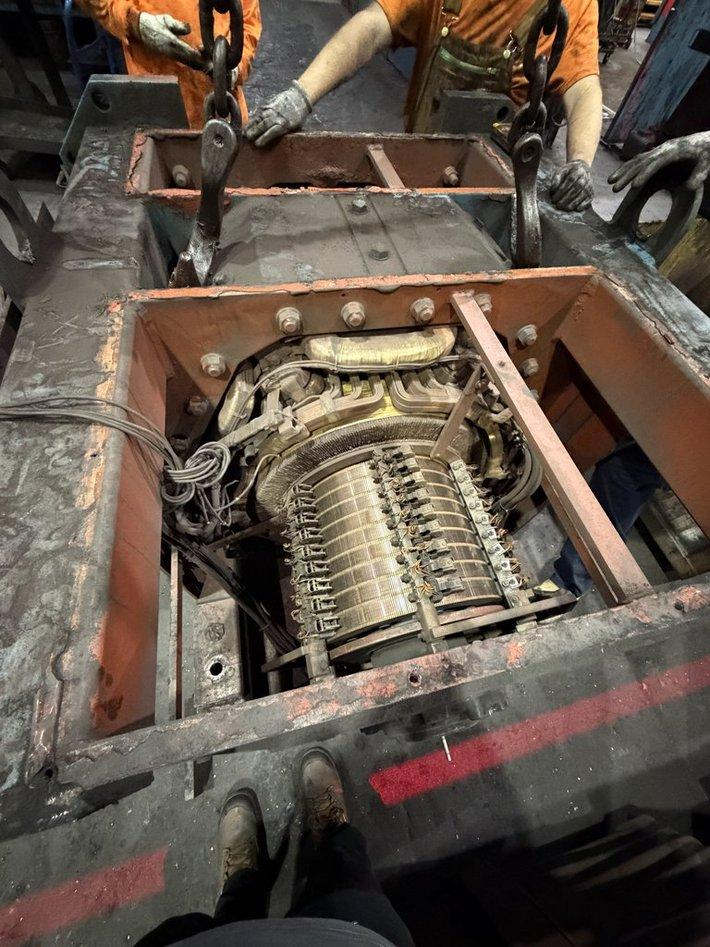
Force-feeding grease into a restricted bearing cavity can build excessive internal pressure, damaging or bypassing seals and forcing grease into areas where it does not belong. On an electric motor, that can include pushing grease past the bearing housing and toward the motor windings, creating additional contamination and reliability concerns.
Rather than treating the job as a single work order, the team moved to a deliberate, staged process:
ASSESS → RELUBE (MEASURED) → MONITOR → COMPARE → ADJUST → REPEAT
Each iteration followed the same loop. Grease was introduced in a measured amount, the bearing was re-examined with the SDT270 and live data was compared to historic. As more data was collected, the process was refined and leading to future tasks being scheduled based on condition data, not time.
Stage 1: Baseline & First Lubrication Task
The first lubrication task confirmed how restricted the bearings had become. Grease acceptance was minimal, with hardened lubricant limiting flow at the inlet. At the purge points, the old grease appeared dry, dark, and hardened rather than flowing normally.
During this initial pass, LUBExpert guided the technician to approximately 7–10 shots of grease per bearing. Rather than forcing more grease into the restricted cavities, the team treated the limited amount each bearing would accept as part of the condition assessment.
That first pass established the starting point for the recovery process and confirmed that the bearings would need to be brought back gradually through repeated, measured lubrication tasks rather than corrected in a single event.
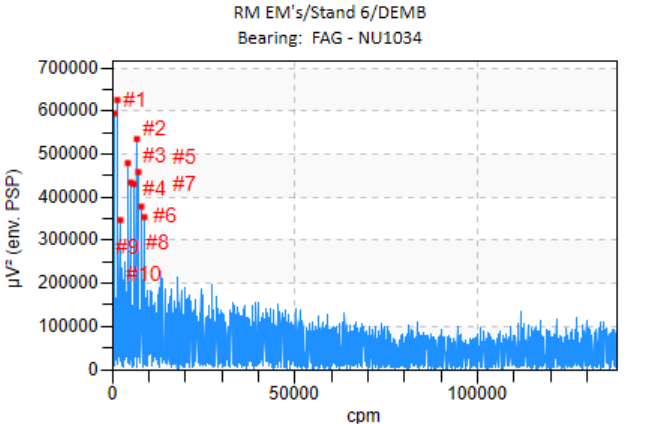
Spectral Ultrasound Data demonstrating massive repetitive energy spikes on Stand 6.
Stage 2: Changes in Bearing Response
During the second lubrication task, both the initial and final ultrasound readings were higher than during the first event. Overall dB levels and noise increased, while the old grease began to soften.
The bearings also began accepting more grease, averaging approximately 13 shots during this stage. Rather than treating the temporary increase in ultrasound as a negative result, the team continued to evaluate each bearing based on its response across repeated lubrication events.
One motor was also identified for replacement during this stage, helping separate a developing mechanical issue from the broader lubrication recovery process taking place across the rest of the fleet.
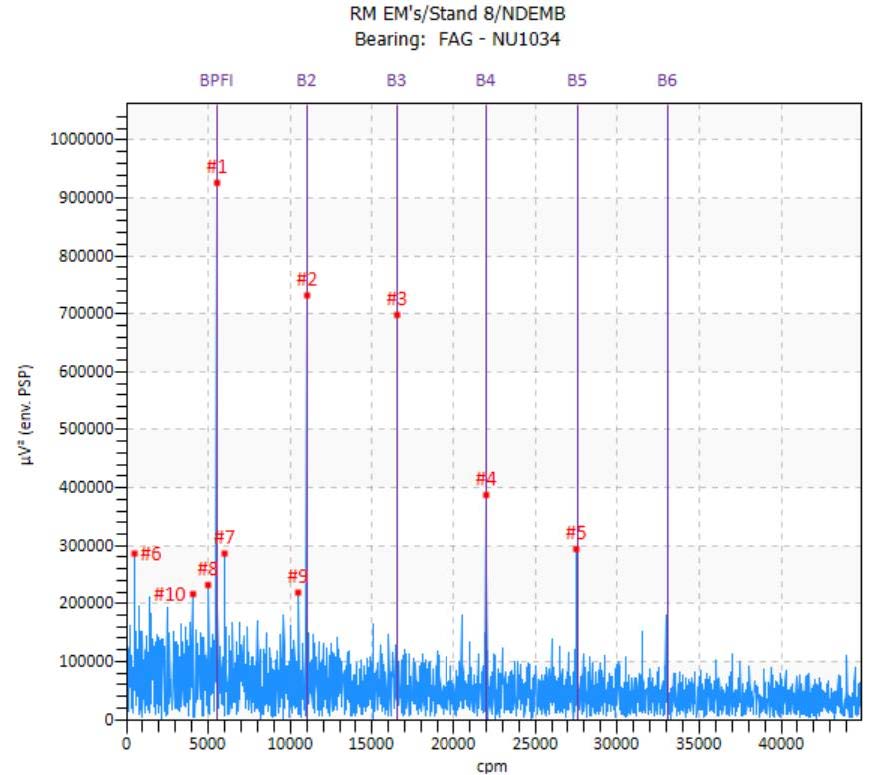
Spectral ultrasound data on Stand 8 identified repetitive impacting signaling a ball pass frequency outer race defect.
Stage 3: Significant Friction Reduction
By the third lubrication task, grease flow had noticeably improved across several motors. Ultrasound levels began to decline, with the spectrum showing a significant reduction in friction-related activity.
This was the first clear sign that the staged approach was improving bearing condition across multiple points.
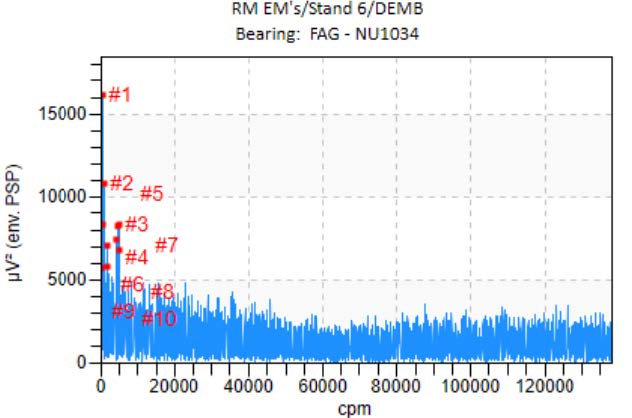
Comparing data on Stand 6 from Stage 1 to Stage 3 demonstrates a marked decrease in overall friction & metal-on-metal contact.
Stage 4: The Return to Normal Lubrication Condition
By the fourth lubrication task, most bearings had returned to normal grease acceptance. With the fleet now in a more stable condition, the team could begin identifying individual problem bearings that still required additional attention.
At this point, the process shifted from restoring the entire fleet to isolating the bearings that were not responding normally.
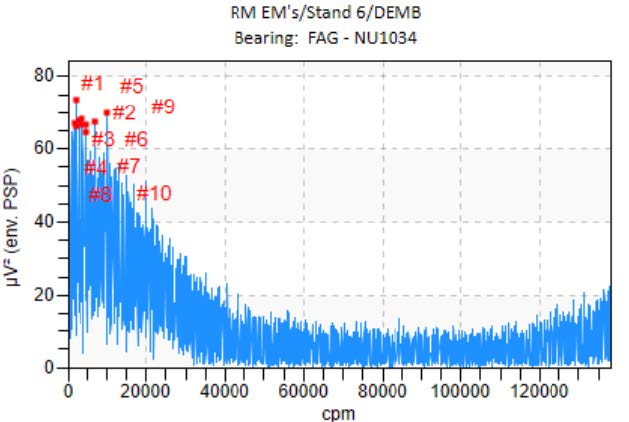
Continued condition improvement observed on Stand 6 achieved through precision lubrication.
Stage 5: Stabilization
By the fifth lubrication task, grease acceptance across the entire fleet approached normal condition and ultrasound readings stabilized around the developing baseline.
The motors accepted two tubes of grease during this stage, the highest amount to date, showing how much grease flow had improved compared to Stage 1.
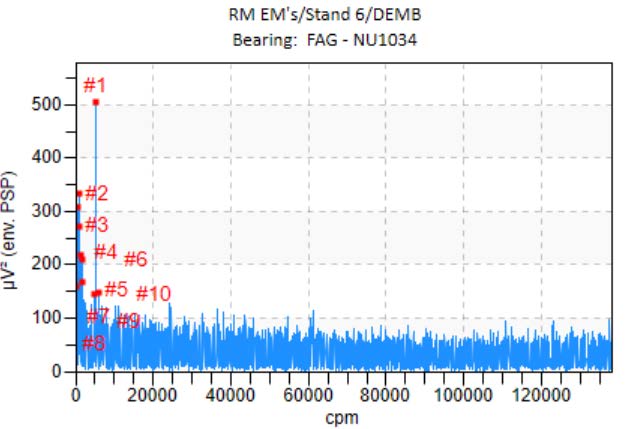
Low energy, relatively normal lubrication condition observed on Stand 6
Stage 6: Present Day - Results Pending
At the time of the case study, the sixth lubrication task was still in progress. All motors except one had been removed from the watch list, and readings were expected to continue stabilizing as the fleet moved into a more normal operational state.
Because this stage was still developing, it should be treated as an ongoing result rather than a final outcome. The project had moved the fleet much closer to a known, monitored condition, but before the project could conclude, more condition data would need to be assessed.
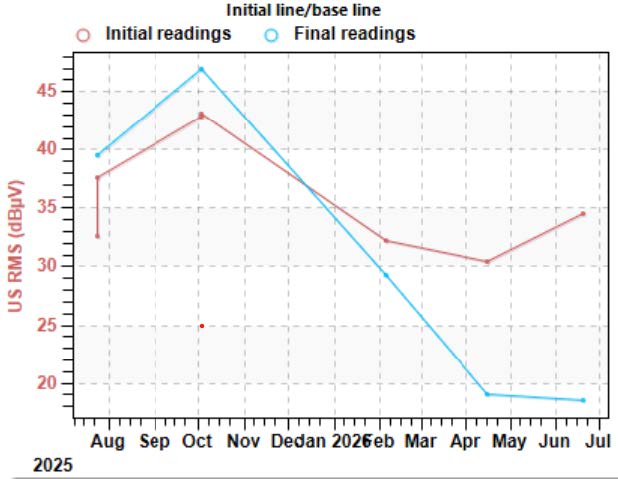
Approximately 12 Months of Ultrasound-Based Lubrication Data Observed on Stand 6
Summary
The steel mill began with 19 drive motors that had gone seven years without a documented regreasing event, no current lubrication PM route, and no established ultrasound history. The first lubrication task showed restricted grease flow, hardened lubricant, and blocked purge or relief paths.
Rather than trying to correct the condition in a single visit, the team used a staged process. Each lubrication task combined controlled regreasing with ultrasound measurement, visual inspection, and comparison against the previous readings.
Across the completed stages, grease acceptance became more consistent, ultrasound activity moved toward a more normal operating range, and most motors were removed from the watch list. One motor was identified for replacement, helping separate a mechanical issue from the broader lubrication recovery process.
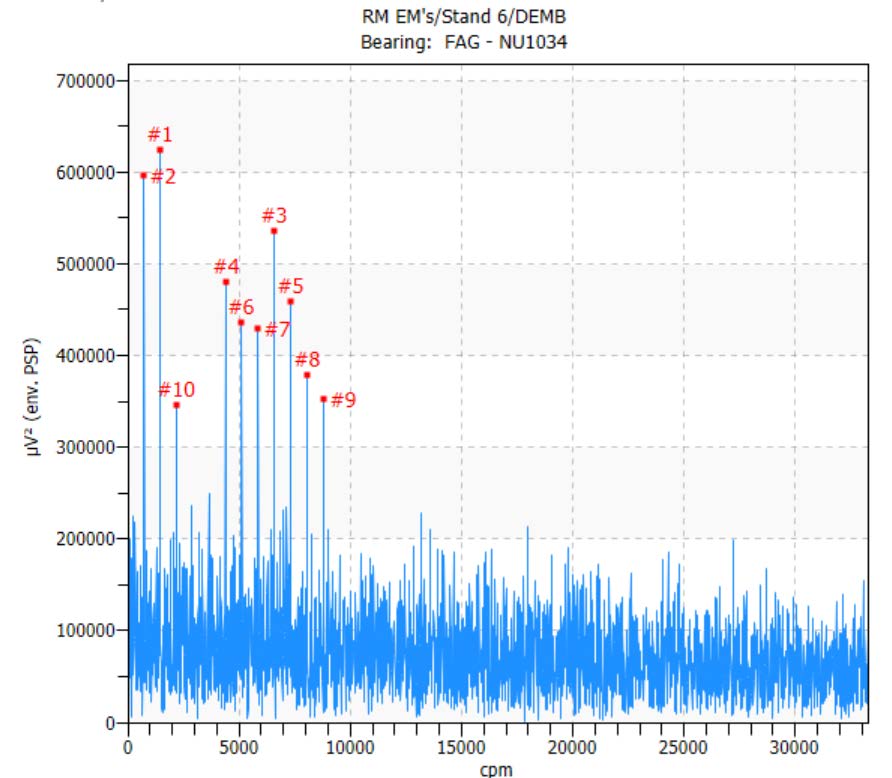
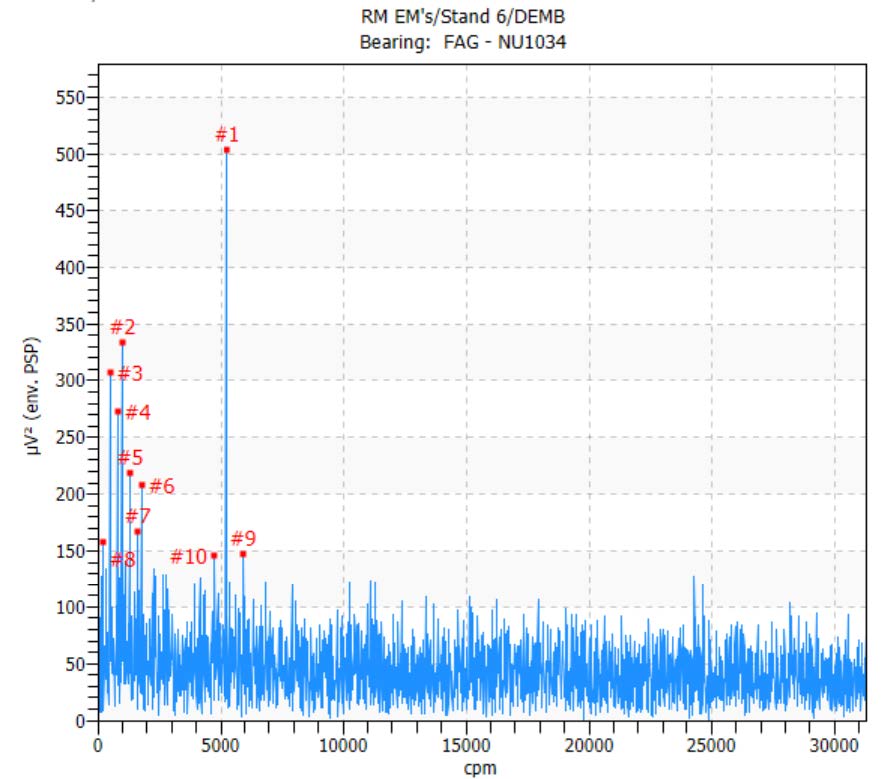
The Stage 1 spectrum shows significantly higher overall ultrasonic energy and friction-related activity. By Stage 6, the signal had reduced substantially, indicating a much lower friction condition and a more stable operating state.
The next step is continued monitoring. Motors can transition from the recovery process into a standard re-lubrication route, with ultrasound-guided checks used to confirm that each bearing remains close to its new baseline.
Any bearing that begins to drift from that baseline can then be identified early and investigated before the fleet returns to another extended period of unknown lubrication condition.
Key Takeaway:
Recovery starts with understanding the bearing’s condition. Establish a baseline, make controlled lubrication adjustments, and use the measured response to guide each next step. The result is a repeatable process that replaces assumptions with condition-based decisions.