Locating Loose Connection with Acoustic Imaging 

SonaVu(R) PLUS Acoustic Imaging Case Study  During an infrared electrical inspection of the LN14 Case Packer, a hot spot was identified around the Phase A and B connections inside its electrical cabinet. An audible buzzing noise was also coming from the cabinet. Together, these findings prompted...

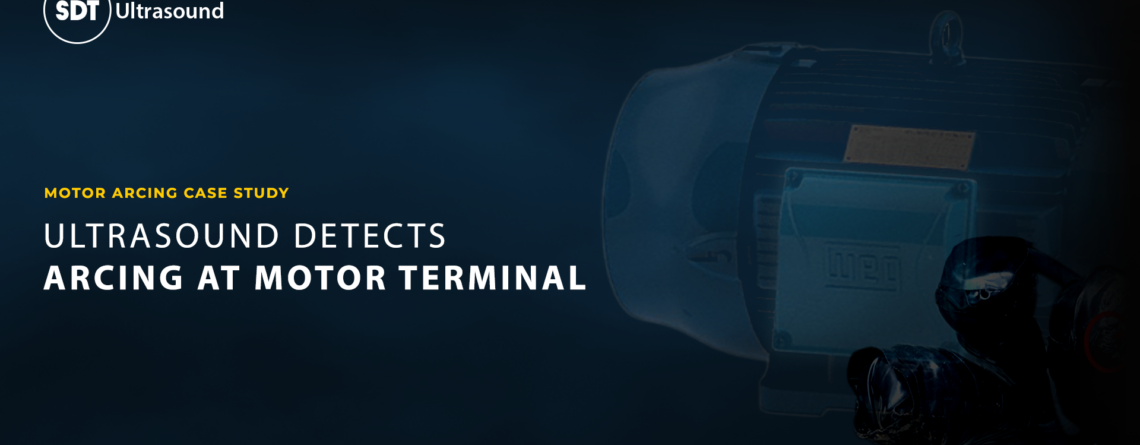
Ultrasonic Detection of Arcing in a Motor Terminal Box  

Found by Gilles Lanthier  Reported by Tristan Rienstra  Figure 1: Motor Terminal Box Reliable electrical connections are a critical part of electric motor reliability. Inside the terminal box, incoming supply conductors connect to motor leads. For safe and reliable operation, secure connections, sound insulation and effective grounding are...

Successful Lubrication with Ultrasound: A Process Water Pump Case Study

In this ultrasound lubrication case study shared by Luis Vasquez, the SDT340 LUBExpert was featured to support a condition-based lubrication task on the process water pumps at a Food & Beverage facility in Houston, Texas.  The setup begins before the technician reaches each asset. In UAS3,...

Finding Common Coupling Failures with Ultrasound Predictive Maintenance Equipment 

Non-Intrusively Inspect Couplings with Airborne Ultrasound  Couplings connect the shafts of rotating equipment and transfer power while providing flexibility for inaccuracies in shaft alignment and absorbing shock loads. They’re an essential component for most motor assemblies found in most manufacturing environments.  Common coupling maintenance practices include visual...

Condition Monitoring with Airborne Ultrasound for Grid Couplings

Using airborne ultrasound is a great method for condition monitoring grid couplings. Although vibration analysis can be effective at identifying 1x shaft speed and harmonic frequencies in the velocity spectrum, it’s hard to determine whether the forcing frequency is due to misalignment, imbalance, or damage...

The Hidden Costs of Over-Greasing — And How to Stop It 

Walk into almost any plant and you will hear it. If a little grease is good, more must be better. That belief has quietly cost industry millions. Over-greasing does not protect bearings. It creates excess pressure, increases friction, raises operating temperatures, and pushes grease past seals....