
How to Find Air Brake and Air Suspension Leaks with Ultrasound
A pressure-loss test can tell you an air system is leaking. It cannot tell you which fitting, valve, line, brake component, or air spring is responsible.
That gap between confirming a leak and finding it is where airborne ultrasound is useful. Escaping compressed air creates turbulence, and turbulence produces high-frequency energy that can be detected directionally. Instead of relying on an audible hiss in a noisy shop, technicians can scan the charged system and work toward the strongest ultrasonic source.
On heavy-duty vehicles, that can mean less time chasing leaks through a long pneumatic circuit and a more direct path to repair verification.
Where Air Leaks Develop
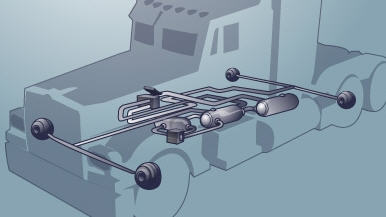
A heavy-duty air brake system can include the compressor, air dryer, reservoirs, control valves, drains, hoses, hard lines, fittings, brake chambers, and other pneumatic devices. Every seal and connection between those components is a potential leak point.
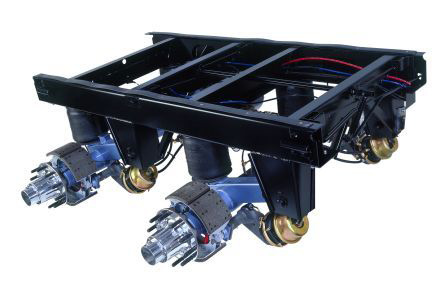
Air suspension adds another group of components: air springs or bellows, height-control valves, lines, fittings, and connections that move with the chassis. A small leak may first show up as more compressor cycling, slow pressure recovery, a change in ride height, or a vehicle that settles after it is parked.
The challenge is not understanding that leaks are possible. It is locating the one that matters without spending unnecessary time on every connection in the system.
Why Ultrasound Works for Air-System Leak Localization
When pressurized air escapes through a small opening, the pressure difference forces the air into turbulent flow. That turbulence contains ultrasonic energy.
Because ultrasound is highly directional, the technician can use the sensor almost like an acoustic pointer. Aim toward the suspected connection, move closer, and watch how the signal changes. If the response falls away when the sensor is redirected or shielded, and grows as it is aimed back toward the same point, the leak location becomes much easier to isolate.
This is particularly useful around valve blocks, fittings, hose bundles, and confined areas where several potential leak sources are close together and lower-frequency background noise is high.
A Practical Air-System Ultrasound Inspection Workflow
Air brake systems are safety-critical, and suspension systems can store significant energy. The vehicle manufacturer's test procedure, required shop controls, and applicable regulations always come first. Ultrasound is used to localize the leak within that approved inspection process.
- Bring the air system to the manufacturer-specified test condition and pressure. Secure the vehicle before inspecting around or underneath pneumatic components.
- When the service procedure allows it, reduce competing engine noise after the system is charged. Keep the required safe test condition intact.
- Scan the system methodically from the supply side outward. Check the dryer, reservoirs, valves, fittings, lines, and hoses before moving toward the brake and suspension endpoints.
- Move the airborne sensor slowly around each connection. Listen for a focused rushing or hissing ultrasonic signal and use the instrument response to work toward the strongest source.
- On air suspension, scan the air springs or bellows, their fittings, height-control valves, nearby lines, rub points, and areas exposed to repeated movement.
- Tag the leak, complete the repair using the correct service procedure, and repeat the ultrasound scan. Then complete the required system pressure-loss and functional checks.
Air Brake Leaks: Follow the Full Air Path
It is easy to start at the wheel end because that is where the braking function is most visible. The leak may be nowhere near the wheel.
A systematic scan from the supply and storage side toward the braking components helps prevent missed upstream leaks and creates a routine that can be repeated from vehicle to vehicle. Valves and fittings deserve close attention, but so do line clamps, bends, abrasion points, and areas where vibration can create rubbing or fatigue.
The goal is consistency. When the technician follows the same path every time, it becomes much harder for a small but persistent leak to hide in the system.
Air Suspension Leaks: Look Beyond Ride Quality
An air suspension leak may first appear as a ride-height or comfort issue, but the effect can extend beyond how the vehicle feels. A leaking air spring, line, or height-control component can increase compressor demand and make it harder for the suspension to maintain its intended position.
Ultrasound lets the technician scan the air springs and related components quickly without coating every surface in leak-detection solution. The strongest ultrasonic indication can then guide a closer visual inspection, repair, or follow-up test.
On vehicles carrying heavy or sensitive loads, that targeted approach makes it easier to treat small air-system losses before they become larger reliability or operating problems.
Verify the Repair, Not Just the Symptom
Finding a leak is only half of the job. The real question is whether the repair removed the source.
Return to the same location under the same test condition and scan again. If the fitting, valve, line, or air spring was the true leak point, the focused ultrasonic signal should be gone or significantly reduced. That before-and-after comparison gives the technician immediate evidence that the repair changed the condition.
After that, complete the required pressure-loss and functional checks for the system. Ultrasound helps locate and verify the source. The system-level test confirms that the vehicle meets the required operating condition.
Bring Ultrasound into the Fleet Troubleshooting Workflow
Maintenance teams already use airborne ultrasound to locate compressed-air leaks across industrial facilities. The physics does not change when the compressed-air system is on a vehicle. What changes is the inspection path, the safety procedure, and the components being checked.
For fleet technicians, the value is straightforward: confirm the system condition with the required test, use ultrasound to find the leak faster, make the repair, and use ultrasound again to verify that the source is gone.
Paired with the SDT340 and the appropriate airborne sensor, that workflow adds a practical leak-localization method to the broader condition monitoring strategy used across mobile and fixed assets.